

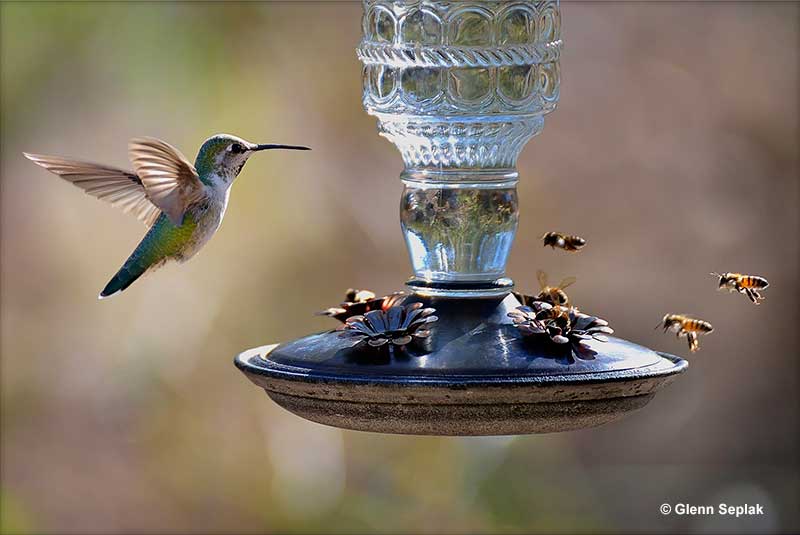
Hummingbirds are such fantastic birds, especially when they visit feeders right in your own backyard! I love watching these feathered jewels at close range. I marvel over their shining, metallic colors, and how small these birds really are!
Hummingbirds are so small that they can even be affected by insects. While other, larger birds feast on all sorts of bugs, hummingbirds are on their guard around bees and wasps. Unfortunately, those stinging insects are capable of taking over hummingbird feeders and scaring all the birds away.
Why are bees and wasps attracted to hummingbird feeders? How can we keep them away?
Pesky Bees
Bees visit nectar feeders for the same reasons that hummingbirds do. Bees love sugar water because, like hummingbirds, they are nectivores.
Similar to hummingbirds, bees also wander to find the best food sources. They are always on the watch for plants that produce the highest amounts of nectar. As these honey-producing insects wander through our neighborhoods, they spot hummingbird feeders and come to investigate such big and beautiful “flowers.”
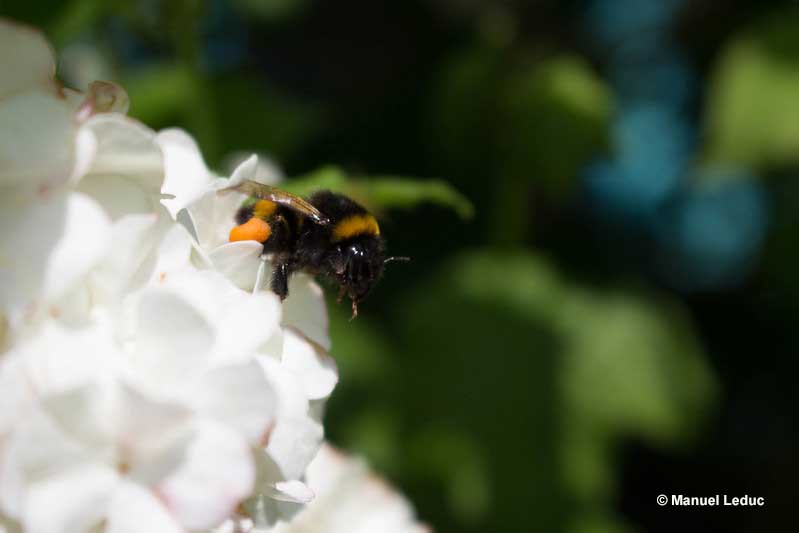
If they aren’t chased away by hummingbirds or other types of birds, they’ll feed before returning to their hive and telling the other bees about this new fantastic food source. It won’t be long before they come back to partake in the sugar feast along with a dozen or more of their six-legged friends!
Other nectarivorous insects can also “take over” feeders, especially Yellow Jackets and other wasps. These insects are eager to visit hummingbird feeders because sugar water is such an easy, high energy food.
The only problem is that we don’t really want them at our feeders. Although hummingbirds can drive off some bees or wasps, they stay away from feeders crawling with stinging insects. It’s hard to say, but they may feel that the risk of getting stung is just too high.
Ways to keep bees and wasps away from feeders
Hummingbird Feeders with Bee and Wasp Protectors
One of the easiest solutions is using feeders that make it impossible for bees and wasps to eat. The insects will still be attracted to them and will still try to feed, but they won’t stay for long.
There are feeders that come with this handy feature and you can also make your own nectar guards. They usually take the form of some plastic mesh that covers the main feeding ports.
Related:
Hummingbirds and some moths can still feed by sticking their long tongues through holes in the mesh. However, for wasps and bees, it’s another story. Try as they might, they won’t be able to access the nectar and will eventually give up.
Leak-Proof Hummingbird Feeders
If you see a bunch of bees on your hummingbird feeder, after they leave, take the feeder down and give it a close check. Is there sugar water dripping from it? Are there obvious cracks? Any tiny holes or other spots with leaks?
If so, you’ve found the problem. Leaking feeders are a great way to bring in bees, wasps, ants, and other unwelcome guests. As the nectar leaks onto the feeder and drips to the ground, the scent is like a dinner bell for nectivores!
Check the feeders that you already have. If the leak is coming from a loose cap, simply tightening it could fix the problem. However, if the feeder has cracks, it’s time to get a new one.
Keep Hummingbird Feeders Clean!
Along similar lines, you’ve got to keep your feeders clean. For healthy hummingbirds, you should be frequently cleaning your feeders anyways. In hot weather, sugar water can go bad quicker than you think!
Cleaning feeders is an easy means of prevention and also works to keep bugs away. Wash a feeder inside and out and you’ll remove sticky and dried sugar water. Even if a feeder doesn’t seem dirty, you can bet it has some leftover nectar on it!
Insects detect those drops and bits of nectar and hone in on your feeder. However, if you remove that sweet signal, it will take a lot longer for bugs to find it. Clean your feeders on a frequent basis and bugs won’t even know it exists.
Use All-Red Feeders
You might think that red colors would be a great way for bees and wasps to find your feeder. It seems to make sense; after all, bright red is perfect for hummingbirds!
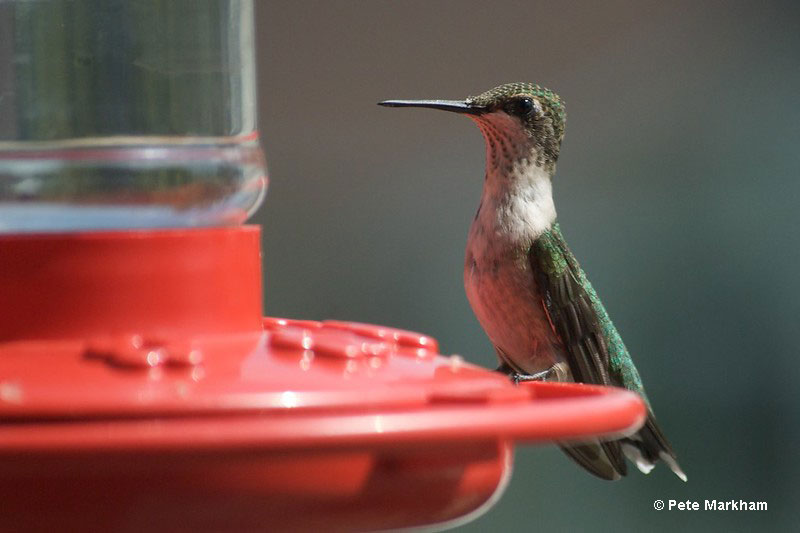
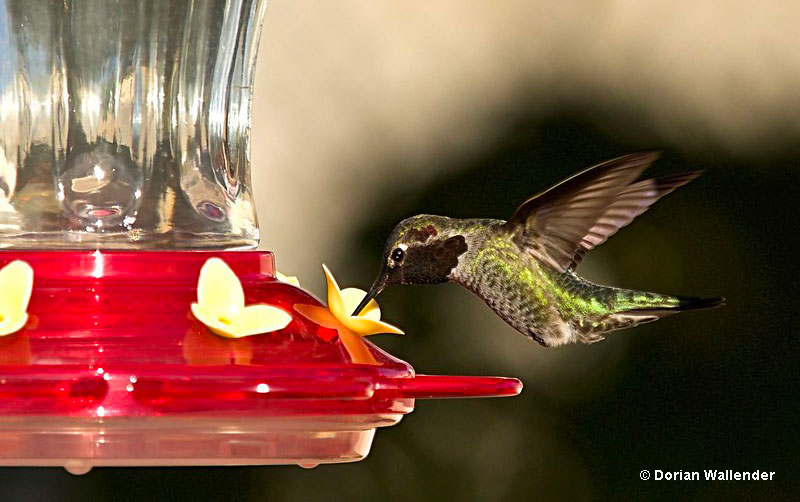
Although some insects might focus on red feeders, it’s actually not the color that most nectarivorous bugs prefer. They like colors associated with plants that they feed on and pollinate. These tend to be flowers with bright yellow petals, flowers with white or pale violet hues, pink flowers, and purple ones.
If a bees sees a red feeder, it might still investigate it but not nearly as much as a red feeder with bright yellow ports. Those yellow bits are telling bees and wasps to come and see what’s for dinner.
Move Your Feeders
Another simple solution is moving the feeder to another part of the garden. As soon as you see a bee or wasp on a feeder, after the stinging insect leaves, take the feeder down. If you can, hang it from a branch ten or fifteen feet away or on the other side of the house.
The hummingbirds will quickly find the feeder, but bees and wasps probably won’t. With time, they’ll eventually “rediscover” it but not right away. Those insects aren’t as smart as hummingbirds are, and it can take them a while to refind a food source that’s not where they are sure it’s supposed to be.
Make sure to move your feeder at least ten feet away, although 25 feet is better.
Give Bees and Wasps Something Else to Eat and Drink
Growing a bee-friendly yard might seem counterintuitive, but it actually makes sense. Bees and wasps visit hummingbird feeders because they are looking for food. If they already have more than enough to eat, they might not visit your nectar feeder.
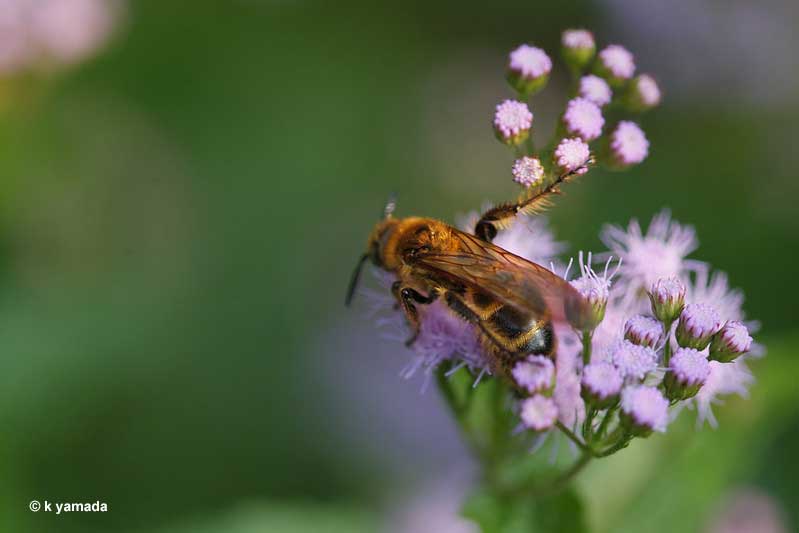
Give them plantings of mint, lavender, and other small pale flowers and they’ll probably go there instead of to your feeders. They might even be so busy with this good natural food that they fail to notice your feeder. If it’s entirely red, it won’t be the right color anyway.
Couple those plantings with a small water feature, and you’ll provide bees and wasps with more places to frequent instead of your feeders.
Frequently Asked Questions
Why are bees around my hummingbird feeder?
Bees are around your hummingbird feeder because they like to eat sugar water. They might be frequenting your feeder because they are attracted to spilled nectar, or might not have many other flowers to feed from.
Do bees drink hummingbird nectar?
Just like hummingbirds, bees are attracted to hummingbird nectar. However, they mostly prefer flower nectar.
Can bees sting the birds?
In some cases, bees can sting the birds. However, this rarely happens to birds that don’t bother bee hives.
Do birds eat bees and wasps?
Some birds eat bees and wasps. The bee-eaters of Eurasia and Africa feed on large numbers of stinging insects, but some of our local species snack on them too, such as mockingbirds and tanagers.