


Penguins inhabit diverse regions from icy Antarctica to temperate coastlines. Known for their playful antics and distinct black-and-white plumage, these flightless birds face various threats, including climate change and human impact. So how long do they live?
How Long Do Penguins Live?
The average lifespan of a penguin is 15-20 years, although the smallest species lives only up to 6 years whereas some species can live up to 30 years. In general, smaller species tend to have shorter lifespans than larger ones.
Throughout the life cycle, penguins face various challenges, and mortality rates are often highest during the early stages, especially for chicks. The life cycle of penguins can be broadly divided into five stages: egg, hatchling, chick, juvenile, and adult. Different penguin species may have variations in the duration and specifics of each stage.
The life cycle begins with the laying of eggs by the female penguin. The number of eggs laid varies by species, but it’s typically one or two.
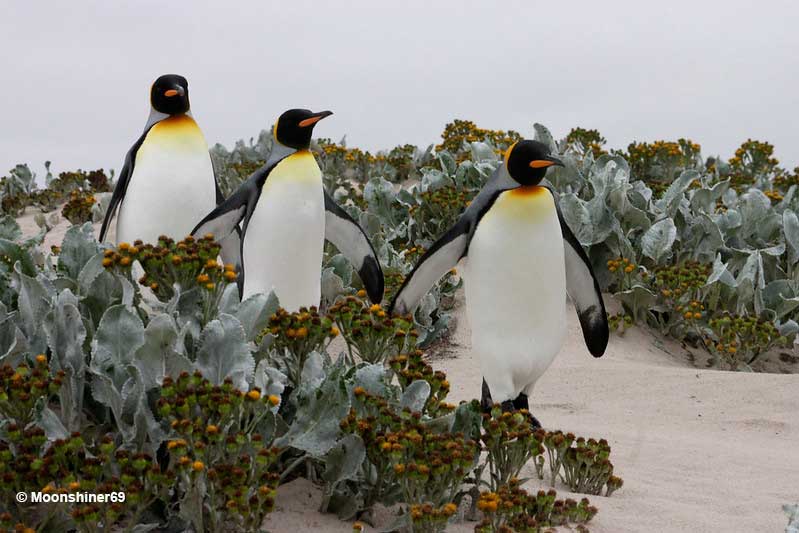
Once the eggs hatch, the hatchlings are covered in down feathers and are incredibly dependent on their parents for warmth and protection. As the hatchlings grow, they develop more feathers and become chicks. The chick stage is a critical period where the young birds are vulnerable to predation and environmental factors.
After a certain period, the chicks become juveniles as they start to develop adult feathers and gradually lose their downy plumage. Juveniles begin to explore their surroundings and may spend more time outside the nest, engaging in activities such as preening and practicing swimming.
Related: Do penguins mate for life?
Once the juvenile penguins have completed their molt, acquiring the waterproof plumage necessary for swimming, they transition into the adult stage and the cycle begins anew.
Different lifespans
The average expected lifespan for different penguin species varies, ranging from 6 to 30 years, depending on the species. In general, smaller penguin species tend to have shorter life expectancy, while larger species tend to have longer ones.
Here are the specific lifespans for various penguin species:
Genus Aptenodytes – above 20 years on average
- King Penguin: 26 years in the wild, 41 years in captivity
- Emperor Penguin: 20 years
Genus Pygoscelis – between 10-20 years on average
- Adelie Penguin: 10-20 years
- Chinstrap Penguin: 15-20 years
- Gentoo Penguin: 15-20 years
Genus Eudyptula – 6 years on average
- Little Penguin (Fairy Penguin): On average 6 years, but records show up to 26 years.
- Australian Little Penguin: 6 years
Genus Spheniscus – varied, 10-30 years on average
- Magellanic Penguin: 20-30 years
- Humboldt Penguin: 15-20 years
- Galapagos Penguin: 15-20 years
- African Penguin: 10-15 years in the wild, 10-27 years in captivity
Genus Megadyptes
- Yellow-eyed Penguin: 8 years on average, can live up to 25 years in the wild, with males tending to live up to twice as long as females
Genus Eudyptes – varied, 8-20 years on average
- Fiordland Penguin: 10-20 years
- Snares Penguin: 20-22 years
- Erect-crested Penguin: 15-20 years
- Southern Rockhopper Penguin: 10 years
- Northern Rockhopper Penguin: 10 years
- Royal Penguin: 15-20 years
- Macaroni Penguin: 8-15 years
These lifespans are approximate ranges, and individual lifespans can be influenced by factors such as environmental conditions, food availability, predation, and human impact.
Why Do Penguins Live Longer In Captivity?
Penguins may live longer in captivity compared to their counterparts in the wild. Their lifespan is affected by various factors and there are both advantages and disadvantages to keeping them in a controlled environment.
Penguins in captivity live in stable and controlled environments. In addition, they are typically shielded from natural predators, reducing the risk of predation-related mortality.
They receive a steady and controlled diet, eliminating the challenges of finding food in the wild. This can contribute to better nutrition and overall health. Captive penguins often receive regular veterinary care, monitoring, and prompt medical attention whenever an issue arises.
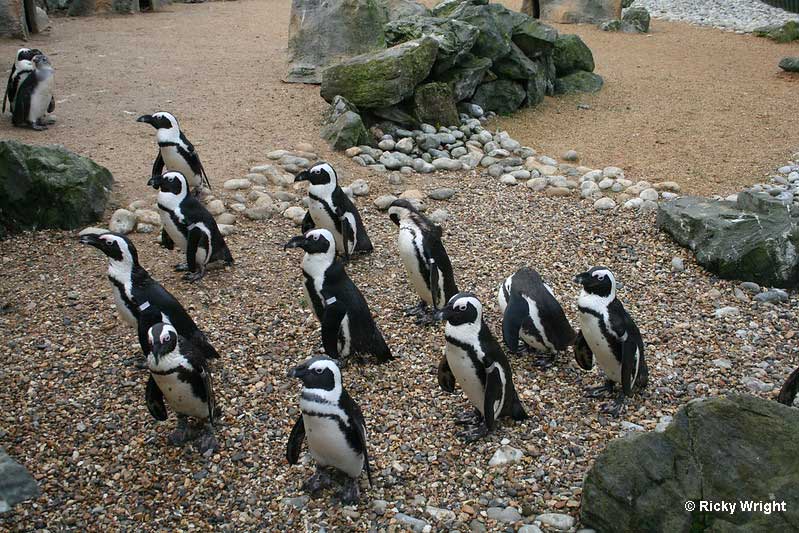
On the other hand, captivity may restrict their ability to engage in natural behaviors such as foraging and swimming long distances. The space they’re in may not replicate the expansive and diverse habitats that penguins experience in the wild, leading to potential stress and reduced quality of life.
Maintaining natural social structures and behaviors can be challenging as well, potentially impacting the psychological well-being of penguins.
Ultimately, the well-being and longevity of penguins in captivity depend on the quality of care provided, adherence to ethical standards, and efforts to replicate natural conditions as closely as possible.
Biggest Dangers
The biggest dangers to penguins primarily stem from human-induced threats and environmental changes. Overfishing diminishes the availability of prey, habitat destruction through pollution and oil spills harms adult birds but also nesting and foraging areas, and climate change alters ecosystems, affecting prey distribution and ice-dependent species like the Emperor Penguin.
Climate change
Climate change poses several significant threats to penguin populations, impacting their habitats, food sources, and overall well-being. Rising global temperatures contribute to the melting of polar ice caps and glaciers, affecting the habitats of ice-dependent penguin species like the Emperor Penguin. These penguins rely on stable ice for breeding, and changes in ice conditions can disrupt their reproductive success.
More frequent and intense weather events, such as storms and heavy rainfall, can negatively impact penguin colonies. Extreme weather can lead to flooding of nests, increased chick mortality, and disturbances in foraging patterns.
Climate change influences ocean currents, affecting the distribution and abundance of prey species such as fish and krill. Increased carbon dioxide (CO2) levels in the atmosphere contribute to ocean acidification, which can further harm their prey populations as well. Penguins, especially those that rely on specific prey items, may face challenges in finding food.
Predators
Penguins have no natural land predators due to where they live. However, predatory seabirds, such as skuas and giant petrels, are known to target penguin eggs and chicks. They can be a threat, particularly in colonies where nesting sites are exposed. Leopard seals and sea lions are known to prey on penguins, especially when they enter the water. Killer whales and sharks pose a threat as well.
Unfortunately, there are also some human-introduced land predators. Invasive species like rats, when introduced to penguin colonies, pose a severe threat to eggs and chicks.
Rats are opportunistic predators that can decimate penguin populations by raiding nests. Feral cats are known to prey on penguins, especially during the nesting season. Cats can pose a significant threat to both eggs and chicks.
In areas where domestic or feral dogs are present, they can pose a direct threat to penguins, particularly during the breeding season when adults and chicks are on land.
Frequently Asked Questions
How long do most penguins live?
Most penguins live for 15-20 years on average. The specific life expectancy depends on the species.
What is the max age of a penguin?
In captivity, the oldest penguin was a King Penguin called Oma who died at 46 years of age. In the wild, Magellanic Penguins have the longest life expectancy of 30 years.
How long does a King Penguin live?
King Penguins have an average life expectancy of 26 years. However, in captivity, the oldest lived to be 41 years old.
Do penguins mate for life?
Many penguin species are known for forming long-term monogamous bonds, and individuals often mate for life with the same partner across breeding seasons.
