


Hummingbirds are such adorable little creatures! With their tiny dimensions, spunky attitudes, and glittering plumage, they can seem more like feathered fairies than actual birds.
I love watching hummingbirds zip between beautiful flowering bushes and backyard feeders. Although these little birds are masters of flight, once in a while, they do stop and perch.
When that happens, take a really close look, and you might see their feet. Do their feet differ from those of other birds? Do they use them in special ways?
Key takeaways:
- Hummingbirds use their feet for multiple purposes, although they aren’t exactly known for having strong grips.
- While hummingbirds are small, so are their legs. Most birds have longer feet, which allows them to hop or walk around.
Do Hummingbirds Even Have Feet?
Hummingbirds spend so much of their time in flight that it’s easy to wonder if they actually have feet. After all, we never see them walking or hopping on the ground. However, even if hummingbirds don’t use their feet like many other birds, they do indeed have them.
However, don’t be surprised if you have trouble seeing their toes. These smallest of birds also have tiny feet! Hummingbirds have evolved small feet for better flight. Smaller feet make them more aerodynamic while also reducing weight.
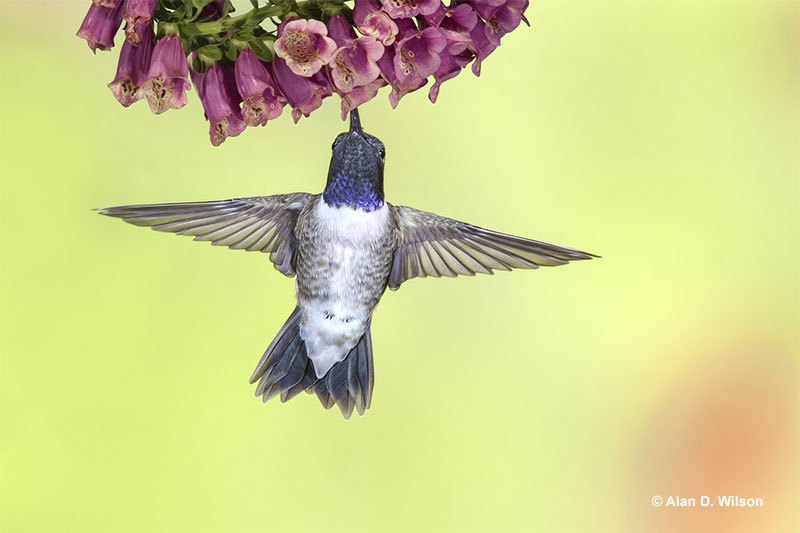
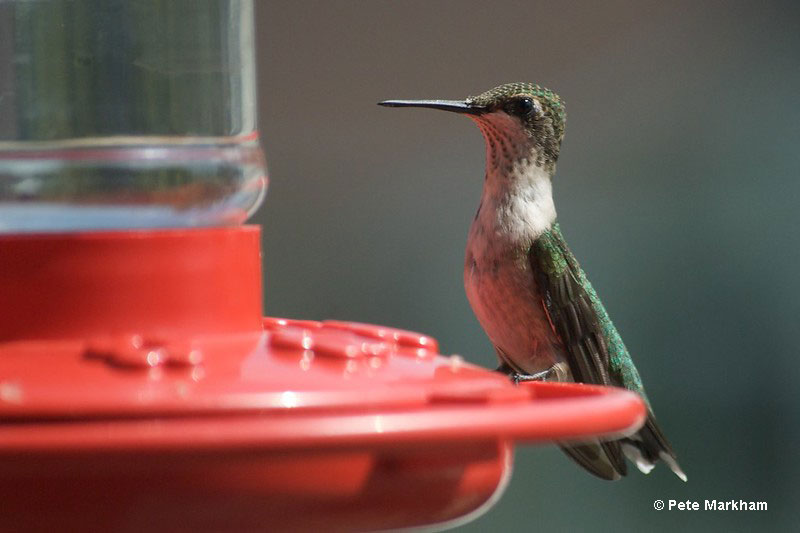
The next time you see a hummingbird perched on a twig or feeder, get out your binoculars and focus in on the bird’s feet.
You’ll notice tiny feet with three little toes in front and one toe in back. You should also notice longish, sharp claws and that their feet seem to be attached directly to the bird’s body. Unlike many other birds, hummingbirds have extremely short and “fused” legs.
That is, they can’t bend them or use their legs to walk around or hop. They might scoot sideways on a branch but that’s about as close as hummingbird get to walking! However, their feet do have a strong grip to keep themselves from falling off twigs while they sleep.
Why are their feet so weak?
Hummingbirds feet aren’t as weak as many people think. Their feet might seem nonexistent and they don’t use them for much but there’s one big reason why hummingbirds need a fairly strong grip. At night, most hummingbirds enter into “torpor”, a type of temporary hibernation where their heart rate and body temperature lower significantly.
During torpor, their tiny feet and toes lock onto their perch and keep them from falling to the ground. However, other than for perching, hummingbirds don’t use their feet for much of anything else.
Since they spend so much of their time on the wing, feet can even be more of a hindrance than something useful.
For that reason, hummingbirds have evolved extremely short legs with small feet. To reduce weight and drag, similar to how jets pull up and stow and their wheels, hummingbirds tuck in their feet.
Ways Hummingbirds Use Their Feet
Perching
Hummingbirds almost only use their feet for perching. Since they can much more easily move around by flying (even backward when needed!), they don’t need feet and legs suited for walking or hopping.
They don’t need feet to scratch in leaf litter or climb up trunks either. Hummingbirds only feed by taking nectar directly from flowers, sugar water from feeders, and catching insects in flight.
To perch, hummingbirds hover in and land on a suitable spot. This can be a slender twig, tip-top of a cactus, bush, or tree, and things like wires and clotheslines. Some hummingbird species also perch on rocks.
Building nests
Hummingbirds also make some use of their feet to build their nests. Only female hummingbirds build nests and although some sources state that they grab nesting material with their feet, this is false.
They rarely, if ever, use their feet to carry nesting material. Instead, female hummingbirds use their beaks to gather bits of dead leaves, lichens, spider silk, and other soft materials.
However, once they put the nesting materials in place, they use their feet to tap down and mold them into shape, especially when making the base of the nest. They also use their feet and body to help form other parts of their nest.
Grooming
Hummingbirds also use their feet for preening and other purposes. Watch a perched hummingbird for a while and you’ll eventually see it use one of its feet to scratch itself!
I usually see them scratch parts of their head or face although maybe they can reach other parts of their body too. When they scratch themselves, at the same time, hummingbirds also preen and rearrange some of their feathers.
The process can be quite acrobatic too! The small birds typically lift their foot up and over one of their wings to get at their head, neck, and face.
Eating
Raptors and some other birds catch food with their feet. Most birds, though, only catch food with their beaks, and hummingbirds are no exception.
These tiny, feathered dynamos stick their slender beaks into flowers and feeders to drink nectar and snap up tiny flying insects in hovering flight. Although most hummingbirds can forage while hovering, most species can also drink nectar while they are perched.
There are also at least two tropical species that only feed while perched; the White-tipped Sicklebill, and Buff-tipped Sicklebill. Both of these hefty hummingbirds perch while inserting their curved beaks into hanging Heliconia flowers.
Stretching And Other Fun Facts
- Tiny feet and legs are two of several adaptations that hummingbirds have to help them fly more efficiently.
- Hummingbirds that seem to be carrying something with their feet probably got them accidentally caught in spider silk or plant material.
- During fights with other hummingbirds, male hummingbirds can use their feet to grasp onto their opponents.
- Several tropical hummingbird species have tufts of feathers on their legs that resemble miniature boots. They probably use these “pom-poms” in courtship displays.
- The bottoms of hummingbird feet have specialized structures that help them grip surfaces better.
- While hovering to feed, hummingbirds can stretch out their feet for balance and stability.
- Hummingbirds have special arteries and veins in their feet to help them shed excess heat generated by fast flight and other processes.
- Hummingbirds clean their feet by rubbing them on branches.
Frequently Asked Questions
What is the anatomy of a hummingbird’s feet?
The anatomy of a hummingbird’s feet is three toes in front and one toe in back, all tipped with sharp claws. They have very short legs, the middle toe is the longest, and they have specialized muscles that help grip and hold onto branches.
Do hummingbirds have legs or just feet?
Hummingbirds have legs and feet. However, their legs are very short, and they can’t bend them like other birds do.
How much weight can hummingbirds carry?
Hummingbirds can’t carry much weight. They only carry things in their beaks and carry very little. Otherwise, they wouldn’t be able to fly.
How long are hummingbirds’ claws?
Hummingbird’s claws are around a quarter of an inch long or less.
What is the function of the hummingbird feet?
The function of the hummingbird’s feet is to perch on branches, especially while sleeping at night.