

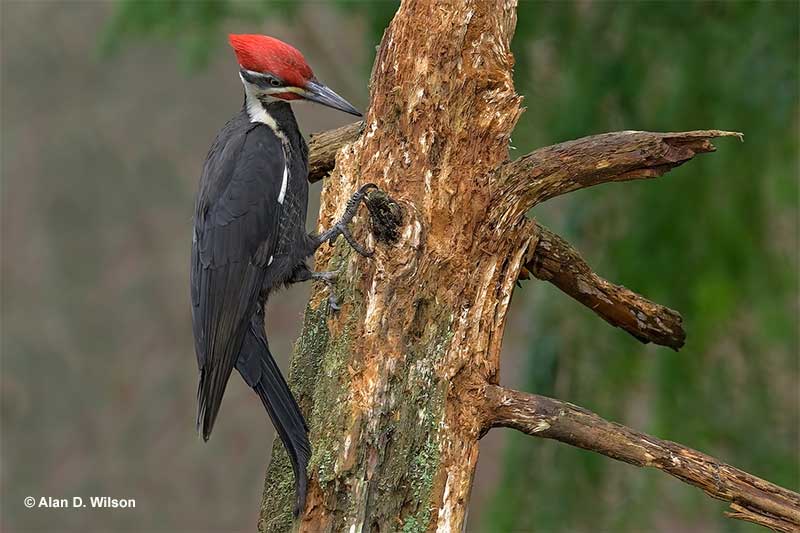
Woodpeckers, as their name suggests, are characterized by their habit of rapid, repetitive drumming on tree trunks, branches, and sometimes even metal.
This serves several vital purposes in their daily lives, from foraging for food and creating nesting sites to communicating with other woodpeckers.
However, what kind of effects does this have? Let’s find out!
Continuously Pecking At Wood
Woodpeckers peck at wood for several reasons, each tied to their survival in one way or another. The three main reasons are related to food, nesting, and communication.
Many woodpeckers eat mainly insects and their larvae and eggs that hide under the bark or inside the tree trunk. They peck at wood to create small holes to access and extract them.
These holes are often small and placed irregularly. Some species, like the sapsuckers, peck at trees to access the sap. They create neat rows of small holes to get the sap flowing, which they then return to from time to time to drink.
However, some woodpeckers, like the Acorn Woodpecker, also drill holes to store various nuts and seeds for the winter. Some trees can be covered in those holes!
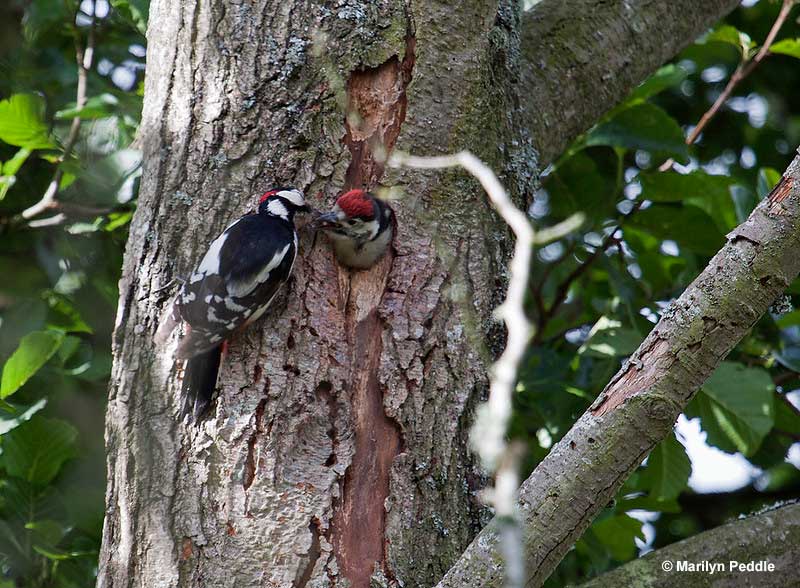
The second reason why woodpeckers peck at wood is to dig nesting cavities. They typically select dead or decaying trees or limbs, as these are easier to excavate. These cavities provide a safe place for laying eggs and raising their young. Woodpeckers often dig new cavities each year, abandoning old ones that other cavity-nesting species, who are unable to dig their own, can then occupy.
Another reason for woodpeckers’ pecking and drumming is communication. They drum on resonant surfaces to produce a loud noise that can be heard over long distances. This drumming serves multiple purposes, including attracting mates, establishing territory, and warding off rivals.
Does pecking make trees more vulnerable to diseases?
Woodpeckers pecking at trees may make them more vulnerable to diseases, but the extent of the damage depends on several factors.
They often target already dead or decaying trees or those that have been severely infected with insects. In these cases, the tree is already compromised, and the woodpeckers’ activities can actually help rather than harm them by getting rid of the pests.
However, when woodpeckers peck at healthy trees, especially for activities like sap-feeding or drilling nesting holes, they create openings that can expose the tree to pathogens, fungi, and insects. Occasional, minor pecking might not cause significant harm to healthy trees, as they have natural defense mechanisms to heal and compartmentalize wounds.
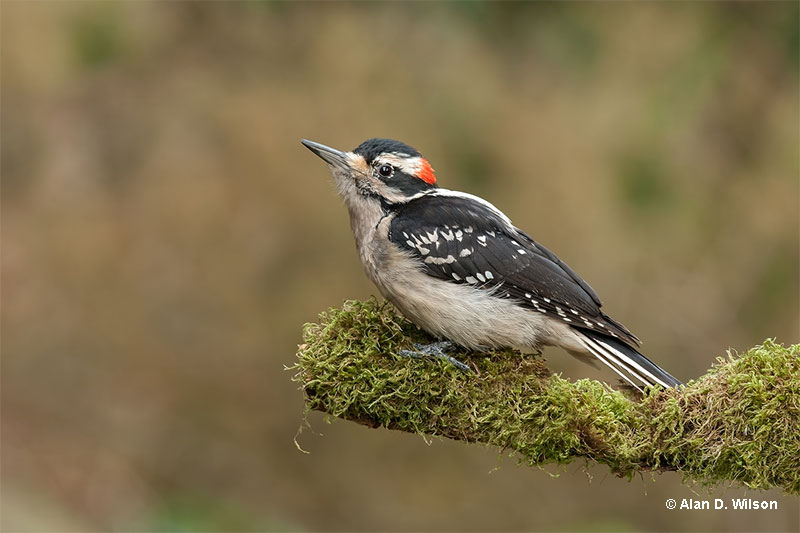
Yet, repeated or extensive pecking, especially by species like sapsuckers that create numerous holes to access tree sap, can stress the tree and increase its susceptibility to diseases and pests.
In extreme, albeit rare cases, woodpeckers can completely remove a strip of bark all the way around the tree. This may cause the tree to eventually die because it disrupts the tree’s ability to transport water and nutrients.
Ultimately, woodpecker damage is often a symptom of an underlying issue, such as an insect infestation within the tree. While a healthy tree can typically withstand minor woodpecker damage, the openings created can leave the tree vulnerable to secondary problems that can severely impact its health if left untreated.
How Do Woodpeckers Know Where To Go?
Scientists are still not entirely sure how woodpeckers determine which trees or specific spots to peck. At a glance, all species prefer softer wood for easier drilling. However, different species have evolved preferences for specific types of trees or wood conditions.
For instance, sapsuckers target living trees to feed on sap, while other woodpeckers prefer dead or decaying wood to hunt for insects. Black-backed Woodpeckers seek out areas recently affected by forest fires, as these environments provide an abundance of suitable trees for nesting and attract insect outbreaks.
For nesting, Williamson’s Sapsuckers often choose trees with dead heartwood and a living outer layer so excavation would be easier but there would still be a decent protective layer.
The methods woodpeckers use to identify where to peck for food remain somewhat mysterious. Some speculate that woodpeckers can hear insects moving under the bark, prompting them to peck in those areas. Others suggest that woodpeckers make a few soft knocks first, listening for subtle differences in the resonance of the wood to locate hollow spaces or insect tunnels.
Additionally, woodpeckers may visually scan tree trunks and branches for signs of insect activity or damage that would indicate the presence of prey.
Are Woodpeckers Good To Have Around?
Woodpeckers are generally good to have around for several reasons. They help control insect populations and outbreaks by feeding on insects, larvae, and eggs that infest trees.
Their presence may even help identify possible issues! Additionally, by excavating dead or dying trees, woodpeckers contribute to the decomposition process and nutrient cycling within the ecosystem. This helps maintain a healthy forest environment.
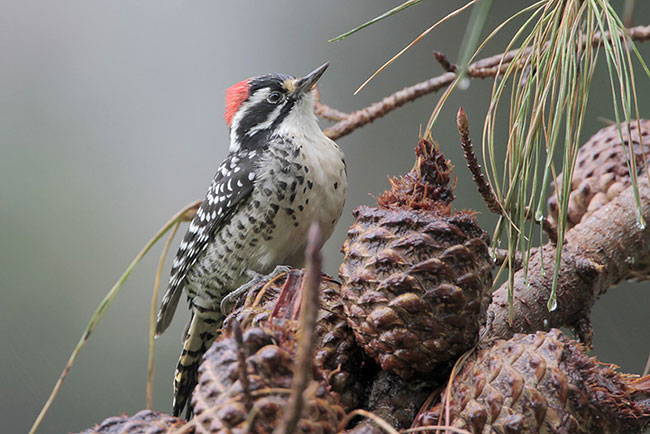
The cavities that woodpeckers create in trees provide essential nesting sites for other cavity-nesting species, such as owls, bluebirds, and other species that cannot create their own cavities. Some woodpeckers also play a role in seed dispersal. By storing seeds in tree cavities or crevices or other locations, they help propagate trees and plants, contributing to forest regeneration.
However, there are also potential drawbacks. In some cases, woodpeckers may cause damage to wooden structures, utility poles, or other man-made objects in search of food or nesting sites. While they often target dead or diseased trees, they can sometimes cause stress to healthy trees, especially if their pecking is extensive. This can make trees more susceptible to diseases and pests.
Keep reading: 6 natural ways to deter woodpeckers
If a woodpecker is causing you trouble, then remember, it is illegal to capture or kill them or disrupt their nesting. The best way to avoid damage is by using preventative measures since woodpeckers can be very persistent once they’ve chosen a spot. Create physical barriers in their pecking areas or hang up shiny and/or noisy objects to scare them away. If the problem persists, call a professional.
Frequently Asked Questions
Do woodpeckers know if a tree is sick?
Woodpeckers seem to have the ability to detect if a tree is sick, diseased, or infected with insects based on their foraging and nesting behavior that targets trees with issues.
Do woodpeckers peck at dead trees?
Woodpeckers often peck at dead or dying trees in search of food or to dig a nesting cavity.
How to stop woodpeckers from pecking at your house?
To stop woodpeckers from pecking at your house, create physical barriers, use visual deterrents like shiny reflective objects, use noise deterrents, apply non-toxic bird repellents, look into providing alternative food sources, or seek professional help.
Can woodpeckers cause damage?
Woodpeckers may cause damage by creating holes in healthy trees that can become an entry point for infections and pests. They may also cause damage to wooden structures such as houses and utility poles.
