

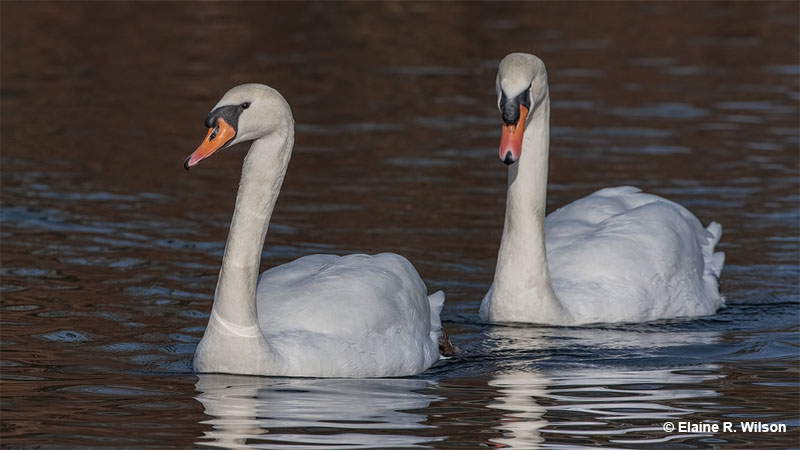
Swans are majestic birds! These huge cousins of ducks and geese are also some of the largest flying birds in the world.
Swans are love-lived birds usually seen in pairs. Pairs of male and female swans spend so much time together, it’s easy to wonder if these impressive birds mate for life.
Do swans mate for life? How do they find a mate?
The Bonds Between Swans
Swans are often seen as symbols of stability and peace and strong, regal bonds formed in romantic relationships. These characteristics aren’t that far from the truth. Swans do indeed form long-term bonds and generally mate for life.
Swan pairs can “divorce,” but that’s pretty uncommon. According to the National Audubon Society, Mute Swans that successfully raise broods “divorce” 3% of the time.
If they don’t raise young, 9% of swan pairs divorce each other. Given that birds find mates so they can have nestlings, this means that a fairly high percentage of swans still stay with their mate even when they don’t breed!
After a pair of swans find each other, they form a pretty strong bond. Both birds end up spending most of their time together, typically foraging in the same area, migrating together, and sharing nesting duties.
Most swan pairs also defend their territory together. Males tend to be more aggressive, but if another pair of swans intrudes on their living space, both can posture, chase, and peck at the other unwelcome birds.
For the most part, swans are monogamous. However, a small percentage of birds do cheat on their mates. It’s not common, but it does occasionally happen.
How do swans find their mates?
Swans start to look for a mate when they are two years old or more. However, they aren’t really mature until they are three, and a few swan species don’t mate until four or five. To find a mate, both males and females spend time in lakes and wetlands looking for other “single” swans.
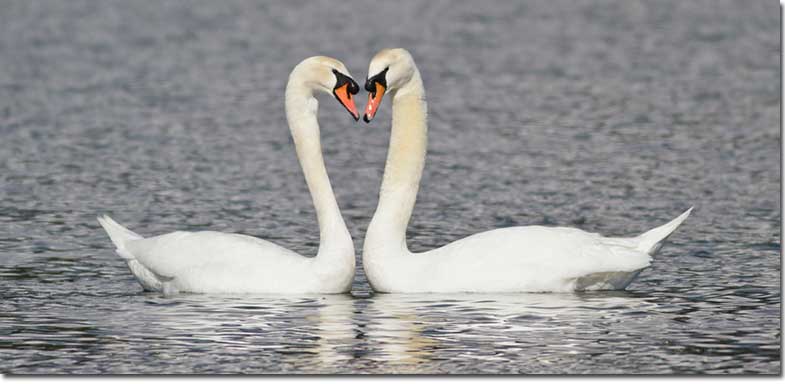
When a pair of unmated swans meet and are interested in each other, they do courtship displays that often include synchronized movements. One such display made by Mute Swans is often depicted in works of art, décor, and romantic themes.
Both swans face each other and dip their heads down to touch their chests. They also get close to each other and can gently touch their heads together. This posture makes the birds appear as if they are making a heart shape!
During courtship, Black Swans and other swan species can also make similar heart shapes when they face each other, extend their necks, and dip their heads down.
They also turn their heads back and forth, dip their heads down to touch the water and vocalize. During courtship, Tundra Swans and other swan species can also bathe together by vigorously dipping their heads and necks into the water.
The Father’s Role
Father swans help raise their young as much as they can. They start by picking a nesting site and then building the basic parts of the nest. If their mate agrees to the nest site, she helps construct the nest and usually takes over the process.
However, the father still brings vegetation to help maintain the nest while she sits on the eggs. Typical nesting sites are on islands or near water, and are one to two foot high mounds the swans make with marsh vegetation.
Once the female swan lays her eggs, she does most of the incubation. The male stays close, though, and when his mate leaves to forage, he sometimes incubates the eggs, too. However, when female swans leave their nest, they usually cover the eggs with down and bits of vegetation.
After the eggs hatch, like most waterfowl, baby swans (cygnets) follow their parents to feeding areas but forage for themselves. The father joins the mother swan in stirring up vegetation and other bits of food in the water that cygnets can feed on.
Baby swans stay with their parents for 100 days, at least until they can fly. Even then, the young swans often return to their parents and stay with them for the winter.
Brood Patches And Other Fun Facts
- If a swan’s mate dies, the remaining parent swan raises the cygnets on its own (even males).
- To help feed their babies, some swans drape vegetation around their necks. This might happen by accident but it seems more likely that swans do this on purpose.
- Swans can be very territorial. Pairs often chase other swans away by pecking at them and hitting them with their wings!
- When Mute Swans raise their wings and arch their neck back, they are making a territorial threat display called “busking.”
- Although male swans lack a brood patch, they can still use their feet to help incubate and keep eggs warm.
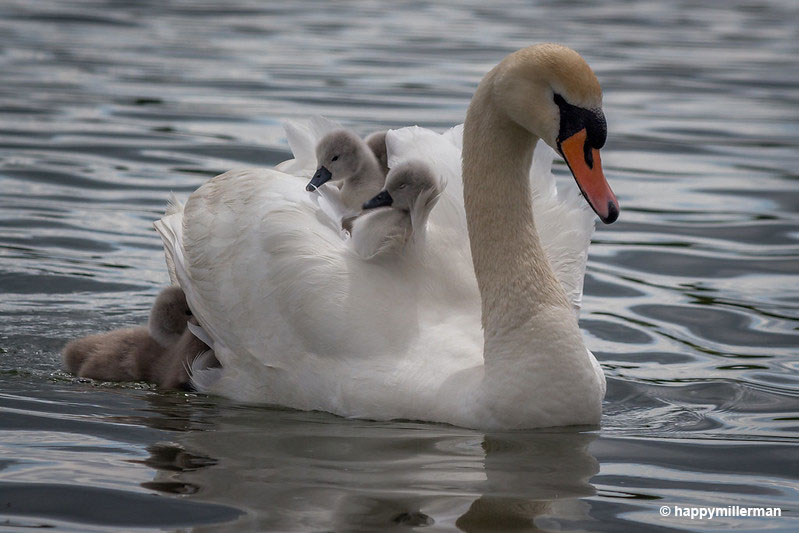
- To keep young cygnets safe, their parents can carry them on their backs while they swim around.
- Baby swans learn about dangers and threats by watching how their parents react to foxes and other predators. They vocalize, hiss, posture, and flap their wings.
- Swans mate for life but also flock with other swans for migration and the winter. I have enjoyed watching flocks of Tundra Swans migrate through the Niagara River area each spring and fall.
Frequently Asked Questions
Are swans loyal to their mates?
Yes, swans are mostly loyal to their mates. Some swans can cheat on their mates, but it doesn’t happen very often.
How do swans show affection to each other?
Swans show affection to each other by gently touching their heads and chests as they face each other. They can also bathe together.
What happens to a swan when its mate dies?
When its mate dies, male swans don’t look for another mate until the next breeding season. However, female swans usually find a new mate a few weeks after the death of their old mate.