

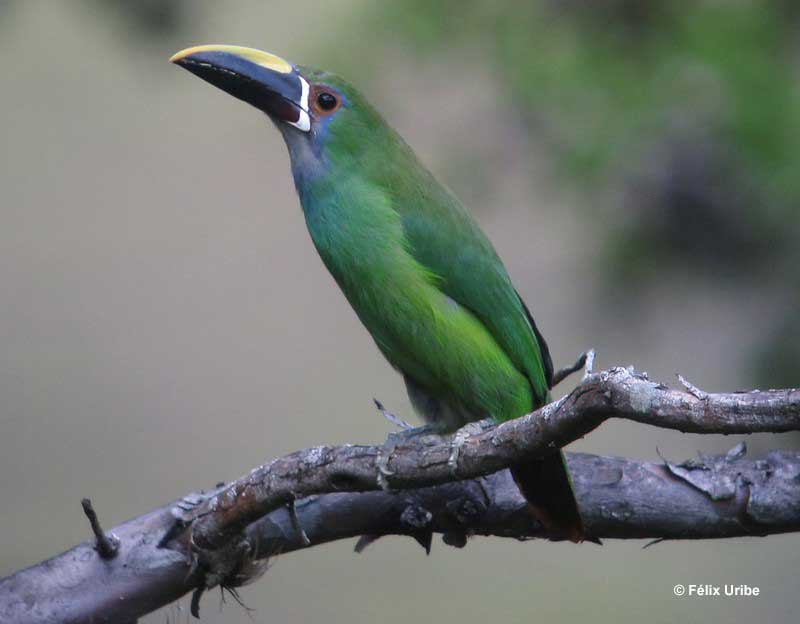
Why limit yourself to one continent, when you could discover them all? Birdzilla has been around for 25 years, and to mark the occasion, we put together some of our favorite memories and adventures.
Hope you enjoy!
- Davis Mountains
- Birdzilla Adventures – Yellowstone
- Birdzilla Adventures – Costa Rica
- Birdzilla Adventures – Sam’s Quick Hits
- Polar Bears of Churchill (Canada)
- Now on to the Polar Bears!
- In Congo and Nebraska with Jane Goodall
- In Nebraska With Jame Goodall
- Birding Cabin Lake, Oregon
- Birds of South Coast Botanic Garden
- Birdzilla Adventures – Grizzly Bears and Eagles
- Birdzilla Adventures – Antarctica
- Polar Bears
- Big Morongo Canyon Preserve
- Birds of Southeast Nevada’s High Desert
- Photo Hotspots – Costa Rica
- Bird Images from Ecuador – Mixed family groups including hummingbirds and tanagers
- Bird Photographs from Ecuador: Hummingbirds, trogons, antpittas, woodcreepers
- Bird Photographs from Ecuador: Hummingbirds, sparrow, thistletail and gnatcatcher
- Photographs from Ecuador: Insects, frogs and more
- Bird Photographs from the Amazon
- Glenn Bartley Photographing Birds in Peru
Davis Mountains
The Davis Mountains are located in a part of Texas known as the Trans-Pecos region of west Texas. They are located on the northern edge of the Chihuahuan Desert. Over 600 square miles of the Davis Mountains is above 5,000 ft. Despite the dry conditions the area includes extensive montane woodlands and abundant wildlife.
The Davis Mountains Preserve, owned by The Nature Conservance, contains most of the pine-oak forests. Nesting species in the Preserve include Flammulated Owl, Mexican Whip-poor-will, Dusky Flycatcher, and Grace’s Warbler. Over 100 species nest at elevations above 5,500 in the Davis Mountains.
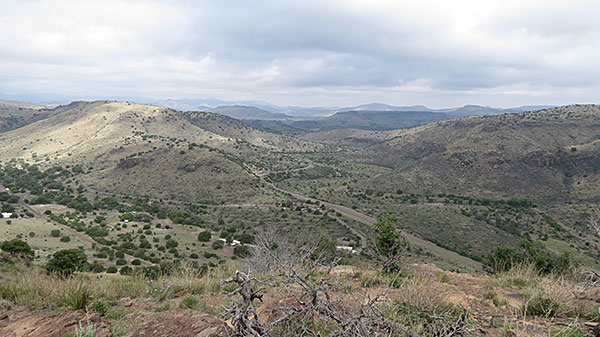
Typical desert mountain habitat. The higest point in the Davis Mountains reaches 8,378 feet above sea level.
The McDonald Observatory is located near the Davis Mountains State Park. Evening Star Parties are a popular attraction for those visiting the region.
Davis Mountains State Park
This trip was more of a family vacation with most of the birding time spent in the park itself and near the bird feeding stations. The state park itself is about 3 miles from the town of Fort Davis and the historic fort itself.
The park provides a range of hospitality options. The historic lodge provides large, clean rooms and a local restaurant. Camping sites are available for trailers, tent camping and more remote primitive camping.
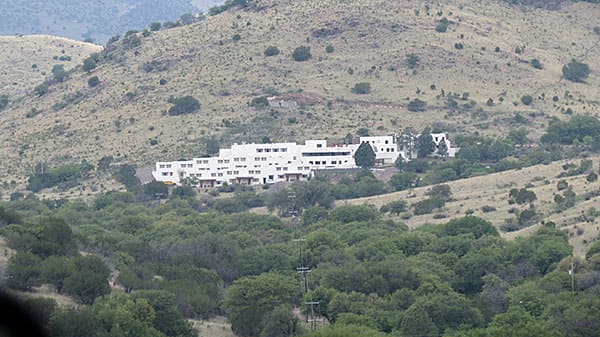
A distant view of the lodge.
The park maintains two bird feeder areas that are the best I have ever seen. The feeding stations make it easy for even novice birders to see and enjoy some colorful western species. Both provide indoor viewing through large windows as well as outside photo blind arrangements for photographers. For birders the park is best known as a place to see the spectacular Harlequin Quail, which unfortunately I missed on this trip. A pair of Elf Owls were nesting in the park, a life bird for me.
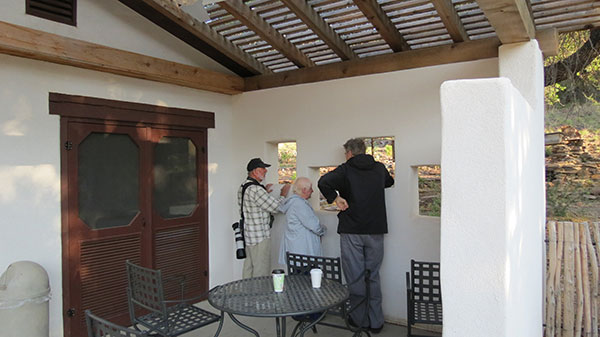
Bird lovers can step inside for excellent viewing of the bird feeding stations while photographers can line up outside.
Most of the following species were quite common at the feeder stations in early May.
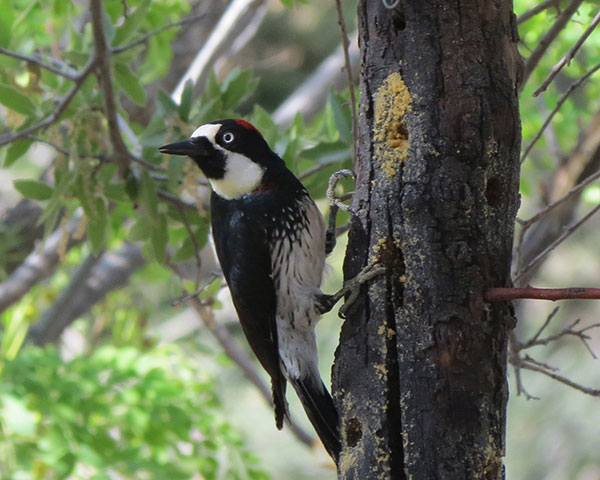
Acorn Woodpecker
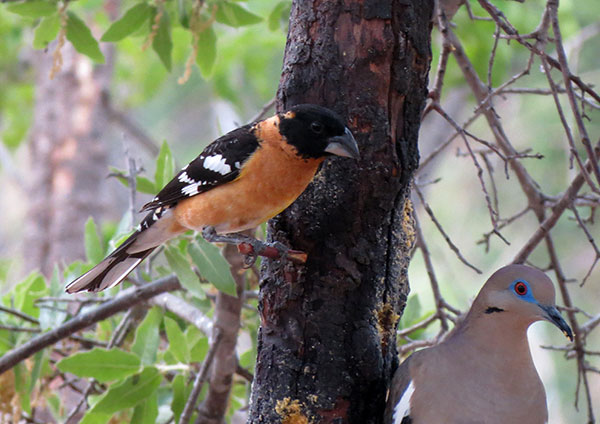
Black-headed Grosbeak and White-winged Dove
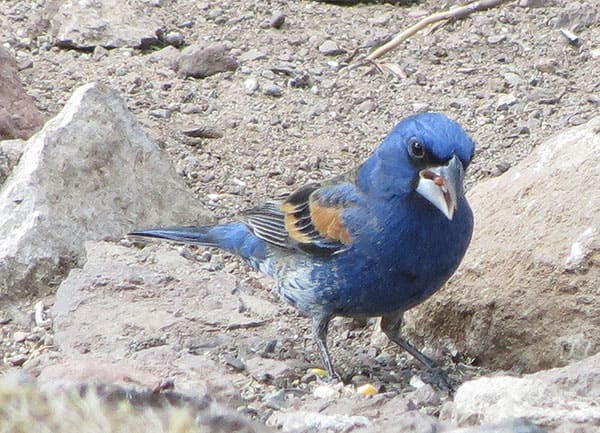
Blue Grosbeak
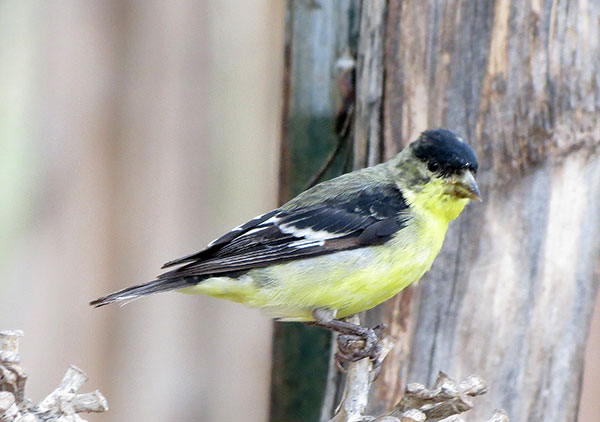
Lesser Goldfinch
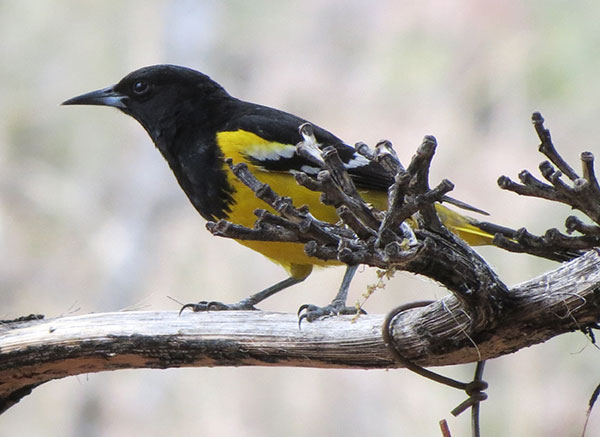
Scott’s Oriole
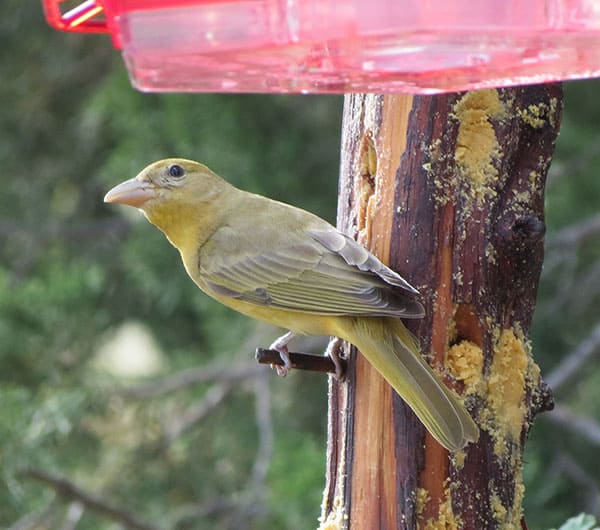
Female Summer Tanager
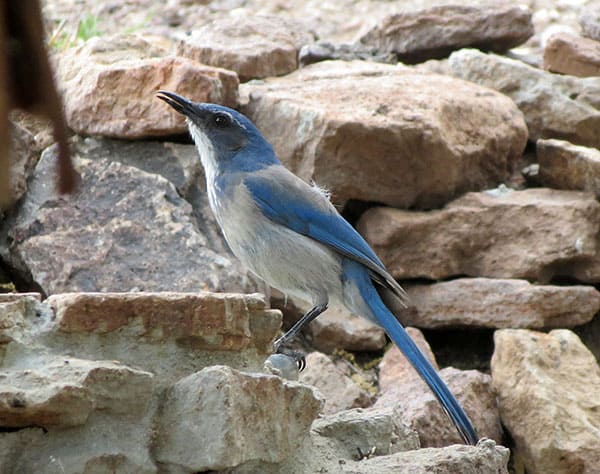
Western Scrub Jay
Wildlife is plentiful in the park and along a nearby nature observation loop.
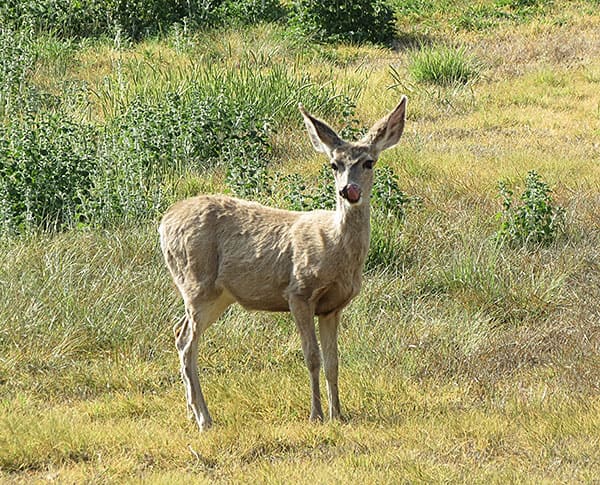
Mule Deer
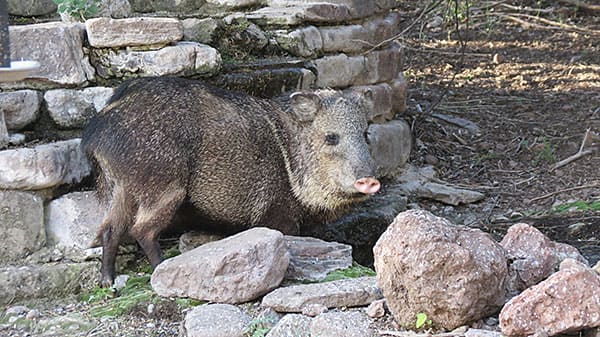
Collared Peccary
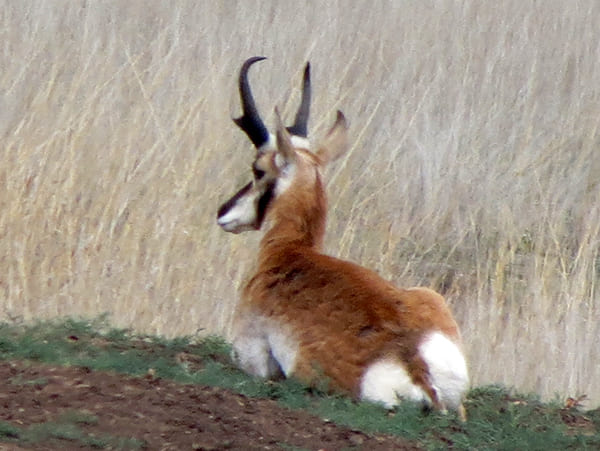
Pronghorn Antelope
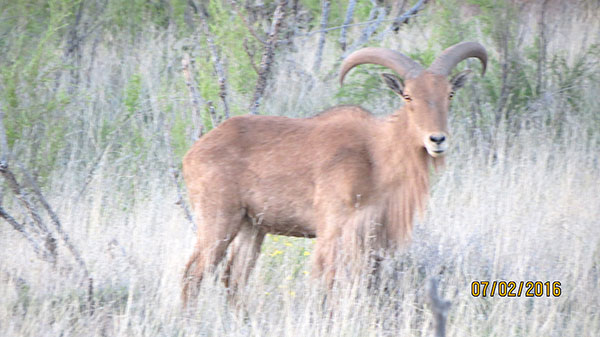
Aoudad/Barbary Sheep roam free through many parts of the Davis Mountains
Black-headed Grosbeak
Northern Cardinal and Ladder-backed Woodpecker
Pronghorn Antelope
Photographs and video © Sam Crowe
Birdzilla Adventures – Yellowstone
While the birds were not as visible as we would have liked, the scenery was magnificent.
This is a brief report on a quick trip to Yellowstone and the Grand Tetons. It was basically a 4-day scouting trip to identify good birding locations, places to stay and places to eat.
There are relatively few eBird Hotspots in the Yellowstone National Park, and all are listed under Yellowstone, Wyoming as of August of 2014.
I could not find any eBird hot spots for the Grand Teton National Park.
Yellowstone National Park
Over a 4-day period we drove all of the main roads in Yellowstone and the Grand Tetons plus many of the side roads. In general, we found the birding very slow. Little singing or calling, even in the early morning. It rained most of the final two days of the trip which might have hampered the activity.
The Common Raven was by far the most visible bird, and the only species we saw that would “hang around” humans in hope of a snack. Feeding animals, including birds, is not allowed in either park.
We stayed at the Lodge at Flag Ranch, 2 miles south of the south entrance of Yellowstone National Park. This location made it a long drive to the northern end of Yellowstone but placed us on the north end of Grand Teton National Park. The Lodge offers camp sites and cabins of various prices ranges. Top of the line cabins were about $300 a night. Lodging and service were excellent. The staff will help with planning day trips and the food service was excellent.
Birding around the lodge
The area around the lodge offered some birding opportunities.
The Snake River is a short walk from the camp grounds. Shrubby areas before the river yielded a nice collection of sparrows, including Song, Lincoln’s, Fox and White-crowned. A single Clark’s Nutcracker was a fly-by. Northern Flickers were seen several times. I thought I heard a Pileated Woodpecker call, rare in the park, but it could have been a flicker. Yellow and Wilson’s Warblers were in the area and singing. Gray Catbirds were also common. A single Steller’s Jay was seen at a distance. Barn and Bank Swallows were seen along the river. Also scared up a family of Mallards and a couple of juncos.
House Finch, House Sparrow (only one), Brewer’s Blackbird and Barn Swallows were seen around the lodge itself.
I road I really wanted to check out is called Grassy Lake Road and starts right at Flag Ranch. It leads back to a couple of small lakes and more isolated areas. It was a gravel road, however, and the rains had filled the pot holes to the point I was not comfortable taking the road a great distance. It might have excellent potential.
In Yellowstone
Two areas in Yellowstone are known for wildlife viewing, Hayden Valley, near the center of the park, and Lamar Valley near the north east of the park. Thunderstorms and rain limited birding on our one visit to the Lamar Valley. Hayden Valley always yielded Canada Goose, Mallard, Common Raven and Great Blue Heron, but not much else.
Chickadees were heard calling in several areas but many of the expected species were not seen.
In addition to driving and hiking we took 2 hour boat tips on Yellowstone Lake and Jackson Lake. Osprey and Bald Eagles were seen on both trips as well as small groups of goldeneyes (too distant to determine the species), a single Bufflehead and several groups of Eared Grebes. What appeared to be two California Gulls were seen at a distance.
Two Common Mergansers were spotted swimming in the Yellowstone River.
The only Black-billed Magpie we saw was in the town of Jackson, searching for food near one of the restaurants.
Birds in the Grand Tetons
Birding results were much the same in the Grand Tetons. The best birding location was at a spot called Dornans, very near the Park Headquarters, and about 5 minutes from the Jackson Airport. Food, fuel and gift shops are in the small area.
One end of the parking lot overlooked a small, brushy area which bordered the Snake River. We birded the area (mid-afternoon) for about an hour, with the following results:
- Bald Eagle
- Osprey
- Clark’s Nutcracker
- Northern Flicker
- Downy Woodpecker
- Black-capped Chickadee
- Mountain Chickadee
- Green-tailed Towhee
- Wilson’s Warbler
- Yellow Warbler
- Emp. Species
- Sandhill Cranes
- Cooper’s Hawk
- Hummingbird species – probably Broad-tailed
- Tree Swallow and probable Northern Rough-Winged and Violet-green Swallows.
Wrap Up
Overall we were very disappointed by both the number and diversity of species. Maybe it was the time of year or the two days of bad weather. Many species that we would have known by their song or call did not make their presence known. It was almost eerily quite in the mornings, when we expected to hear much more.
We did like the location of the Flag Ranch (Gateway Lodge) although it makes a long drive to the north eastern part of the park. Lodging inside the park, reservations required month’s in advance, would provide easier access to many areas of the park. Lodging just outside the western entrance of the park might also be preferred.
Rental Car Tip
If renting a car at the Jackson Airport, the rental car companies will offer to pay for the gas when you return the car, a common option. In most instances it will be better to fill up yourself before returning the car. Dornan’s, mentioned above, is only about 5 minutes north of the airport. Fill up there and watch for animals and birds along the way. We spotted Bald Eagle from the Jackson Airport Terminal building.
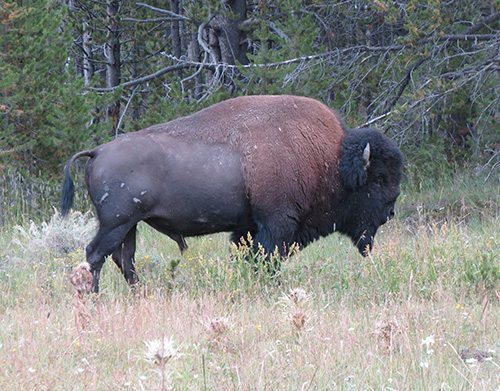
Bison were a fairly common site in the park.
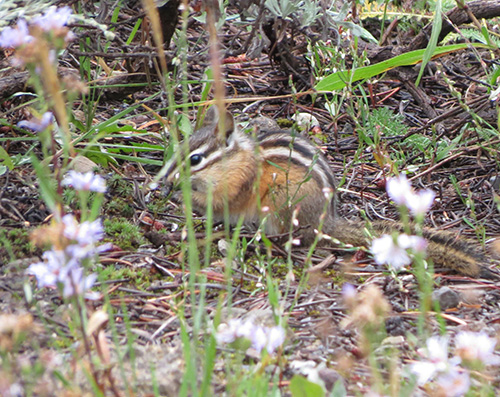
Smaller critters were common and had to learn to avoid the larger guys.
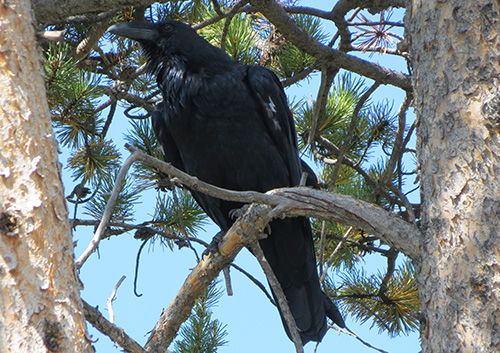
Common Ravens were the most obvious birds in the park.
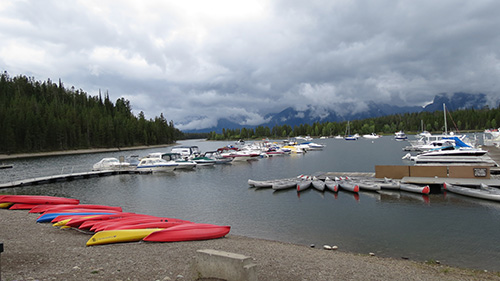
Marina at Lake Jackson
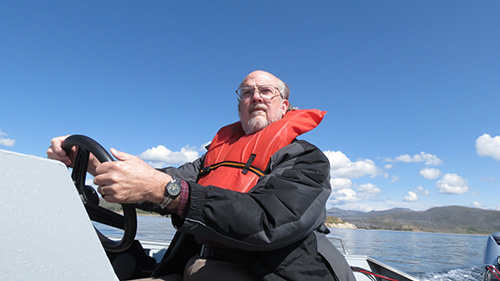
We spent 2 hours cruising both Yellowstone and Jackson Lakes. The birds were few. White Pelican, Osprey, Bald Eagle, Common Goldeneye, Eared Grebes, Bufflehead and probably California Gull were all we could come up with.
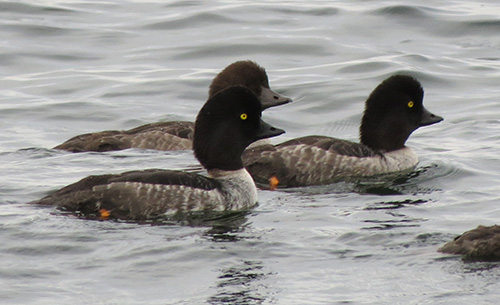
Common Goldeneyes
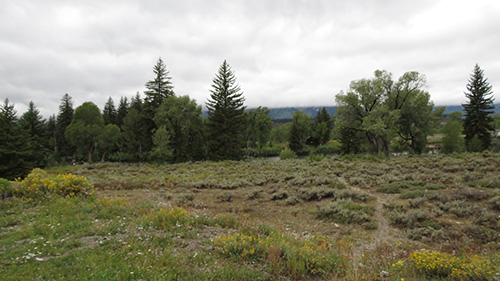
This is a view of the habitat from the Dorans parking lot. A pair of Green-tailed Towhees were chasing each other across the field. The Snake River is behind the tree line.
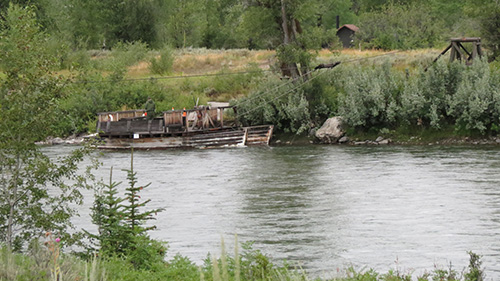
This is the historic ferry that first offered convenient access across the Snake River. It is hidden below the trees in the photograph above.
(All photos © Sam or Janebell Crowe)
Birdzilla Adventures – Costa Rica
Roughing it is not a requirement for birding in Costa Rica. In fact, if you like to vacation with other non-birding couples it is a great place to visit.
We rented a home about 1000 ft up on the side of a mountain, with a distant view of the ocean. It was a beautiful home with great sunsets. Chestnut-mandibled Toucans were commonly seen and heard. Parrots, Swallow-tailed Kites and even the occasional frigatebird could be seen flying back and forth across the lower level of the mountain.
The home was near Quepos, on the Pacific side of Costa Rica, and just a few hours drive from San Jose.
In additional to exploring the nearby national parks and enjoying great meals at restaurants with wonderful views, we tried both snorkeling and white-water rafting. The snorkeling was marginal. The rafting was a hit.
Birding in the area was only fair. Better knowledge of the bird songs of the area would have been beneficial.
All of the following photos and the video were taken by Sam Crowe with the Canon SX40 HS camera. The built in lens has a zoom range from 24-840 mm. Several of the images below were shot hand-held at the full 840 mm zoom, often at distances of over 100 yards.
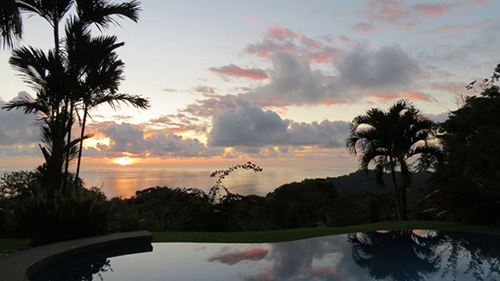
A typical sunset from the back porch.
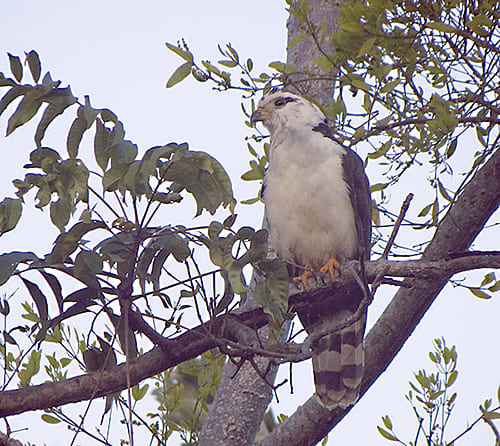
Black-and-White Hawk-Eagle?
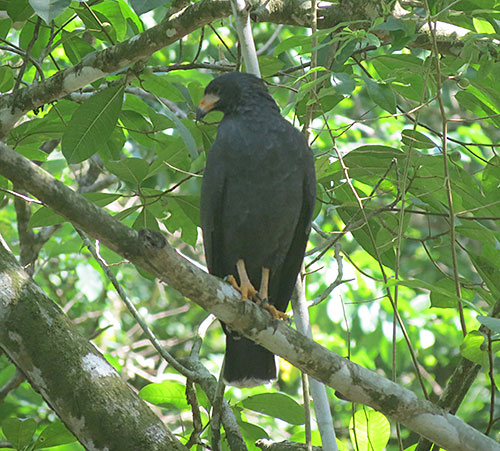
Common Black-Hawk
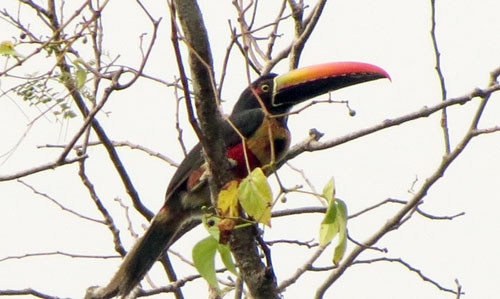
Firey-Billed Aracari
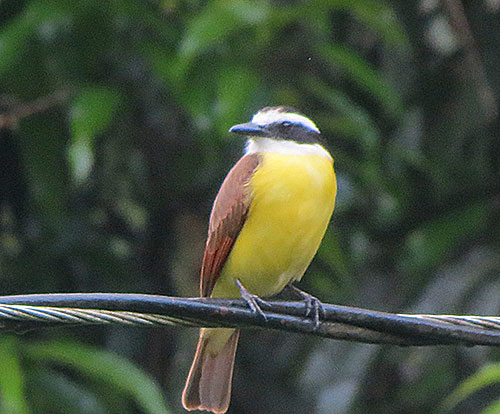
Great Kiskadee
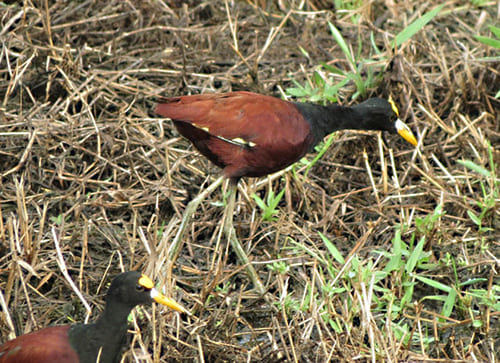
Northern Jacana
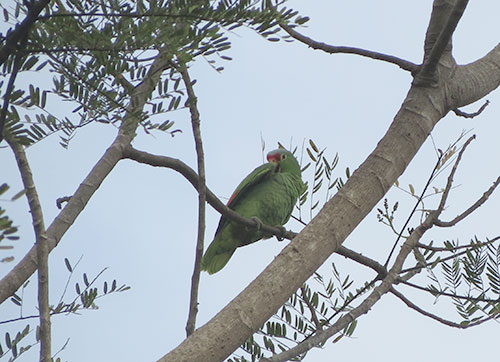
Red-lored Parrot
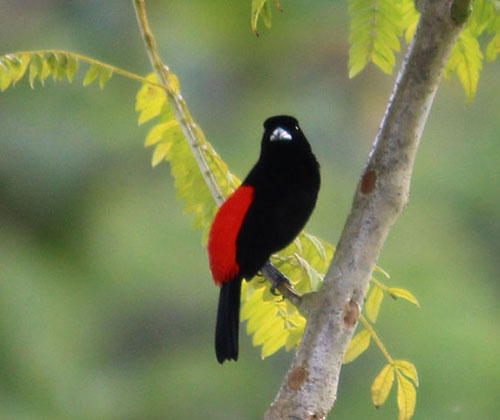
Crimson-rumped Tanager – very common
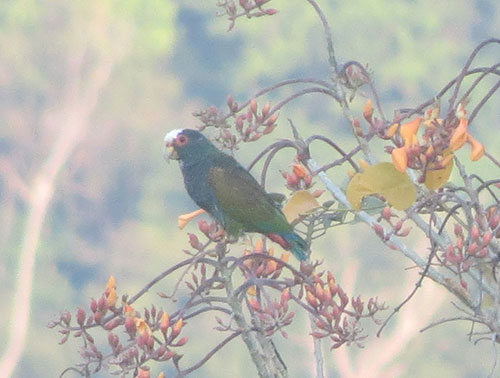
White-crowned Parrot – This bird was several hundred yards away.
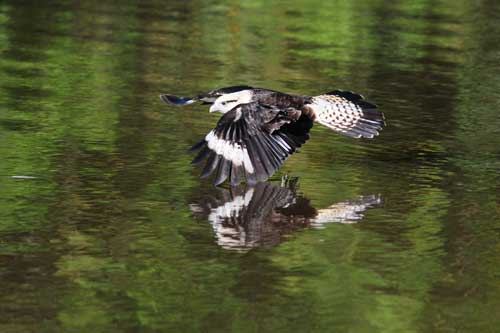
Yellow-headed Caracara
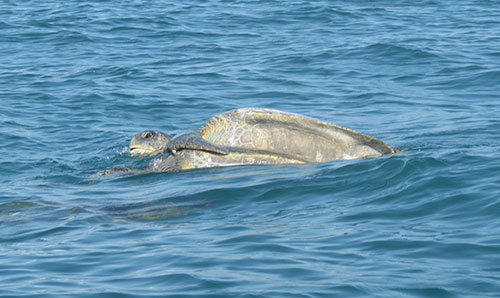
Black Sea Turtle
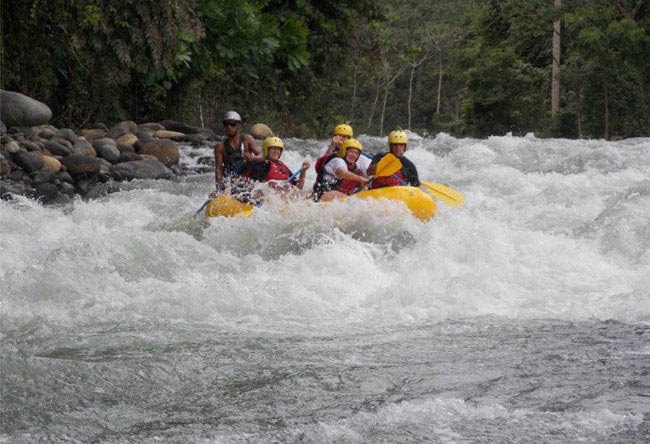
White-water rafting – one of my favorite things!
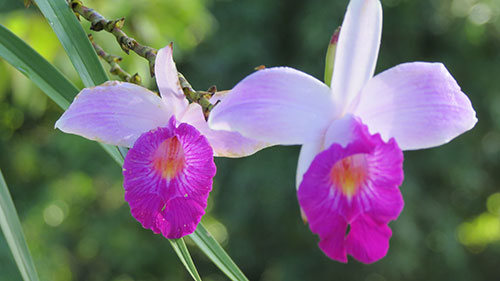
Orchids are common.
Birdzilla Adventures – Sam’s Quick Hits
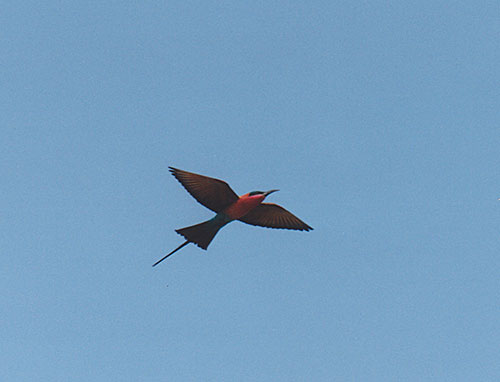
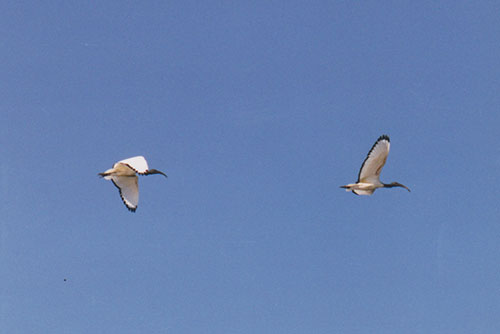
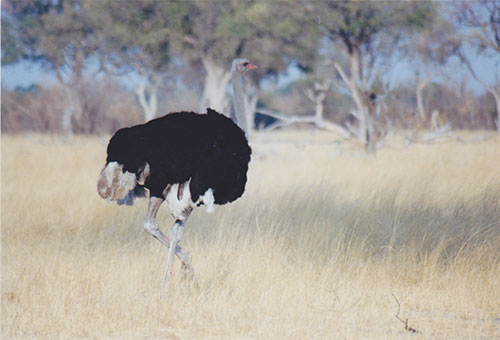
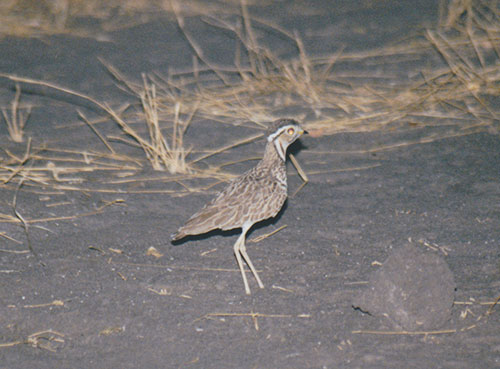
Early birding adventures occurred before the advent of digital photography. Here are a few quick samples. Lots of slides I’ll get through some day.
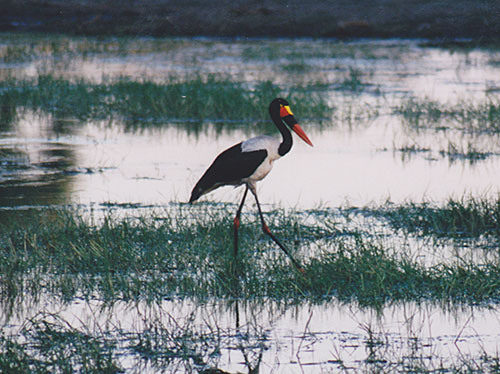
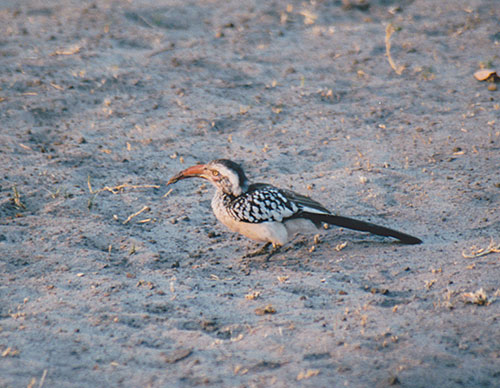
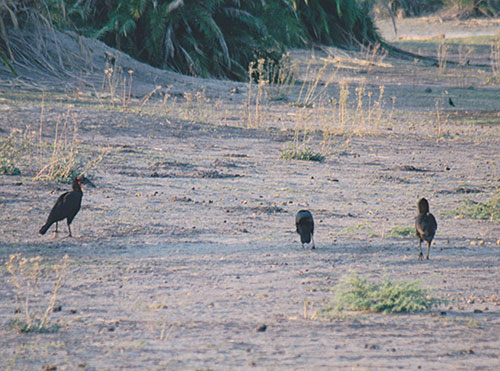
South Africa
My friend Bob Lanier teaches at Jesuit High School in Dallas. He has inspired several of his students to pursue a career related to birds. One of his students spent two years in South Africa studying the Bald Ibis. Bob and I had the opportunity to visit with his student for two weeks. We had a great time visiting Kruger National Park as well as the Mkuze Game Reserve, Mtunzini and several private ranches. Here are just a few photos from our trip.
Peru
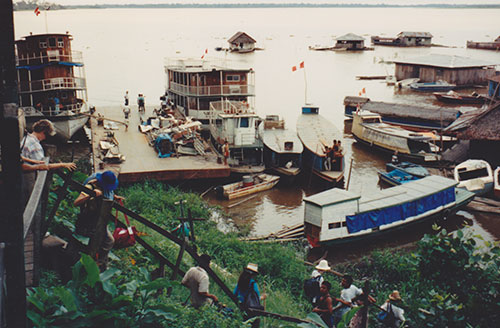
Bob also leads trips around the world for science teachers. I managed to tag along one of his two week trips to Peru and the Amazon River.
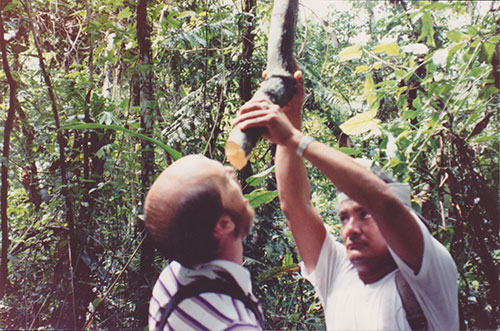
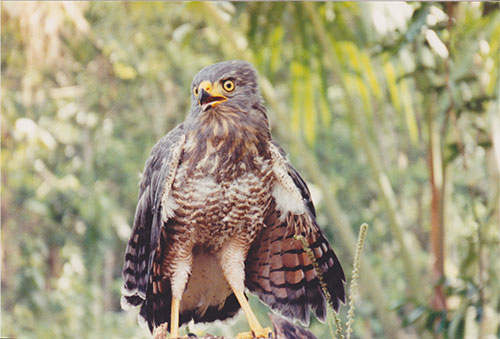
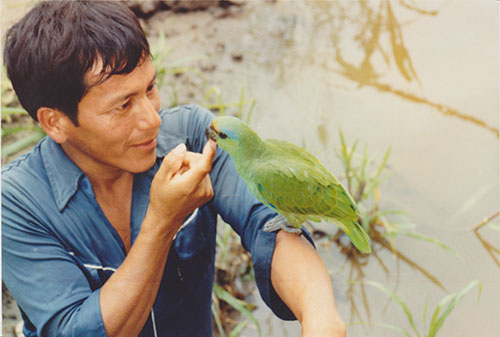
New Zealand
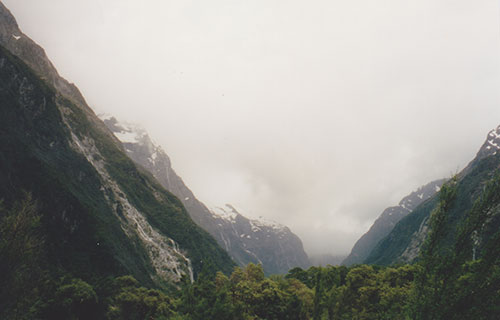
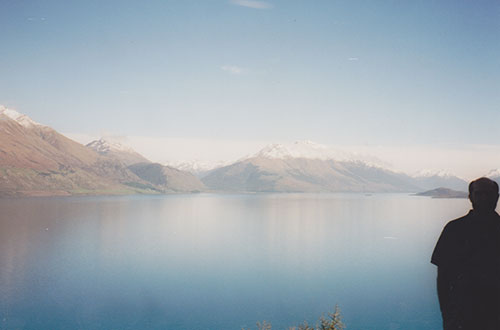
Hiking the Milford Trek was a great experince but there was little birding along the way. We did see numerous species in other parts of new Zealand including the Yellow-eyed Penguin and the pesky Kea.
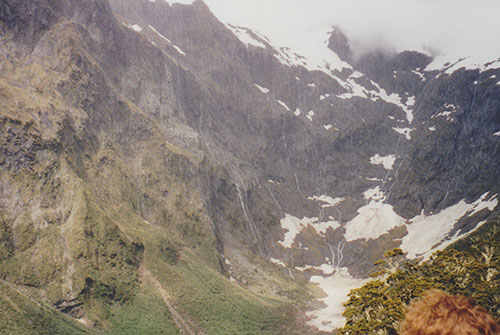
The Lower Canyons
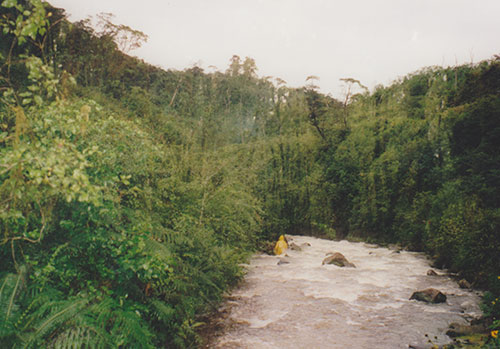
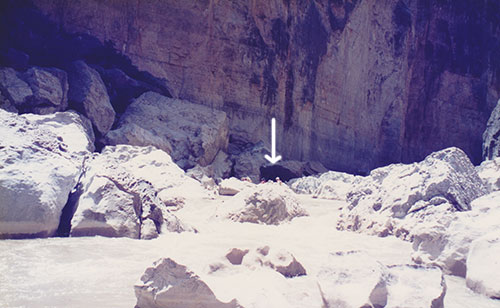
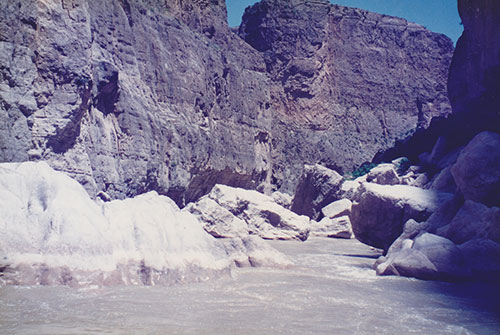
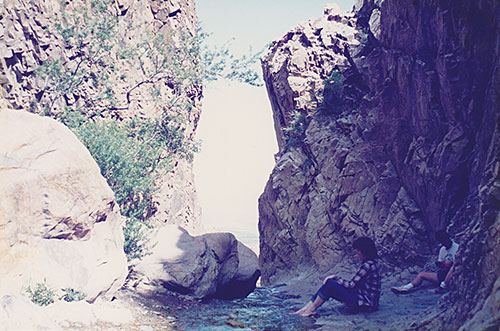
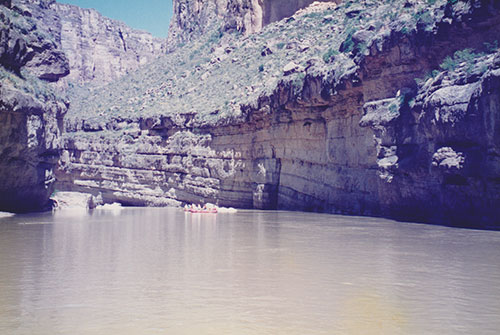
One of my all-time favorite trips was a one-week canoe trip on the Rio Grande River just below Big Bend National Park. We encountered Class 4 and Class 5 rapids along the way and warmed our aching arms and backs in hot springs on the Mexican side of the river. Well-known Texas Valley birder Jane Kittleman helped put the trip together. There were 5 canoes in the group, all from the Dallas Siera Club.
Polar Bears of Churchill (Canada)
Layered against the bitter subzero cold Birdzilla team members Mark and Becci Crowe scan the snow drifts in search of the world’s largest land predator, the Polar Bear. But they’ll find no males here. It’s winter and all but the pregnant females left the tundra months ago to roam the ice fields covering Hudson Bay in search of seals.
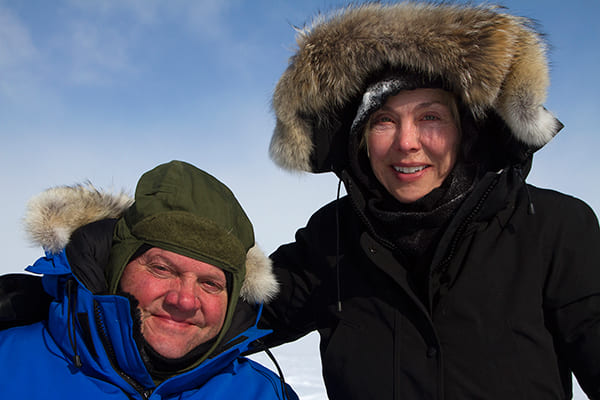
The pregnant females have stayed behind digging dens where they remain until their young cubs are strong enough to venture out. The Crowe’s are seeking these tiny cubs emerging from their dens as they explore the world for the first time. A unique opportunity that few will witness, Mark and Becci are returning to polar bear country for the 3rd time to share their findings exclusively with Birdzilla.
Physician, retired army colonel, photographer and videographer, Dr. Mark Crowe, is ready for whatever happens. Previously, Mark captured a cub exiting its den for the first time on camera. Last year, he and Becci were present when a polar bear mother and cub duo came too close to the city and ended up being sedated and transported by helicopter to a less populated region.
Becci Crowe, a notable wildlife artist and Signature Member of Artists for Conservation, is up for the challenge as well. An intrepid nature has seen her explore 45 countries on 6 continents including the Republic of Congo, Botswana, Zimbabwe, Namibia, Antarctica, The Amazon, China, India, Nepal, Thailand and Borneo.
“My art is a reflection of my fascination with nature and all things wild. I seek the wild around me whether it’s in my own back yard or around the world,” she said. Becci and Mark network with conservationists from all over the world and Becci’s art collectors include Dr. Jane Goodall. Her TEDx talk is called, “The Art of Living an Unimaginable Life.”
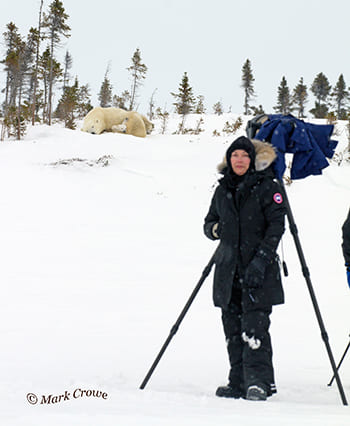
Becci with the polar bears.
The Crowe’s now find themselves on the ground in this highly restricted area inside Wapusk National Park in northern Manitoba. Polar Bear mums begin digging dens in November and emerge 3-4 months later with their young cubs. Finding them isn’t the only challenge.
Standing for hours photographing them in subzero temperatures can be difficult. Mark explains “With sub-zero temperatures, equipment has its own set of objections. A powerful auto focus lens, for example, can get very finicky in extreme temperatures.
Camera batteries have a short life in the bitter cold and must be kept warm. Managing delicate cameras with thick gloves filled with hand warmers offers its own set of obstacles but we’re ready!”
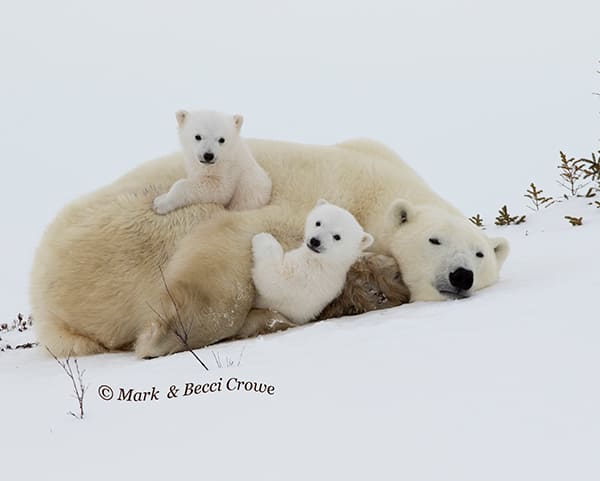
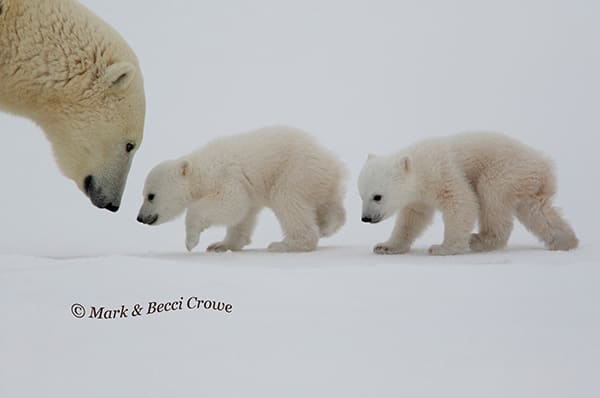
Sightings are always unpredictable and timing, the weather, and expert trackers determine the outcome. But it all came together for the Crowes. They saw twin cubs for the first time and had 4 exciting days observing, photographing, and videotaping the mum and cubs playing, nursing, exploring, and interacting together.
The mum was headed for Hudson Bay and the search was on each morning to find them. Female Polar Bears are in a fasting state while in the den and emerge hungry. They must safely guide their cubs to a frozen Hudson Bay, nursing them en route, to hunt for seals in an effort to regain the weight they’ve lost.
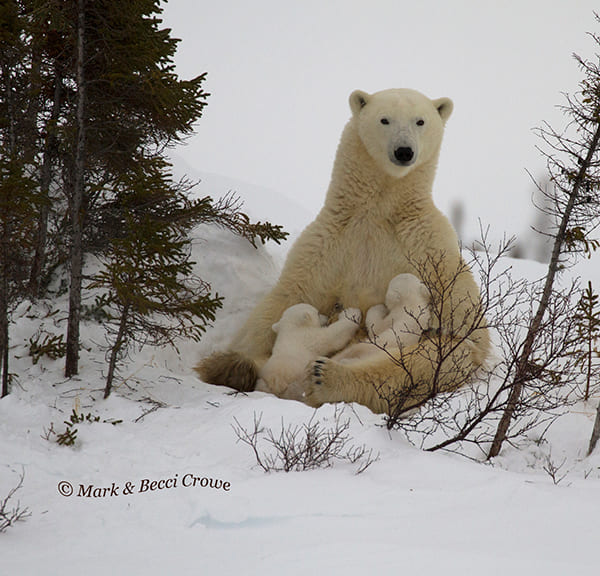
Dinner time!
Polar ice is crucial for survival of polar bears. The International Union for Conservation of Nature (IUCN) list the polar bear as a vulnerable species, citing sea ice losses from climate change as the single biggest threat to polar bear survival. Polar bears rely on the sea ice to hunt, travel, breed, and sometimes to den. The future of the twin cubs Mark and Becci photographed depend on it.
Birdzilla Staff Mark and Becci Crowe Enjoy Time with the Polar Bears of Churchill, Manitoba, Canada.
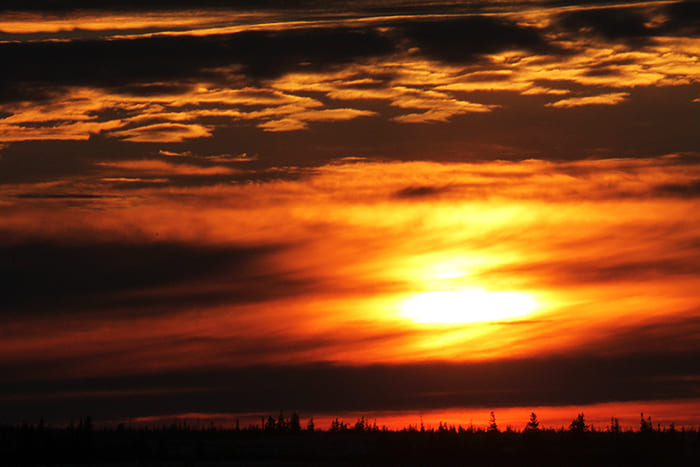
Winter nights are long but the sun does hang around.
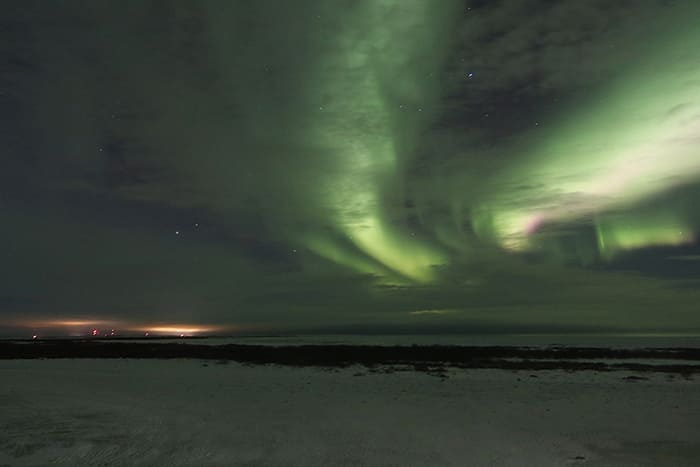
A bonus is a chance to see the Northern Lights.
Now on to the Polar Bears!
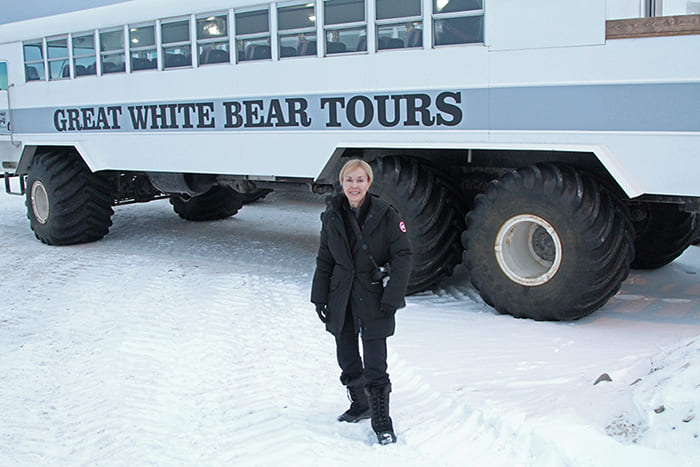
Special vehicles are available for reaching the bears over snow-covered ground.
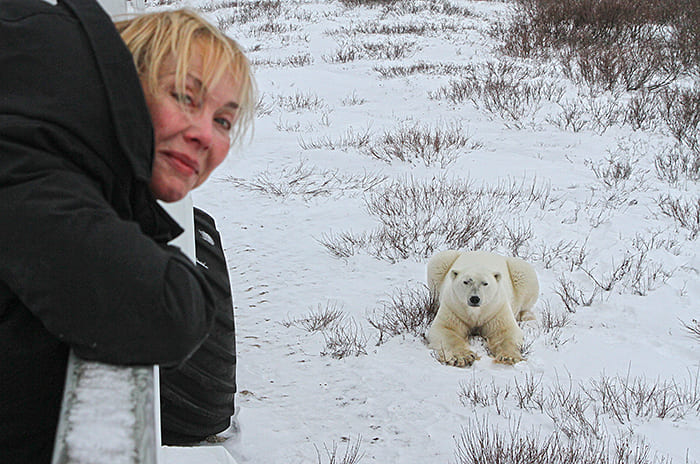
Becci taking a peak out the van.
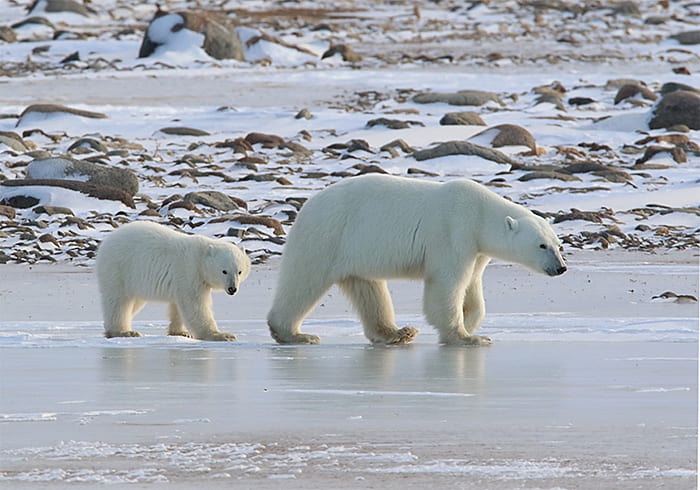
Polar Bears arriving, mom with offspring.
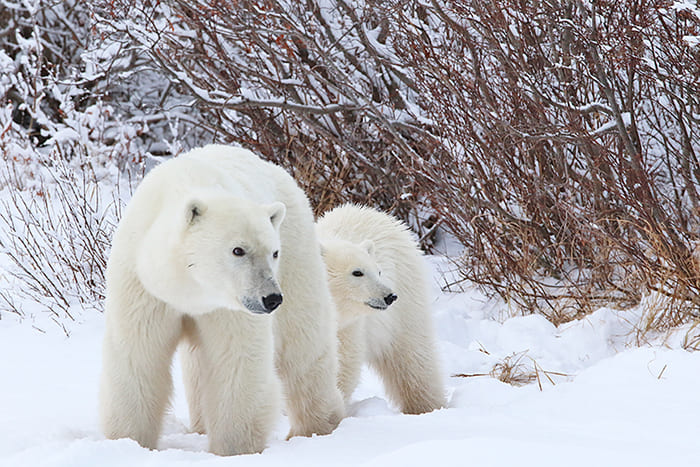
They seem so friendly.
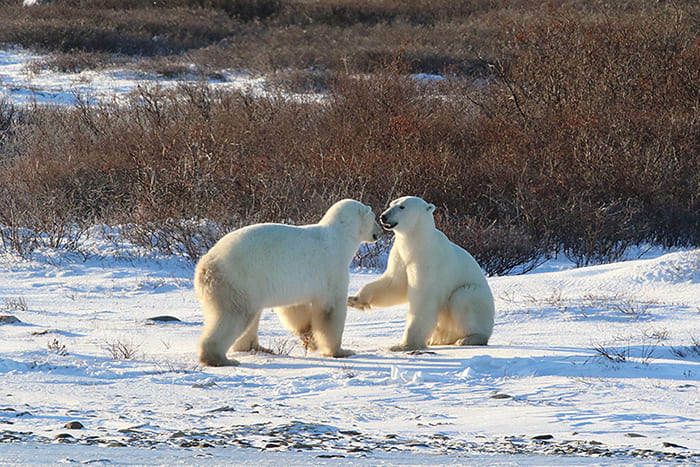
A friendly greeting?
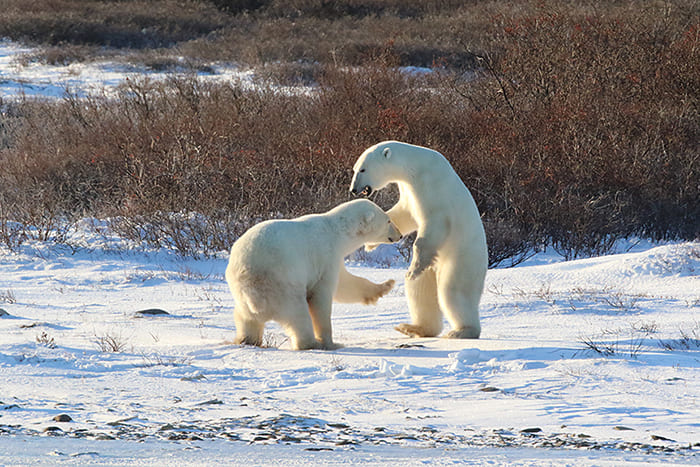
Still on good terms?
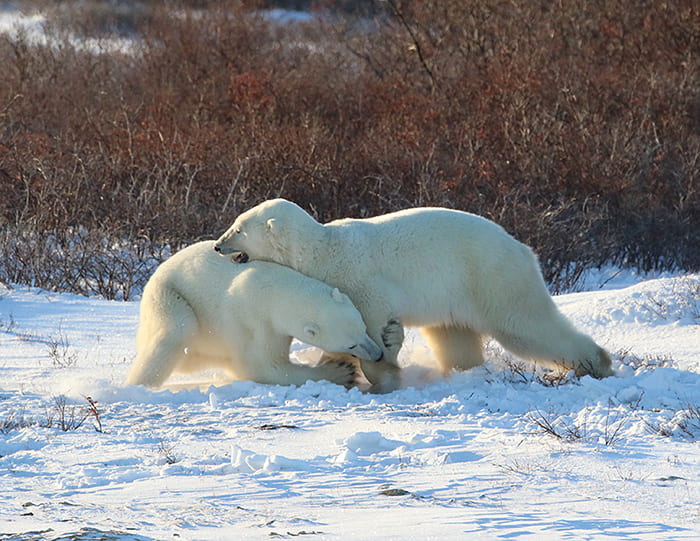
Just playing, we think.
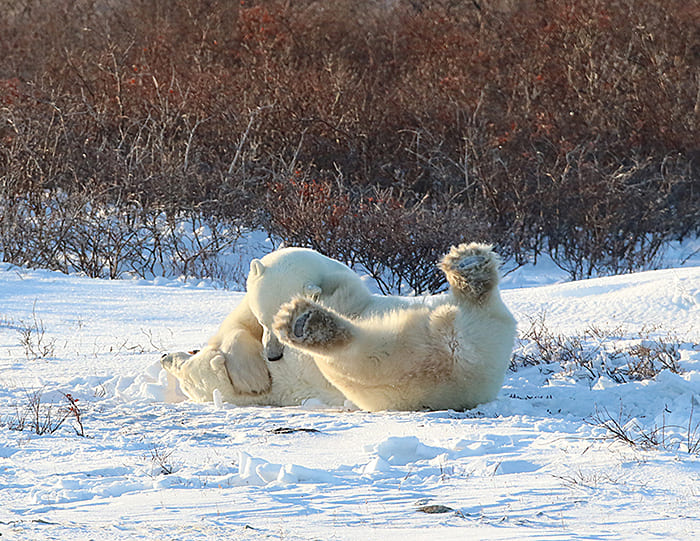
Bear love?
When the bears get too close to town and too nosey they sometimes escorted out of town.
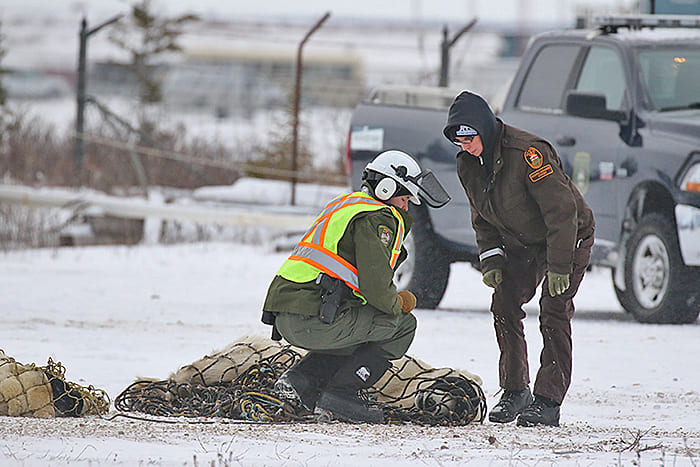
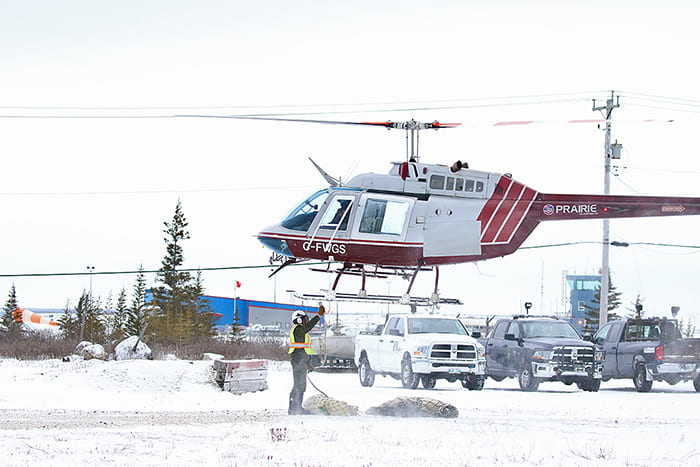
Ready?
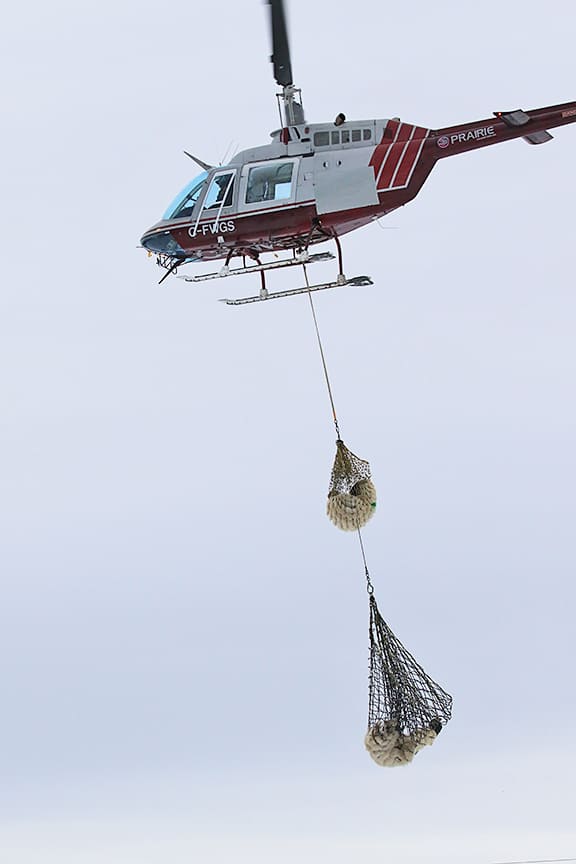
A free helicopter ride.
Other animals are often see in the area.
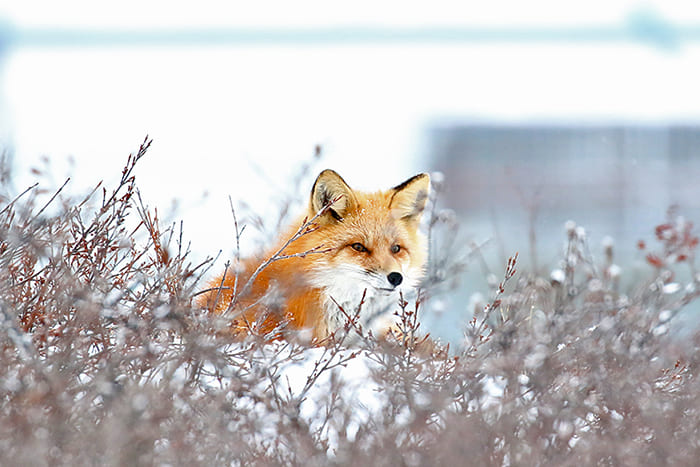
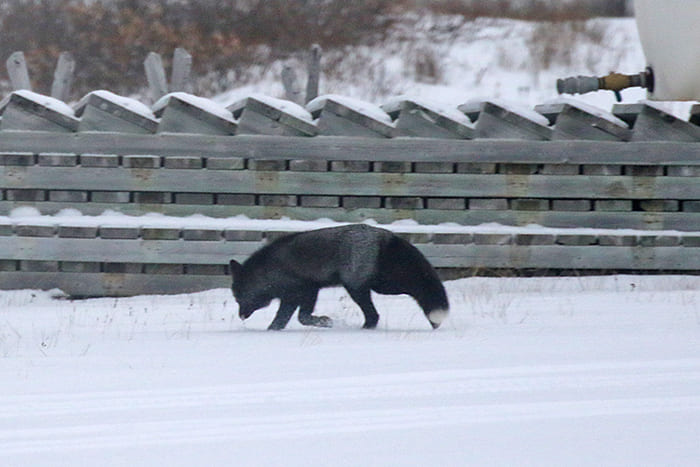
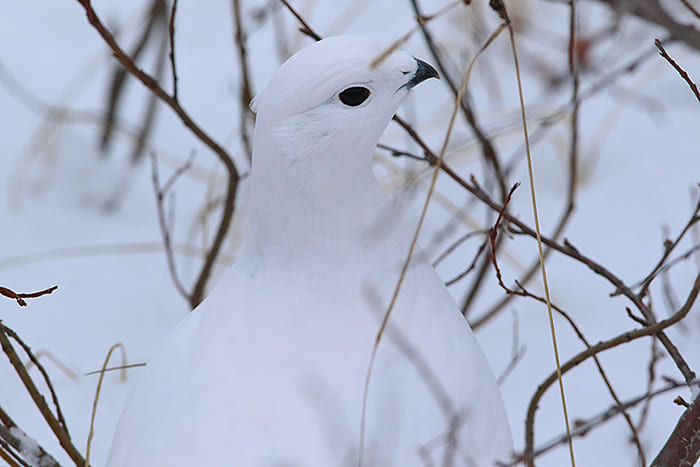
Female Rock and Willow Ptarmigans are very similar in the winter, not sure which this one is.
In Congo and Nebraska with Jane Goodall
Dr. Jane Goodall, the Republic of Congo, a place called Tchimpounga and orphan chimpanzees…
Mark and Becci Crowe just experienced it all. Observing wildlife in the wild and bearing witness to their challenges not only inspires their art & photography but enables them to tell the story of endangered animals… and just weeks ago they were with Dr. Jane Goodall in Tchimpounga to bear witness to the plight of chimpanzees and efforts to save them.
Tchimpounga Chimpanzee Rehabilitation Center in the Republic of Congo was established by Dr. Jane Goodall in 1992 and is currently the largest chimpanzee sanctuary in Africa. It was created to provide care for orphans of the bushmeat trade. In addition to habitat loss, the illegal commercial bushmeat trade is now one of the most serious threats to chimpanzees. It is the large-scale killing of chimpanzees for meat.
Poachers kill the adults for meat and then take the babies to sell on the black market as pets. There are over 160 orphans at Tchimpounga – victims of the bushmeat and exotic pet trade. Many of them have lived here for years and are now adults.
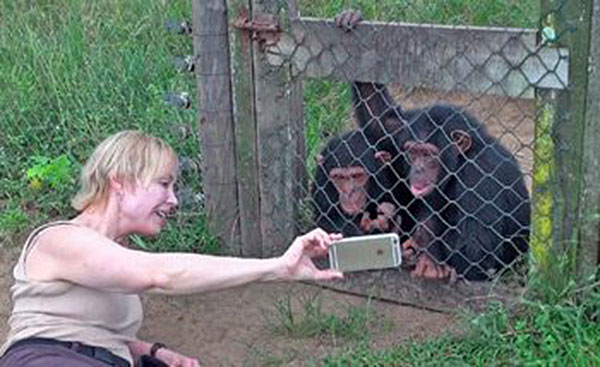
Even chimps like a selfie
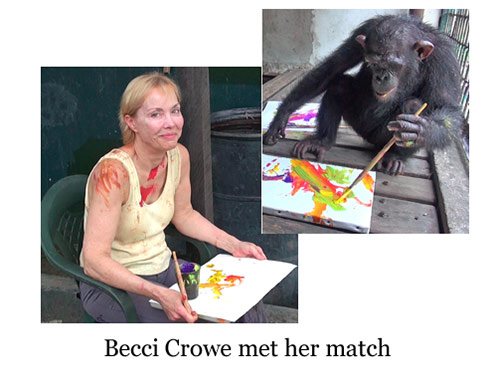
Staff artist Becci Crowe picking up a few tips from a local artist.
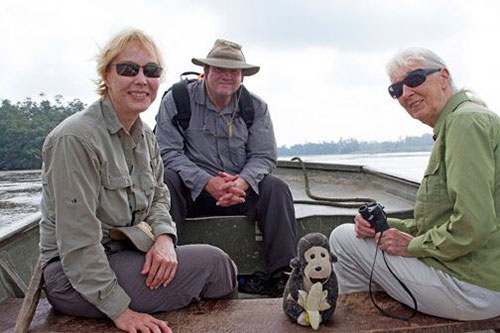
Mark and Becci Crowe with Dr. Jane Goodall
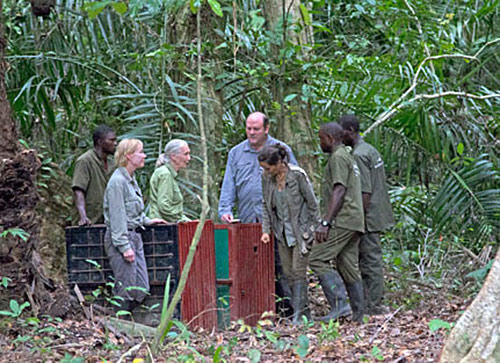
Preparing to release the chimpanzees in their new home.
Mark and Becci’s first chimpanzee sighting was driving into the Tchimpounga compound and seeing the younger orphans in their outdoor enclosure. Becci describes that first encounter, “As we stood facing the chimpanzees on the other side of the fence, they were as curious about us as we were about them. I’ve always heard how intelligent they are, but the depth and intensity of their gaze as they looked into my eyes took me by surprise.” Chimpanzees share 98% of our DNA.
The Crowe’s 10 days at Tchimpounga with Dr. Goodall were filled with 4-wheel driving through rough roads hacked through the jungle, camping in the forest, and boat trips up the Ngongo and Kouilou Rivers to see the mandrill and orphan chimpanzee release sites.
The Jane Goodall Institute is expanding Tchimpounga using three islands in the nearby Kouilou River. The islands offer the chimpanzees a much larger, natural setting where monitoring and care can still be provided. Mark and Becci had the unique opportunity to assist Dr. Goodall and the JGI staff in releasing 2 orphan chimpanzees onto one of these new island homes.
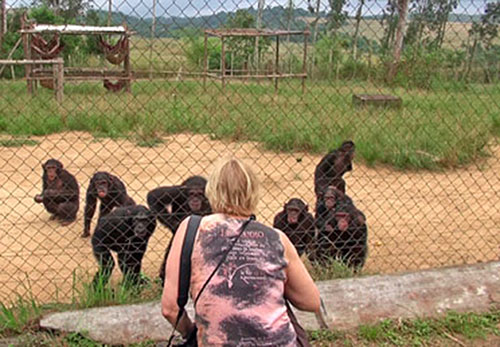
Young orphaned chimps.
Chimpanzees are listed as endangered by the IUCN. The United States has recognized wild chimpanzees as endangered under the Endangered Species Act (ESA) but has not provided the same level of protection for chimpanzees held captive in this country. This has enabled exploitation of chimpanzees in the US as pets, for entertainment, advertising and medical research—a situation that also has hampered efforts to promote protection of wild chimpanzees.
Now, as of June 2015, the U.S. Fish and Wildlife Service announced that all chimpanzees, whether captive or wild, will have the same endangered status and receive the same level of protection under the Endangered Species Act. This is a landmark milestone for chimpanzee conservation.
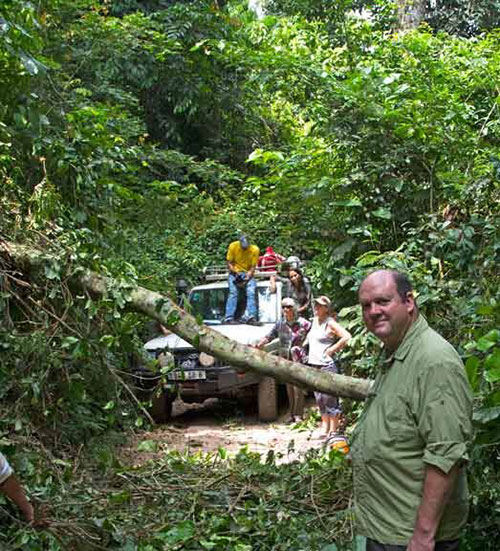
Staff Photographer Mark Crowe
Visit Becci’s web site for more on her art and conservation efforts.
In Nebraska With Jame Goodall
Birdzilla staff artist Becci Crowe and Mark Crowe joined Dr. Jane Goodall and a few others to experience the wonder of Sandhill Crane Migration on the Platte River in Nebraska.
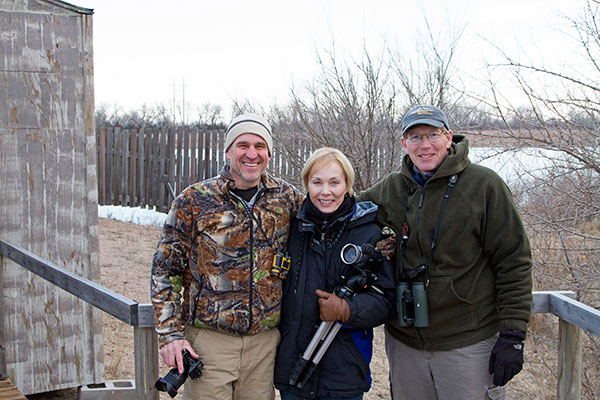
Becci Crowe with Bill Wallauer and Scott Weidensaul
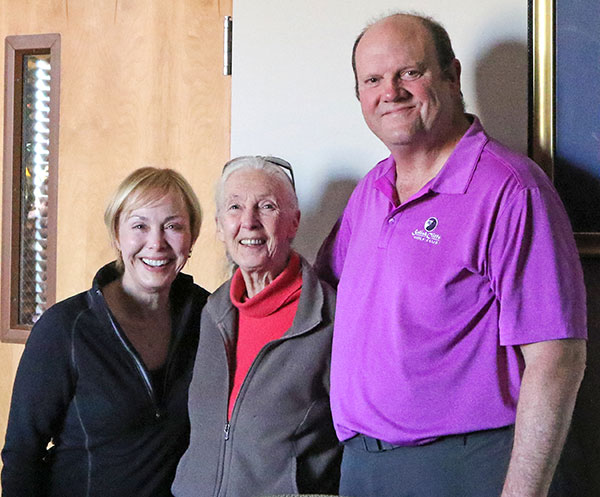
Becci and Mark Crowe with Dr. Goodall
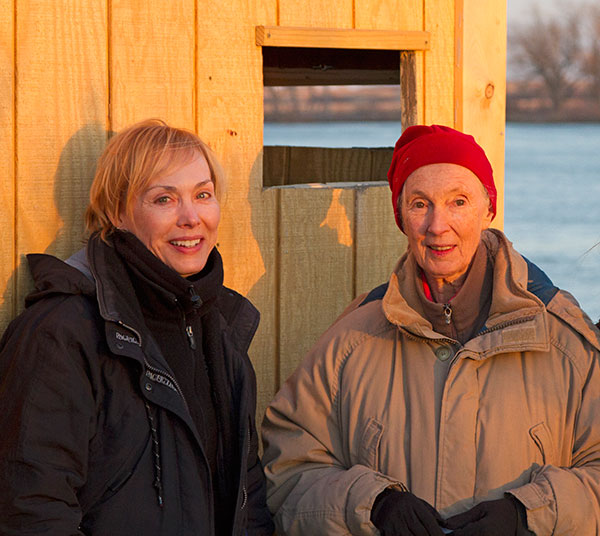
Becci Crowe and Dr. Jane Goodall at the photo blind. They look a little cold.
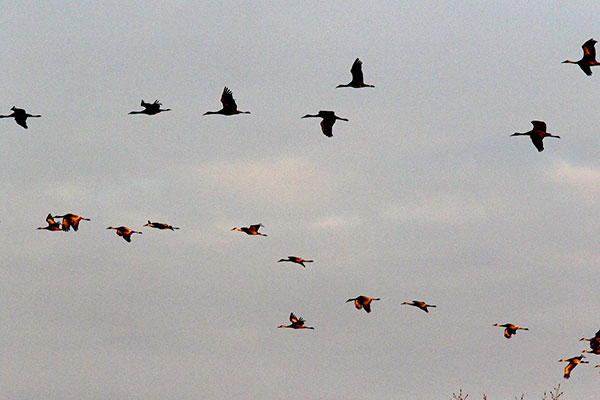
Sandhill Cranes arriving back in the evening.
Birding Cabin Lake, Oregon
It’s out in the dry pine forests of central Oregon, on the eastern side of the Cascade Range. You approach the area via dirt roads, some of them rough, all the time wondering either “What could possibly be out here?” or “Where IS it?” But Cabin Lake is famous among birding circles in the Northwest; it’s at a meeting place of the eastern Cascade pine forests and high desert eco-systems.
Of facilities, there’s just a primitive campground, and a historic Forest Service guard station. But it’s here that Deschutes National Forest built 2 permanent bird blinds (2 landscapes here) and to attract birds each blind has a small concrete basin called a “guzzler” that fills with water from a nearby storage tank. So you enter a blind, sit… and wait. You usually don’t have to wait too long before a bird perches on the sticks and rocks lining the sides, or takes a sip or even bathes — and all this is taking place about 10 to 15 feet in front of you.
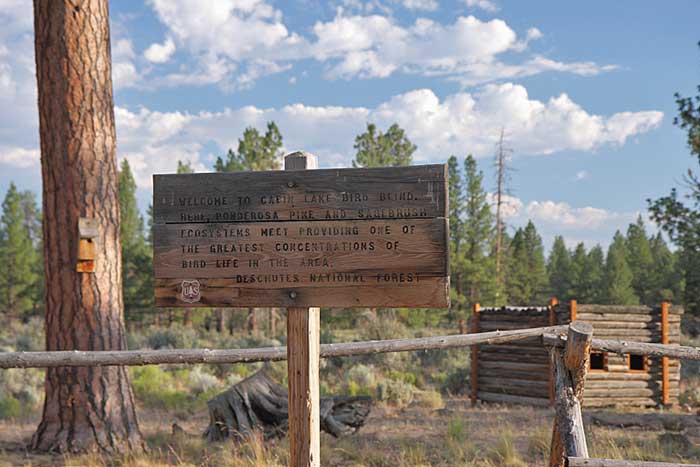
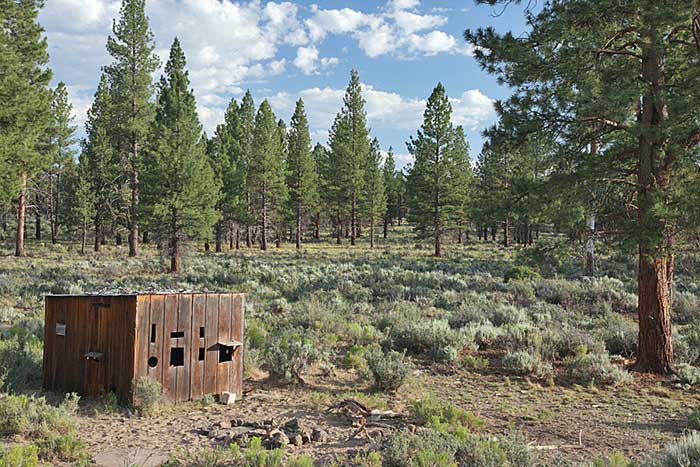
Here are some of the birds I saw when I was there in August — and these are the more common birds there. I also saw Cassin’s Finch, Northern Flicker and Clark’s Nutcracker — again, all “up close and personal”. Cabin Lake, with its blinds and water guzzlers, is remote so it’s a day’s destination — but it’s well worth the time and effort to get there. (All photographs © Steve Wolfe)
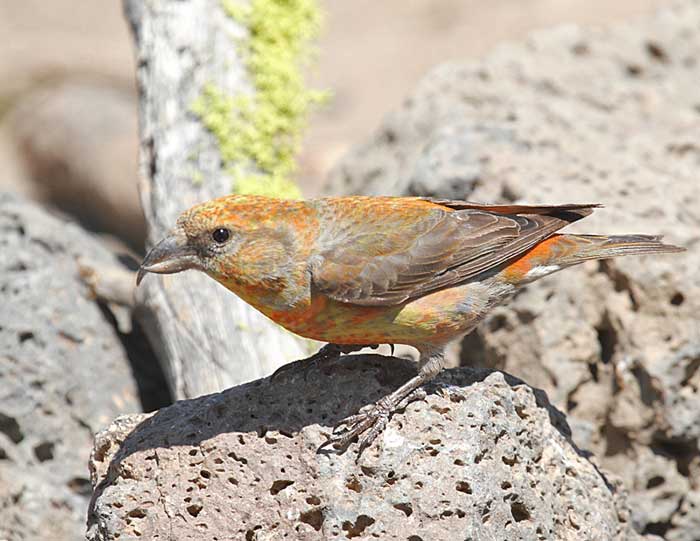
Red Crossbill
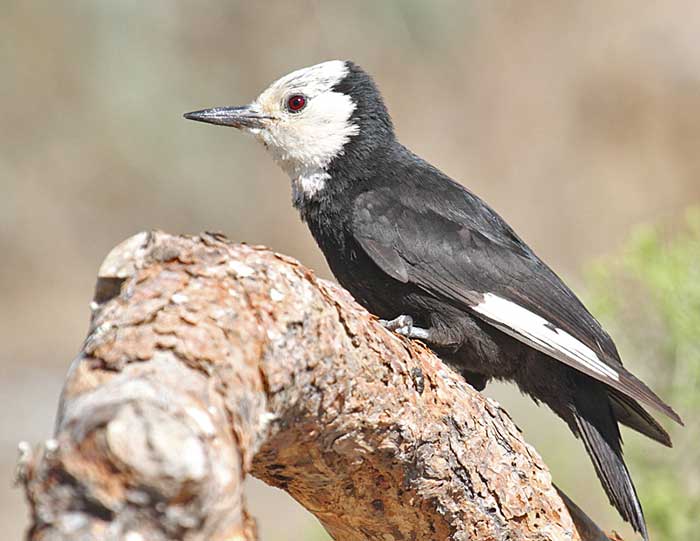
White-headed Woodpecker
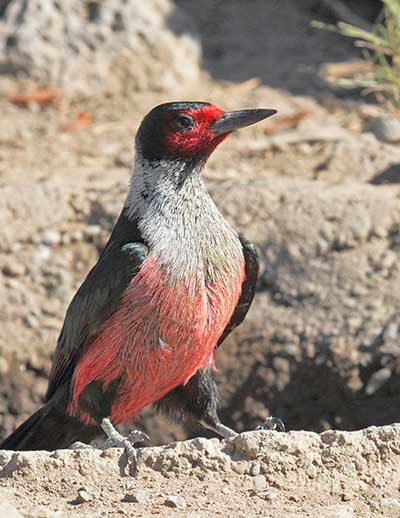
Lewis’s Woodpecker
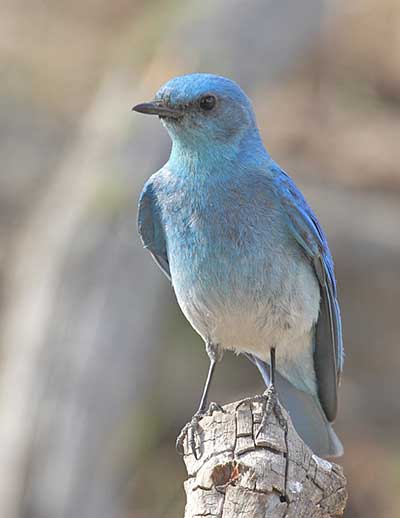
Mountain Bluebird
Enjoymore of Steve’s work: www.lonewolfephotos.com and www.facebook.com/lonewolfephotos.
Birds of South Coast Botanic Garden
(all photographs © Steve Wolfe)
Most botanic gardens aren’t known for the birds they attract; since their main focus is “botanic”, as in “botany”, people come to visit for the plants, trees and flowers to be found there. The South Coast Botanic Garden, on the Palos Verdes Peninsula in coastal Los Angeles, California, is no exception. Built on a former landfill, its 87 acres has more than 2,500 different species of plants, and the Garden plays host to weddings, plant sales, and other events one associates with botanic gardens. But as you can imagine, with its wealth of flora, especially when in bloom, it attracts its fair share of birds — and the occasional rarity can be found there, too.
The garden is especially known for its Anna’s and Allen’s hummingbirds, who feed on the nectar of Mexican bush sage (salvia leucantha), Purple Bottlebrush — or flowering cherry blossoms.
And both Anna’s and Allen’s are “residents” of the peninsula, so you’ll see them here year-round.
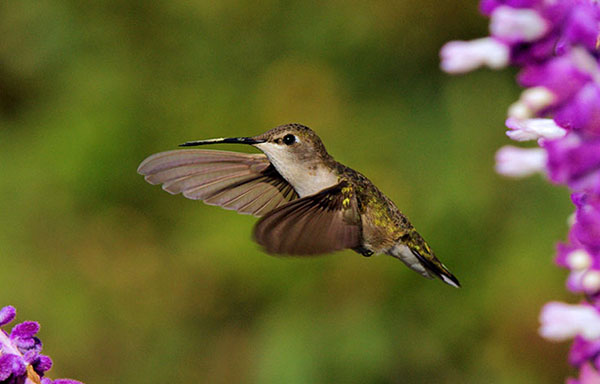
Female Anna’s Hummingbird
Other birds who live in the vicinity of the Garden are Red-shouldered Hawks of the “elegans” subspecies that are seen only in California, and their rising, whistled “kee-rah” calls can often be heard at the Garden.
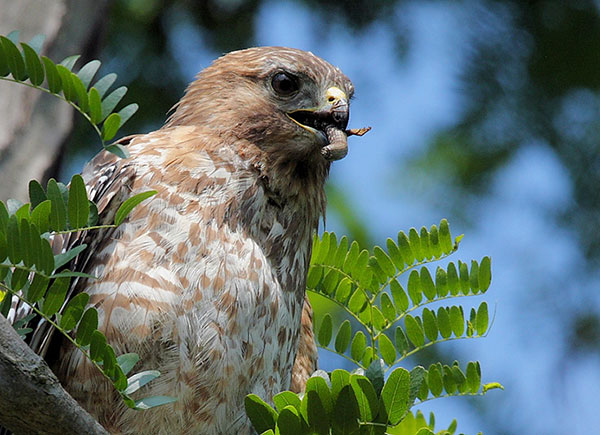
The wide variety of trees and plants, from cactus to pines, means that birds flying through the area might find a habitat that reminds them of “home”, and stay awhile; in late May 2007, I “discovered” a first-summer Mississippi Kite, only the 6th recorded sighting in Los Angeles County, that favored a “she-oak” tree, native to Australia but also found in the southeastern US, its usual range.
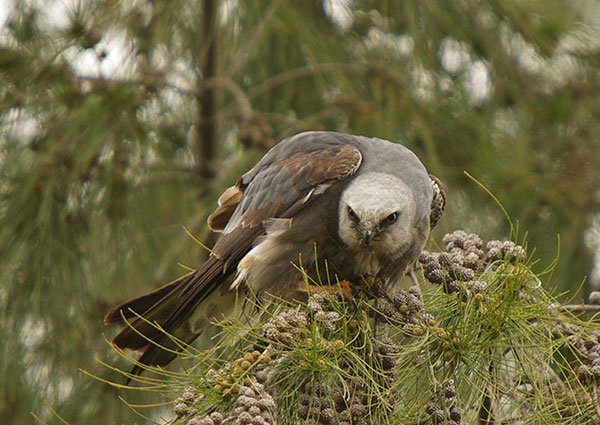
It entertained birders and visitors for 9 days, catching insects on-the-wing, until it disappeared as mysteriously as it had arrived.
A Thick-billed Kingbird, a bird usually seen only in SE Arizona, visited the Garden for a few months in winter 2008-2009, and was the only TBK listed on the nationwide Christmas Bird Count of 2008.
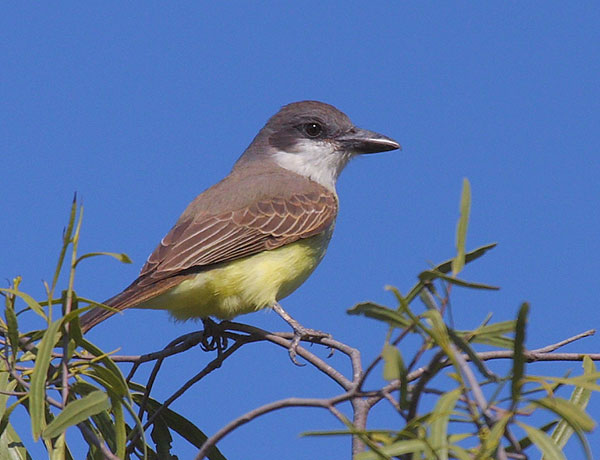
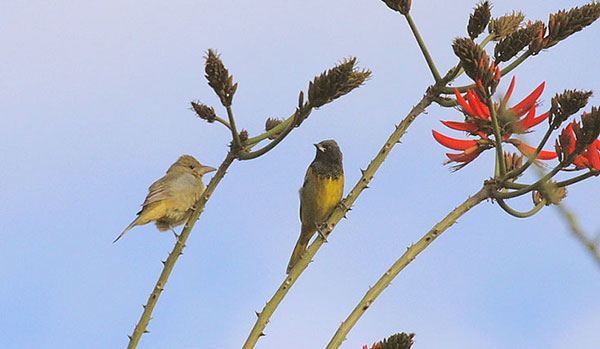
In 2012 a female Summer Tanager and a male Scott’s Oriole, both rarely seen in southern California, were spotted in the same tree at the Garden, next to one another.
Nesting birds have been thought to be discouraged by the release of gases from the landfill underneath, but I’ve seen Downy Woodpeckers nesting in the stalk of a “century plant”, an Allen’s hummingbird nest in a Bottlebrush tree, and Common Yellowthroats picking up insects for nestlings. On any given day at the Garden you can see birds from the resident Northern Mockingbirds and Black Phoebes to Red-breasted Nuthatches in the pines at Hidden Meadow. So the South Coast Botanic Garden in Palos Verdes is definitely worth your time to check out for the possible birds to be found there. The Botanic Garden — it’s not just for plants anymore.
Birdzilla Adventures – Grizzly Bears and Eagles
Becci and Mark are at it again, this time in search of Grizzly Bears and friends in Canada and Alaska.
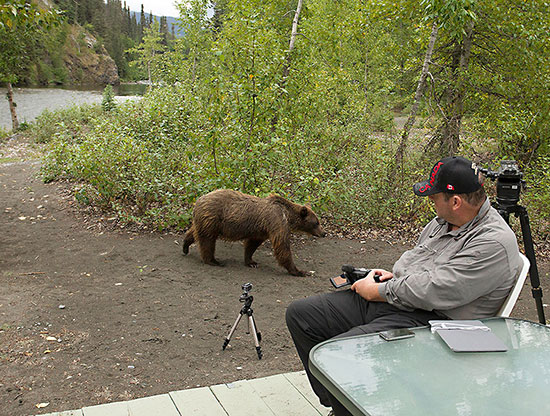
Mark Crowe photographing near-by grizzly bear.
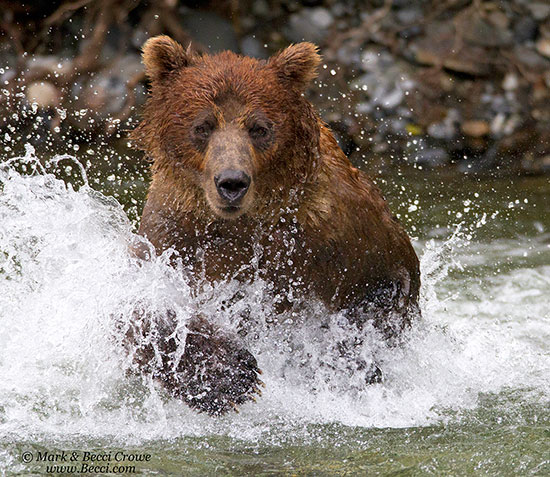
Public service announcement: How do you stop a charging grizzly bear?
A – Take away his credit card.
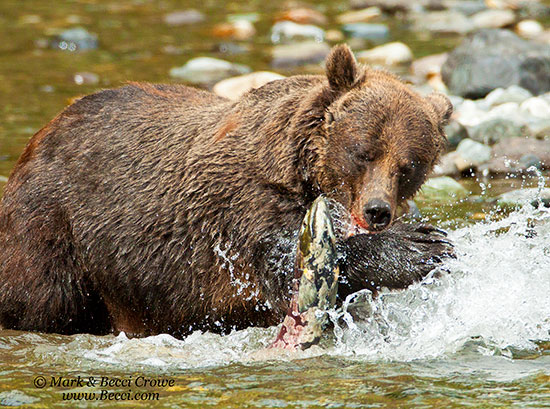
This is what the bears were after.
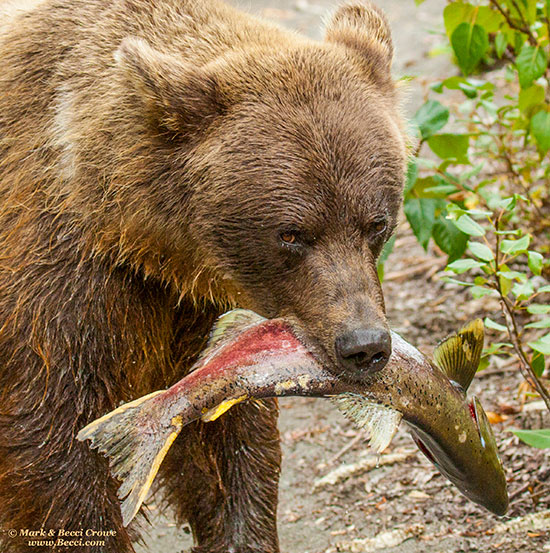
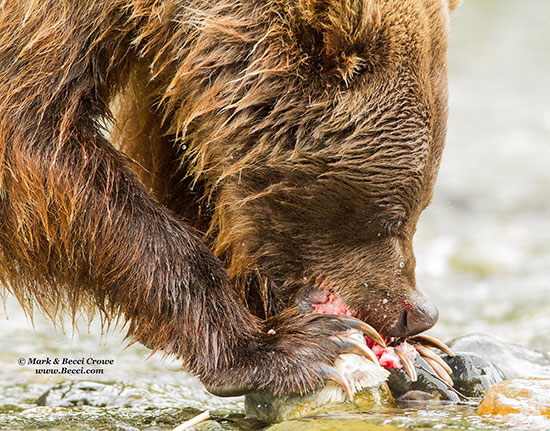
The bears had two approaches to dining on salmon. This one with a straight-on, get-er-done approach.
Young Bald Eagles, sans their white head and tail, were participating in the salmon feast. It can take Bald Eagles 4-5 years before reaching full adult plumage.
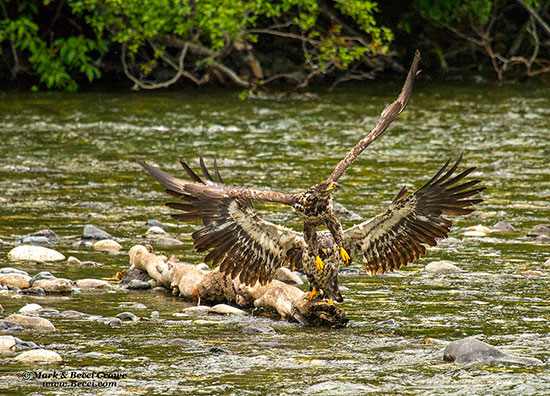
Larger versions of the above images are on this page. Images are copyright Becci and Mark Crowe.
Visit Becci’s own web site to learn about her other trips, art and conservation efforts.
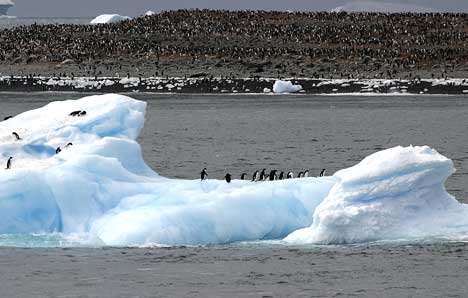
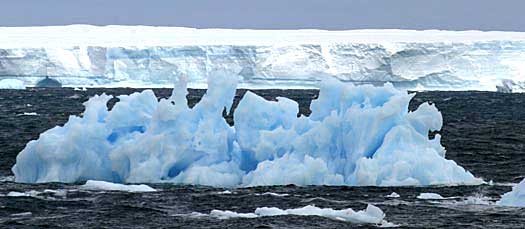
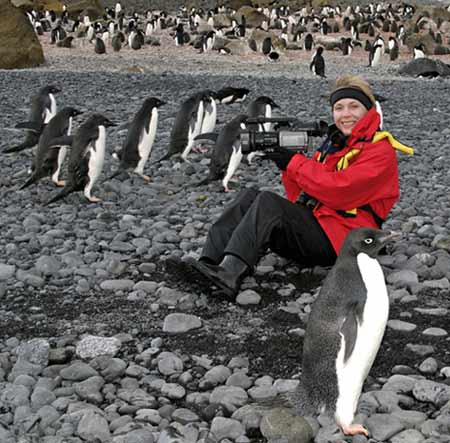
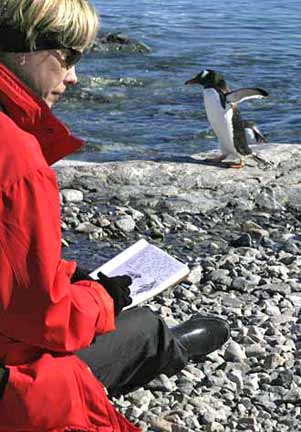
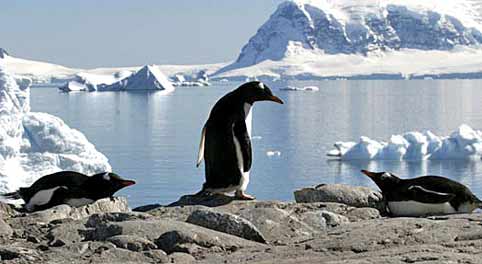
Birdzilla Adventures – Antarctica
With Mark and Becci Crowe
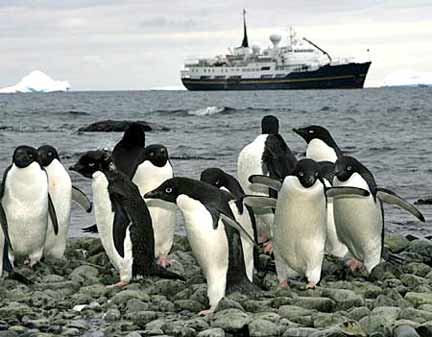
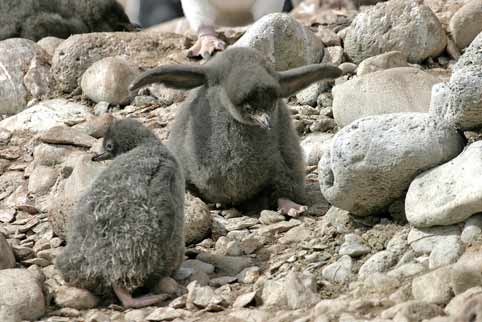
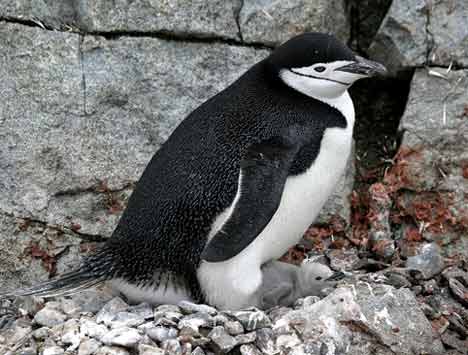
Polar Bears
Mark and Becci took a turn from their trips to Africa to a much colder climate – winter in Canada. They were on the search for a mother and cub exiting their den for the first time. They had a long wait in chilling conditions, but eventually met with success.
This slide show will give you an idea of what they went through. We’ll be posting additional information at a later date
Big Morongo Canyon Preserve
Big Morongo Preserve looking west to snow-capped San Bernardino Mountains
Big Morongo Canyon Preserve in southern California’s high desert is a unique place — where mountains and desert meet to create an oasis in an otherwise dry land. Here at Big Morongo, snowmelt from the nearby San Bernardino Mountains encounters impermeable rock that acts as a dam, which creates surface water in the form of perennial springs. The high water table thus created at Big Morongo Canyon means cottonwoods and other tall trees flourish despite the desert climate, and in addition the Mojave riparian forest with its lush growth is widely considered to be some of the best in California.
It’s for these reasons, along with Big Morongo Canyon being at the intersection of the Mojave and Sonoran desert, that wildlife flocks to the area — and the birding can be some of the best in southern California, particularly during spring migration. 254 species have been recorded here and in Covington Park across from the Preserve, and nesting birds include Vermilion Flycatcher, Summer Tanager and Brown-crested Flycatcher. I’ve been there in May and have seen Summer Tanagers, who are regular summer visitors –
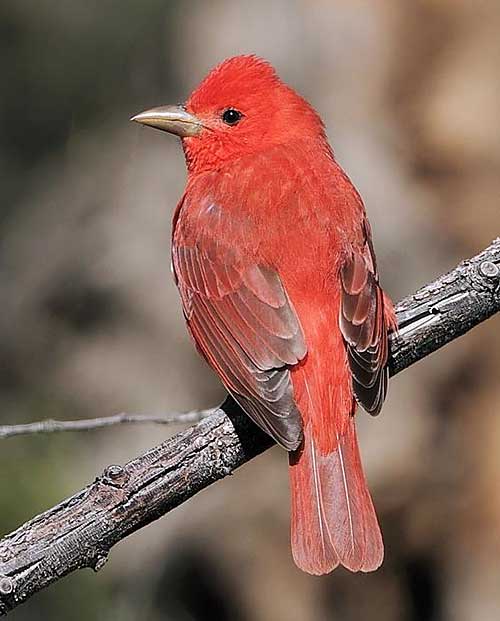
Summer Tanager
along with California Thrashers, who are year-round residents at the Preserve.
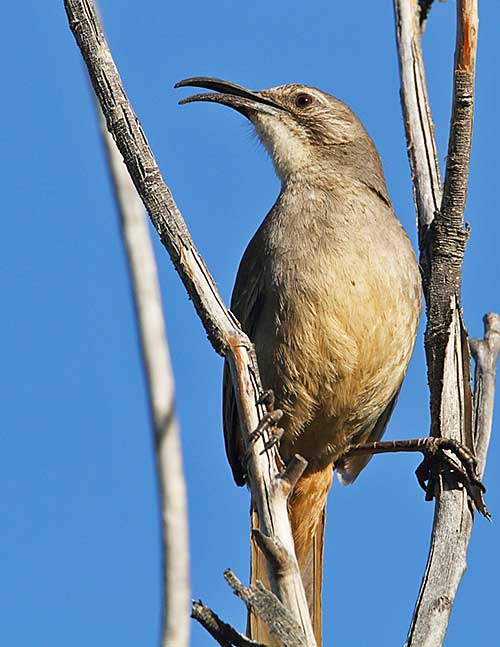
California Thrasher
Vermilion Flycatchers arrive in spring and stay for the summer, giving the Preserve an added splash of color —
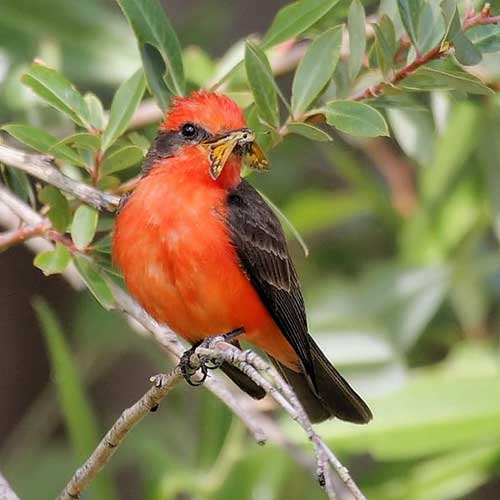
Vermilion Flycatcher
and the occasional presence of Mountain Chickadees reminds one that the mountains are nearby.
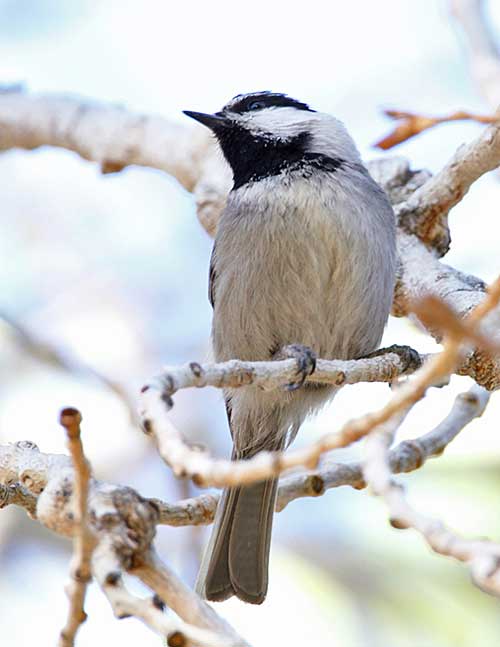
Mountain Chickadee
Costa’s and Anna’s hummingbirds are year-round residents, and it’s always a thrill to see an Anna’s mom feeding her nestlings in a tiny nest on a branch right off the Marsh Trail —
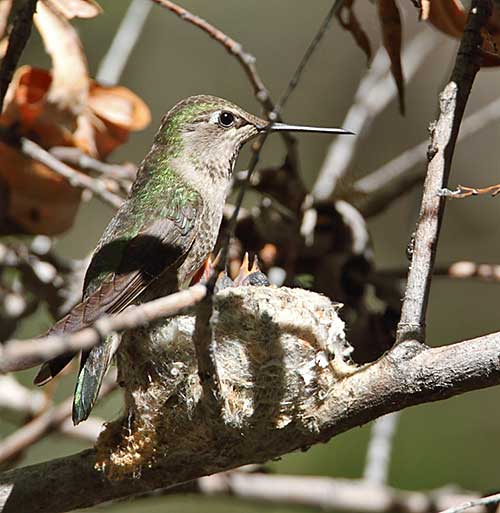
Anna’s Hummingbird
From singing Yellow-breasted Chats to nesting Red-tailed Hawks at Covington Park, Thrashers to Flycatchers, all set in unique high-desert scenery, Big Morongo Preserve and Covington Park, particularly during spring migration, should be considered a top destination for birding in Southern California.
All photographs are copyright Steve Wolfe.
Birds of Southeast Nevada’s High Desert
When most people think of southeast Nevada images of glitzy Las Vegas first come to mind,but beyond the casinos and hotels lies a desert landscape teeming with wildlife that is mostly hidden during the day, including birds. But with persistence and a little luck, birding here can be fun and rewarding. A great place teeming with possibilities is the Overton Wildlife Management Area, located 70 miles northeast of Las Vegas off Interstate 15 near the town of Overton.
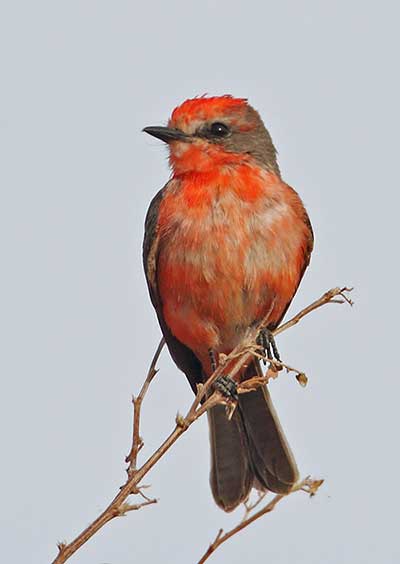
Vermillion Flycatcher © Steve Wolfe
It’s HUGE — 14,000+ acres — and is made up of grain fields, wetlands, ponds the size of small lakes, and areas of mesquite and other desert flora. Due to this wide variety of habitat you can find a wide variety of bird species here, ranging from beautifully-melodious Crissal Thrasher hiding deep in the desert brush to Bald Eagles perched on tree branches, with a desert mountain for a backdrop.
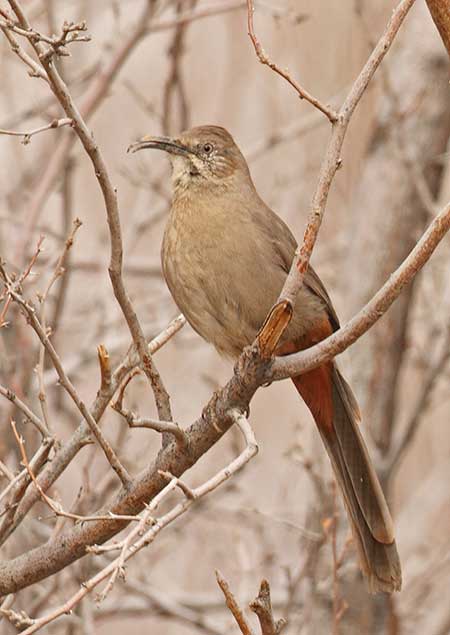
Crissal Thrasher © Steve Wolfe
There is a network of dirt roads lacing through the wildlife area that you can either walk or drive; I’ve done both and found that driving is more advantageous for viewing and photographing birds; a vehicle acts as a “blind” so birds don’t “spook” as often as when you’re walking. (Besides the fact that you’re moving faster when driving, so you cover more territory and see more birds.)
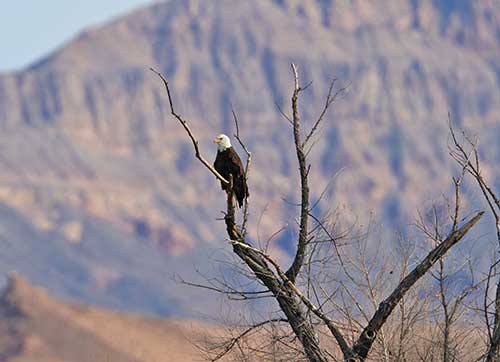
Bald Eagle © Steve Wolfe
The wildlife area is so diverse and covers such a large area that you literally can see anything here; Common Crane, a Eurasian species similar to Sandhill Crane, was discovered here last year in a flock of Sandhills, and when word got out birders from all over Nevada and the West came to see it. I’ve checked off as many as 50 species during an 8-hour period there.
My wildlife camera rig consists of a Canon 7D and 500mm f/4 prime lens, usually with a 1.4x teleconverter attached, which gives a total distance of 700mm, so I can get close shots of the birds without their noticing I’m taking their picture, at which point they fly off in the opposite direction.
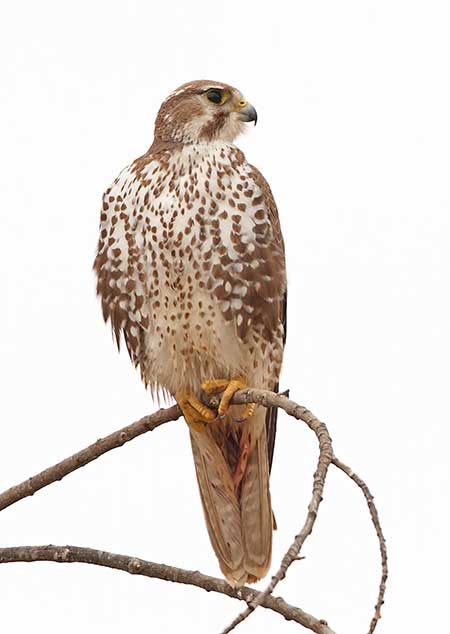
Prairie Falcon – © Steve Wolfe
For instance, Prairie Falcon are notoriously skittish whenever they catch you looking at them, but this one stayed at his perch long enough for me to get good closeups though I was a good distance away. And even when you’re far away the landscape here in northeast Nevada is spectacular, so you can place birds set against backdrops such as desert mountains.
From Phainopepla singing on top of mesquite bushes to Common Goldeneye meandering on large ponds, the Overton Wildlife Management Area, between the Valley of Fire State Park and Lake Mead National Recreation Area, is truly an unsung jewel for birds and other wildlife.
Photo Hotspots – Costa Rica
From time we’ll provide reports on great birding trips and great places to photograph birds. This report is from Glenn Bartley, our staff photographer. Although the report is from 2005, much of the information on the areas visited remains pertinent. So, enjoy a few of his photogrpahs and spend some time with Glenn on his 6 month trip exploring and photographing Costa Rica.
PURA VIDA IN COSTA RICA: November – April 2005
November 7-13: San Jose, La Selva Research Station
Ariving at Juan Santamaria International Airport I claimed my bags, grabbed a cab and made my way to San Jose. Since I wasn’t able to get a bus to LaSelva that day I decided to find a hostel for the night and sort out transportation for the next day.
The 2 hour bus trip to LaSelva worked its way through the cloud forests of Braulio Carrillo National Park and had some beautiful scenery along the way.
When I arrived at La Selva I suddenly had a huge smile on my face as I realized that the potential of this amazing place. Imagine a tropical rainforest with about 60km of hiking trails (many of which are paved), over 400 species of birds, 500 species of butterflies as well as hundreds of mammals, snakes and frogs. For a nature-nerd like me this place is heaven!
I spent the week working over the trails in seach of new habitats and new species. Evenings were spent in the cafeteria chatting with the various other researchers from all over the world. When it was time to crash I headed back to my cabin in the rainforest where I had my own double room overlooing the Rio Puerto Viejo and faded off to sleep listening to the sounds of the jungle.
La Selva, despite frequent rain and mostly cloudy conditions, has been an amazing place to start my trip. If the rest of Costa Rica holds this kind of ecological diversity, friendly and interesting people and relaxed atmosphere then it is going to be an unbelievable six months!
I have no idea how often I will be able to update this journal. Hopefully it will be at least on a bi-weekly basis so stay tuned!
Next up: Las Cruces Field Station, Wilson Botanical Gardens and Los Cusingos Bird Sanctuary.
November 14-20: La Selva Research Station, San Jose, Las Cruces Research Station
La Selva was amazing. I wound up staying a few extra days because it was just too good to leave. I could easily have stayed there for a month and not run out of things to photograph. But that wouldn’t exactly be traveling now would it?
In Costa Rica if you want to get anywhere by bus you almost always have to go back to San Jose first. So I headed back to good ol’ Pangea hostel for a night and then caught an early morning bus to San Vito in the far Southeast corner of the country. The trip took longer than one might expect due to the atrocious condition of Costa Rica’s roads. Fortunately, for the last 2 hours of the bus ride we wound our way along a ridge overlooking the scenic Valle de Coto Brus. The views were breathtaking.
Arriving in San Vito I made the dumbest mistake I have ever made travelling. After negotiating a cab to take me to the station I asked him to stop so I could grab some food at a local soda. I said “espera aqui por favor” and ran in to grab a snack. When I came out a minute later he was nowhere to be seen. My backpack with all my clothes in his trunk. Me with a greasy pastry and coke that no longer seemed appetizing.
Still in disbelief at my naivity I asked myself how I could have just done something so stupid?? Luckily the guy just went around the corner to get some gas. But I had a valuable lesson pounded into my head. Never leave your stuff out of arms reach!
After La Selva I thought I had been spoiled. The place was so comfortable and amazing for photography I didnt think I would get it that good again for a while. I was wrong. Las Cruces is just as beautiful. My room is fantastic and has an amazing view. And the wildlife is very plentiful here as well.
The station is fairly remote and at the momment it is pretty dead. The only other guests at the momment are a couple of great girls from America (Anika via Sweeden), a Dane and a Tico.
Unfortunately it also rains here a lot. Annual precipitation is in the neighbourhood of 4 metres. But at least the afternoon rains have given me a chance to get caught up on editing photos and updating this journal and the rest of my site.
I really havent had a chance to thoroughly explore the trail system here. The photos below were all taken over a 3 hour period on my first day here.
Next up: Los Cusingos Bird Sanctuary (I hope??), Avalon Biological Station, San Gerardo de Rivas….
November 21-27: San Gerardo de Rivas, San Gerardo de Dota, San Jose
Las Cruces was Great! It didn’t really have the species diversity that La Selva had, and it rained a whole lot. But I still managed to get some decent shots and add some new species to the ever-growing list.
One thing that was really good about Las Cruces was that there were more people that spoke spanish so I got to practise more than in La Selva.
My next stop was supposed to be Los Cusingos bird sanctuary but it turned out to be closed for the rainy season. Plan B was Avalon biological station. It was also closed. Plan C brought me to San Gerardo de Rivas which is a beautiful little town in the mountains that most people only visit as a jump-off point to climb mount Chirripo. For me though San Gerardo de Rivas has turned out to be I think my favourite place so far. The people here are fantastic. There are hardly any tourists. And no one speaks english which has been great for my Spanish progression. Oh yeah … and the scenery and wildlife are incredible!!
I spent my first two nights here at a small little hostel where the owners were really nice to me and put out plantains to attract birds for me. From there I hiked around each day in search of new species and scenic views – both of which I found many of.
My next three nights were spent at what is definately my favourite establishment of the trip so far. Albergue Montana El Pelicano is such an amazing place. It has stunning views, lots of wildlife, a great restaurant, a pool and unbelievably friendly hosts Omar and his wife who can arrange trips in the area. All this for the astronomical price of ……… $8 American. Wow!
I have spent my time here trying to capture the 5 or 6 species of hummingbirds that frequent the garden. I have had limited success and frequent frustration but it has been a good learning experience when it comes to high speed flash photography. I’ve gone for a few runs in the mountains and watched a few of the soccer games at the local field. I’ve made a few new friends and had some more great experiences.
Overall San Gerardo de Rivas is a beautiful place that I definately plan to return to during my time in Costa Rica. Perhaps even to conquer Chirripo!
While I could have easily spent another few days in San Gerardo de Rivas after 5 days it was time to move on. A few kilometers up the road, and higher up into the Talamanca mountains, is a little place called Albergue Mirador de Quetzales. It is a little farm that has been converted into a lodge. The main draw here is the resplendant quetzal – a bird that many consider to be one of the most beautiful in the world. While these birds are quite rare this is supposed to be one of the best places to find them. Unfortunately I did not.
On the bright side I did run into a charming British couple whom I had met earlier in my trip at La Selva. It was great to see some familiar faces and we had a really good time hiking around and enjoying the other birds of the area.
The next morning it was back to San Jose for a much needed shave and to take care of my dirty laundry that was beginning to make my pack smell like there was a dead animal in it.
My best friend from home arrives today and I am really looking forward to having a travel companion and also to finally get to the beach and get in some surfing.
Next up: Tamarindo and some surfing…
November 28-December 15: San Jose, Jaco, Manuel Antonio, Dominical, Uvita,
Matty arrived on schedule and with no real problems. After a night in San Jose we headed off to Jaco to buy surfboards and start the beach phase of this trip.
Although I hadn’t heard many good things about Jaco (especially not from my dear Kate!) I have to admit that getting to the beach was really nice. Matty and I did a tour of the 8 or 10 surf shops on the main strip and sorted out what we thought was the best deal on boards. We were both pretty happy with what we found and were definately ready to get out there and test them out!
Our fist session really couldnt have gone any better. We paddled out together and joked around for a while behind the break. But when the first decent set came through both of us got real serious, real quick. The competitive nature of Matty’s and my friendship was in full display as both of us paddled hard for the first wave. I got to my feet and as I looked over it was a really great feeling to see my best friend on the same wave too. What a start! Unfortunately this was the last good luck I would see for a while…
Maybe it was because my first few weeks went so well, and simply the universe trying to keep itself in balance, but the next day began a string of bad luck for me that would last the next few days. After going for a surf in the morning I got caught on the inside and while trying to paddle out Matty plowed into me. I just got my hands up in time to keep my teeth but Matty smoked me pretty good anyways. I really didn’t care until I got out of the water a half hour later and found a huge ding in my new board. Even then I didn’t really mind too much. When you surf your board will get a ding here and there and its really no big deal. I got it fixed and the next day headed back out with high hopes. Unfortunately before I could even get out behind the set my leash snapped. This really shouldnt happen. But it did and I was not happy about it. I decided that to cheer myself up I would go and take some photos that afternoon. Unfortunately I didnt get any good shots and I lost the foot for my tripod in the mud. It was extremely frustrating! I decided that Jaco was bad luck for me and it was time to move on…
In the morning we caught a bus from Jaco to Manuel Antonio. I was definately looking for a change of scenery and I really hoped Manuel Antonio would provide this. I feared though that this place would be overrun by tour groups and the beach crowded. It was pleasent surprise though to find this place to be really laid back and the beach lovely. Nevertheless my run of bad luck was not over!
The following morning I went out to take some photos only to discover that the bumpy bus ride had damaged the hood for my 300mm 2.8 and cracked a very important part of my tripod. Fortunately the damage to both items was at least temporarilly repairable with a delicate touch and a little duct tape and I carried on with my mission down the beach in search of shore birds. I found a Willet hanging around a group of rocks where the incomming tide met the beach. The best angle for the shot was to wade out to a partially submerged rock and get the light behind me. Even though the tide was comming in, and because of the turbulent water I couldn’t see the bottom, the past few days of unproductive photography and the frustrating few days of surfing made me really want to nail this shot and I convinced myself that it was worth the effort. On the way out though I slipped and my camera and beloved 300mm came, with no exaggeration, about an inch from going in to the tidal saltwater and sand slurry. I was shaking with adreniline, dread, or perhaps anger at how stupid I had been and how close I had just come to ruining my gear. Needless to say I retreated to the shore, found an exposed roch to sit on and regained my composure. I settled for a photo of the willet from the beach. He did me a favour and snatched up a few shrimp to feast on and enabling at least few decent frames.
Overall these last few days have not been great. But I really think that travelling is all about learning lessons and realizing things about yourself and about life. In travelling, and certainly in life, one has to learn to take the good with the bad. During the bad times all you have to do is remember that if you can just ride them out good times will be not far away…I sure hope so anyways!
After a few more days in Manuel Antonio surfing and roaming around we made our way to Dominical. The trip took a bit longer than expected due to unreliable information about when our bus was meant to leave. We wound up having to wait for 6 hours in a local bar because we just missed our bus. This meant we got in to Dominical pretty late. We pretty much just found a place, helped a guy get his jeep out of a ditch, grabbed a beer and crashed. T
The next day we headed to the beach and spent a good chunk of the day surfing. Dominical really is a surfing town and not much else. The waves were small but good so I was happy enough. Some dude ran in to Matty though and dinged his board so that was definately a bummer. With Matt’s board out of commission for a day we decided to go to Hacienda Baru wildlife refuge for the day. It was nice but we didn’t see much wildlife. I was happy to find a green and black poison dart frog though and I managed a few decent shots before he hopped off.
As I mentioned Dominical is a surf town and that’s pretty much it. So when the waves went flat and we got bored it was time to move on once again. Our next stop was a small town (if you could even call it that) called Uvita. The town is the jump off point for Bellena Marine National Park which is absolutely beautiful. While it would have been amazing to go out whale watching here it was pretty expensive and the beach was so nice and uncrowded we decided to just hang out there for the day.
Much like Dominical Uvita had little else to keep us occupied beyond the park. So after a few days we decided to head back to Manuel Antonio and make a trip to the National Park there (it was raining much of the time we were there the previous week so we never got ot go). Manuel Antonio National Park is really pretty touristy. The monkeys, coatis and racoons are all really used to people and have no second thoughts about trying to steal your lunch. There are lots of people. And it is definately not a very adventeurous hike. Nevertheless the place was definately worth visiting. The beaches in the park are absolutelay amazing and there were some really nice scenic views.
After one more day in Manuel Antonio to relax by the beach it was finally time to head back to San Jose and regroup for the next leg of the trip…
Next up: The Carribean coast, Aviaros del Caribbe Sloth Refuge, Cahuita National Park, Gandoca-Manzanillo National park…
December 16-26: San Jose, Cahuita, Puerto Viejo, Manzanillo
My final two travelling companions arrived from Toronto on Thursday. We had originally intended on leaving the next morning for the Caribbean. Unfortunately Vero and Nolwenns luggage was temporarily misplaced by the airline and we had to linger for another day in San Jose. Being in the city made me more aware of how strange it is for me to be in a foreign country around the holidays. Its so odd not to be shopping for presents and hearing Christmas carols on the radio and in the mall. And its really different being at the beach in 30+ degree weather at this time of the year. While clearly snow here is an impossibility they get around this in San Jose by selling bags of confetti. In the evening when you walk around Avenida Central you are welcomed by strangers throwing handfuls of confetti in your face. Feliz navidad!
Anyways, after a brief delay the four of us caught an early bus for Cahuita and our first glimpse of the Caribbean coast of Costa Rica. Cahuita was a really pleasant little town. Everyone was very laid back and very friendly. Another great thing about Cahuita was that about a 2 minute walk from our hostel was the entrance to Cahuita National Park. I found the park to be very beautiful but fairly static. The trail winds its way along the beach crossing a few river mouths on the way out to the point. Even still it was pretty tranquillo and by getting up early I had the whole place to myself one morning and managed a few shots of a tricoloured heron and a lesser-golden plover.
I really wanted to visit Aviarios del Caribe Sloth refuge but the weather wasnt cooperating on our third day in Cahuita and we decided to move on to Puerto Viejo.
Puerto Viejo has a similar vibe to Cahuita but on a grander, or at least larger, scale. There are lots of rasta’s, lots of Bob Marley playing, but best of all lots of friendly people. We decided that it would be nice to stay here for the week leading up to Christmas and do some day trips from here.
One day we rented bikes and visited Punta Uva where we found a beautiful beach and a really cool reef with tons of tropical fish. Another day we hitched a ride down to Manzanillo and explored a few more beautiful beaches and a small section of the National Park. But I have to say that one of my favourite memories from this place will definately be the afternoon that Matty and I got invited to play in the locals soccer game. We explained to the guys that we really were not very accomplished soccer players but they insisted we play by saying “no worries maan…..everyone is welcome here…” Anyways we were definitely the worst players on the field but it was still really fun. Every once and a while someone would even shout out “pass it to the gringo” and I’d get a chance to show off my lack-luster soccer skills. Needless to say no one was very impressed.
Its definitely been strange being away from home for Christmas and I absolutely miss my friends and family back home. But this Christmas on the Caribbean will definitely be one to remember.
Next up: Poas and Arenal Volcanoes, Monteverde and the Nicoya Peninsula…
December 27- January 6: Poas Volcano, Montezuma, Santa Teresa, San Gerardo de Rivas
After returning to San Jose for a night we all decided that it would be a good idea to rent a car and try to visit both the Poas volcano as well as La Paz Waterfall Gardens in one day. So the four of us, along with my German friend Anika, headed off early to try to get to the volcano before the clouds rolled in. Unfortunately the weather was not being cooperative and by the time we got there it was cloudy and raining. We decided to abort our plans to visit the waterfall gardens and take advantage of our rented vehicle by driving around aimlessly. We eventually made our way back to San Jose only to find that there was a huge parade going on and most of the major streets were blocked off. After about an hour and a half of driving around we finally made it back to the car rental place and to our hostel for the night. That evening we decided that, since the weather was meant to stay cloudy for the next several days in the central valley, we should just head back to the coast.
Early the next morning we caught a bus for Puntarenas where we boarded a ferry to Paquera in order to get yet another bus for Montezuma. It was a bit of a mission getting there but it was worth it. The town was quite nice and there was lots of potential for day excursions in the vicinity. One day Nolwenn and I went snorkeling at a nearby beach. Another we headed to Cabo Blanco absolute nature reserve to do some hiking. Both of which were fantastic outings. But by far the most memorable experience in Montezuma was the day that Matty and I hiked to a 80-100 foot waterfall and cliff jumped from about 60 feet.
Since I lost the rock-paper-scissors contestI had to go first. It was terrifying! The climb up was dodgy enough but when I got up there I realized that there was about 15 feet of overhanging rock that I would have to clear if I was going to make the jump safely. My heart was pounding and I really was scared. But there was only one way down so I got composed and jumped as far out as I could. I’m not sure how much I missed the rocks by but it wasn’t much. Even thought the landing in the pool was a bit harsh I was so glad to have made it down safely. What a rush!
The next day (New Years day) we all headed over to Playa Santa Teresa for some sun and some surfing. The beach was beautiful and the wave was firing. It was some of the best conditions for surfing I’ve seen since I’ve been here so as soon as I got my board waxed up I headed straight out. the waves were pretty big and since it was a beach break with a lot of water movement it was definitely a bit tough to get out. But eventually I made it out behind the set and let my arms, which at that point felt like rubber, recover. I didn’t stay out long but I did manage to get probably the best wave of my life. I was stoked.
We lounged on the beach for a few more hours and watched a beautiful sunset over the Pacific. It was a really great day. The only problem was that there were no buses running back to Montezuma and we couldn’t find a cab to save our lives. Luckily the girls were able to convince a truckload full of Ticos to take us back. We all piled in to the back of the pickup which was absolutely rammed. All in all there were 14 passengers, 2 surfboards and muchos cervecas! I won’t get into too many details but let’s just say it was quite the ride!
We got back to town just in time to grab some dinner and count down the New Year. The center of town was packed with locals and tourists all of whom were enjoying the fireworks and festivities. As the New Year approached I couldn’t help but think about how much has happened this past year and how exciting 2006 should be. Overall it was a really memorable New Year ’s Day and night.
Early the next morning we made the return voyage to San Jose to recharge before heading off again. We split up with the girls heading in one direction and Matty and I in another. Matty and I caught a bus for San Isidro and San Gerardo de Rivas where we hoped to climb Cerro Chirripo – the highest mountain in all of Central America. We made it to Rivas with no problems and got an early start the next morning. The climb was tough. And made even tougher by the fact that we were carrying heavy camera equipment so that we could film our adventure. Nevertheless after 8 hours and 15 km up the side of a mountain we made it to the rest station for the night. We were both exhausted, and I was feeling pretty sick so we pretty much just ate and then crashed. We woke at 2:45 AM so that we could make it to the summit in time to catch the sunrise. It was freezing cold (literally….there was ice) and pitch black. Luckily we met a few girls who agreed to lend us their head lamps. Otherwise there was no way we would have made it to the top.
After a few hours of nocturnal hiking we finally made it. It was a great feeling to have accomplished our goal and watching the sun rise from the highest point in Central America with no a single other soul for miles around was especially rewarding.
The climb back down was a huge mission. We were both so tired and our legs were exhausted. Going down proved almost as difficult and perhaps more treacherous than going up. To add to the difficulty it was raining for a good chunk of the descent. Nevertheless we made it down and back to our hostel for a well deserved celebratory casado and coke!
After a day of R&R we headed back to San Jose to meet up with the girls and start our next adventure…
Next up: Arenal and Monteverde
January 7-24 : Arenal, San Jose, Monteverde & La Selva
Sorry It’s been so long since my last update but things have been pretty busy down here!
Our final excursion as a four-somme took us to La Fortuna and the Arenal Volcano. Unfortunately our bad luck when it comes to volcanoes continued and it was a cloudy day when we went to see the volcano. It was pretty cool though being able to see the glowing rocks tumbling down the side and to be able to hear the sounds of the erupting volcano.
We returned to San Jose for one last night out and to say goodbye to Nolwenn.
Unfortunately we had a few technical problems to sort out with Matty’s video camera so we once again got stuck in San Jose. But he took care of it like a champ and after a few days we were on our way to Monteverde.
The first full day we were in Monteverde was the best for me. I got up early and headed down to the reserve. Since the park didn’t open until 7 I checked out the nearby hummingbird garden and got a few shots there. It was a really cool place with dozens of hummingbirds whizzing by and zipping all around!
When the park opened I headed off and, after grabbing a trail map, was on my way. The cloud forest really is a special place. Its such a unique ecosystem and environment to be in. I wish that it could be summed up in a photo but there is simply no way. Anyways I had a really nice hike and saw a few birds I hadn’t seen before. I also saw a Tyra which is a fairly large carnivorous mammal that lives here which was really cool as well. But the highlight for me, and if you read my last newsletter you know why, was spotting not one but two male Resplendent Quetzals fighting for territory.
I was just on my way out of the park when I heard the call that I knew to be of the Quetzal. I searched around for a while with no luck and then one flew into view but was high up in a tree and really not photographable. He only stuck around for a few seconds and then flew off and I thought that might be it for the Quetzal. But then the other male flew right into a nearby tree and was followed by the one that had just flown off. I grabbed my camera and both tele-converters and got to work. Over the next 15 minutes or so I captured some photos of these beautiful birds that I am pretty happy with. They arent perfect and I hope to do better. But Its a great start to my Quetzal quest.
After returning to town for lunch Matt, Vero and I went on a zipline canopy tour where we flew through the forest canopy attached to steel cables by a pully system. It was really fun and I would definitely recommend it to everyone.
We spent the next few days filming a few things and checking out the sights. Matty and I even got to go ATVing for free because one of the companies wanted a video promo of the tour they offered. It was pouring rain, super muddy and so much fun!
Matty and Vero left Monteverde a day before I did and headed off on their own journey. I have to say I was eager to get back to my own photographic priorities. I left Monteverde for a brief night in San Jose and then headed to La Selva once again.
I was really worried that La Selva would be rainy again because everyone I talked to said that this region had been getting dumped on. In fact if I had arrived a day earlier I would have had to take a boat in! But luckily the weather Gods were on my side this time and I was blessed with 5 days of perfect weather and amazing photographic opportunities. I have done pretty much nothing but take pictures all week and its been great. I had a goal of 17 new avian species and I managed to get 21.
This place is so amazing. To be so immersed in nature and yet so comfortable at the same time is a harmonious relationship that La Selva has achieved like no other place I have visited. I love it here and I hope I will get a chance to return another day.
So that’s pretty much it. A few weeks of fun and excitement and some more photos I’m really proud of. I hope you enjoy them and to hear from you all soon.
Next up: Los Cusingos, Zoo Ave and Lankster Botanical Gardens
January 25-31 : La Selva, San Jose, Los Cusingos, Zoo Ave, Lankster Botanical Gardens
Its funny that I wrote about the balance of nature and comfort at LaSelva. That night a bat tried to sneak into bed with me. The balance has been disturbed! Seriously though, despite me intimate encounter with the bat, I really had a great week there.
I spent a fairly uneventful day in San Jose where I went to a mall and then did some shopping on avenida central. While I was in the ghetto of San Jose some French guy came up to me almost in tears saying that he had just had his passport and all his money stolen and if I could help him out with some money for a cab. I was initially skeptical but the guy was almost crying and I tried to put myself in his shoes. I know I would want some help. So I gave him about 4 bucks for a cab. I felt good about helping the guy out. That is until later that night when I was out for beers with another Canadian guy from the hostel and I mentioned the story to him. It turns out the same guy asked him for money the day before with the same story! Son of a Bitch! Scammed again!
But after I thought about it I still would have done the same thing. This guy was so convincing and to be honest I’d rather be the kind of person who would help someone in need then just become completely jaded and not trust anyone. With that said if I see that piece of sh#$ on the street he is getting a punch in the kidney.
Anyways the next day I moved on to my next destination called “Los Cusingos”. Its actually the old homestead of Alexander Skutch who co-authored the guide to the birds of Costa Rica. I had tried to make a reservation through my hostel and was told that it was all arranged. But when I showed up they clearly had no idea I was coming. But it didn’t really matter because there were no other tourists there at all.
I spent a few days there photographing a few new species and going for hikes in the woods. It was very enjoyable and when it came time to pay I was pleasantly surprised that the guy running the place waived the entrance fee and only charged me six bucks a night. Pura Vida!
I boarded a bus back to good ol’ San Jose and made arrangements for a few small day trips – the first of which took me to Zoo Ave. My guide book raved about this place but I was very disapointed. They definitely had a good diversity of birds on display but they were all in tiny cages. After seeing most of these animals in the wild it was pretty anticlimactic to see them behind bars.
Not to be discouraged I sorted out the details to head to my next mini-destination – the Lankester Botanic Garden. There isn’t much to say about the garden. Its really nice and they have a lot of interesting plants. But no wildlife. I saw more birds walking down from the highway than I did in the garden.
So I think tomorrow will be a day to get things all figured out for Panama – where I hope to photograph more quetzals – and the Osa Peninsula – the area National Geographic called “the most biologically intense place on earth”. Its gonna be a busy few weeks!
Next up: PANAMA and the Osa Peninsula
February 1-14: Panama and the Osa Peninsula
On February first my travel companions and I headed off for Panama. It was a breeze getting there from Costa Rica and we had no hassles at all venturing into a new country. Our first stop was to be Bocas Del Toro and the Island of Bastementos. After an interesting taxi ride – where the driver tried to scam us into paying more than we had arranged – and a cramped minibus ride, we made it to Bocas. From there a water taxi zipped us over to Bastementos.
In Bastementos I found what I considered to be a pretty ideal spot. Our hostel resembled a tree house with basic, but decent enough, rooms. The owner was very nice and super laid back. The other travelers were all in good spirits as they were as happy as I to be there. And beers were 50 cents. What more could you ask for?
The island itself was beautiful with calm and crystal clear waters on one side and surfable waves and a gorgeous beach on the other. Bastementos was indeed a very fine place!
My first full day there my travel mates and I hiked over to the beach for the day for some surfing and lounging at the beach. It was great. The only problem was that, after being in the jungle and mountains so much, I forgot to put on any sunscreen. I had a really fun day but I got absolutely demolished by the sun.
The next day I had hoped to go back to the beach but my blazing red back made me think that perhaps it would be smarter to lounge about in the shade and read instead. Unfortunately the others decided that they wanted to leave. I thought about staying longer by myself but decided that I too would move on. It’s too bad because it really was a fantastic place.
Anyways I caught a bus for the city of David and then another for the peaceful mountain town of Boquete. I had heard that there was a trail nearby called the “Quetzal trail” which sounded promising for photographic opportunities of my favorite bird.
Unfortunately there were a few problems that kept me from photographing quetzals in Boquete. To start with there had been an unusual amount of rain in the area in the weeks before I got there and most people were saying that they hadn’t seen any in weeks. It was also cloudy for the first four days I was there making photography impossible. And finally I must have eaten something that didn’t agree with me so even if the quetzals were there I wasn’t in any shape to go and find them. So my first few days in Boquete were pretty uneventful and quite boring.
By the end of the week however my stomach had sorted itself out, the weather had cleared and I was anxious to get out on the trails. Along with my guide Feliciano I headed up into the mountains in search of quetzals and whatever else might be up there. We didn’t manage to see any quetzals though we did hear one calling. But it was such a beautiful day and such a fantastic hike that I really didn’t mind. The whole area is so nice and it was wonderful just being there.
I spent one last day in Boquete taking care of a few things including fixing my broken tripod which had become a huge annoyance. I am quite proud of the repair job I managed to come up with using random parts from a local hardware store. My tripod should be solid for the rest of the trip.
The following morning I returned to Costa Rica and headed for the Osa Peninsula. After a few buses, another stop at customs, and a ferry ride that I would rather forget, I made it to the town of Puerto Jimenez. Immediately after I got off the boat I saw two scarlet macaws fly into a nearby tree. A great start!
I spent the next few days exploring the nearby ecosystems, swimming and trying to get a photo of a scarlet macaw in flight. This turned out to be a lot harder than I had imagined. They tend to sit in a tree for a long time then all of a sudden take off in an unpredictable direction – squawking and mocking me as they fly away. I had several unsuccessful attempts in my first few days in Jimenez.
One day while out taking pictures I met a really nice couple from Chile. It turns out that they were both ornithologists. Obviously we got along great and decided over dinner that we would all go to Corcovado the next day. We spent the day walking on the beach to the park and I tried several more times unsuccessfully for my macaw in flight shot. I was getting really frustrated but I convinced myself that if I kept at it I would get one. Then at the end of the day, at the very last opportunity, two macaws came screaming into view and, finally, I got my shot.
That’s pretty much it for the past few weeks. Panama’s beauty made up for the lack of photographic opportunities and the Osa peninsula lived up to its reputation as one of the most diverse and amazing spots on the planet.
Next up: Rancho Naturalista and Palo Verde
February 16-23: Rancho Naturalista & Palo Verde
This past week has been one of the best of the trip! I was fortunate enough to have the opportunity to visit Rancho Naturalista – one of the premier birding lodges in Costa Rica – for four incredible days. It is such an amazing place! It is comfortable, beautiful, the food is incredible and the birding and opportunities for photography are top notch.
When I arrived at Rancho I learned that another professional nature photographer whom I knew from www.naturescapes.net was also there. He specializes in high speed hummingbird photography and was generous enough to let me work with him. For the next two days we had a fantastic time trying to capture images of “natures flying jewels”. It was really fun shooting with another nature photographer and trying a new style of photography. The results that can be achieved with high speed flash techniques are absolutely stunning.
My new friend Juan moved on to Monteverde and I moved on to other subjects. There were so many species at Rancho that I hadn’t had the chance to photograph elsewhere and I tried to capture as many as I could.
While at Rancho I was also taking photographs for the owner for her website and other publications. Because of this I even got to go horseback riding one morning to the top of a beautiful valley. My horse was as “tranquillo” as they come and I managed to stay in the saddle and have a great time.
Many of the other visitors at Rancho had very good cameras, and enjoyed photography, but weren’t achieving the photographs they had hoped for. So I gave a few tips here and a few tips there. I took a few guests up to the hummingbird feeders and offered some suggestions on using fill flash. The guests seemed to enjoy this and – I guess – so did the owner because she asked me to return to Rancho this summer to lead a photography workshop. I really hope that works out!
I moved on from Rancho Naturalista to Palo Verde national park. It is a very different ecosystem than any others I have visited on my trip. It’s a huge wetland that dries up significantly in the dry season leading to high concentrations of migratory waterfowl, herons, storks and shorebirds. It was a bit difficult to approach the birds however since there were so many eyes on you and when one flies – they all fly! But I really enjoyed the park and managed to get several frames of Black-bellied Whistling Ducks, Thick-knee’s and a Ringed Kingfisher that I am very pleased with. I also photographed my 200th avian species down here which was one of my goals for the trip.
Next up: Some R&R at the beach
February 24-March 19: Santa Teresa
This has been an amazing trip so far. Pretty much everything I had hoped for. But it hasn’t been a vacation at all! It can be really stressful carrying around all this camera equipment and I find constantly being on the move difficult as well. Making temporary friends and living out of a backpack has begun to get very, very tired. And I haven’t been surfing at all! I definitely needed to take a few weeks away from photography, find a beach, and just relax for a while.
I really liked Playa Santa Teresa when I was here back in December so I decided it was as good a spot as any to stay put for a while. I definitely have not regretted my decision.
My daily routine in Santa Teresa consisted of getting up early to surf for a few hours with Matty before the winds and crowds get out of control. I then generally either ran or worked out before I headed back to my place for breakfast and coffee. I usually met up with my other roommates about this point and we would head to the beach to lounge about in our hammocks and read for the majority of the day. I try to squeeze in another surf session in the afternoon and then watch the sun set every night from my hammock on the beach. Afterwards I would make dinner and then it just depended on the night – some were very low key and others crazy. All were memorable and fun.
I haven’t been doing much photography since I’ve been here. But since this beach is supposed to have the second most beautiful sunsets in the world so I have managed a few photos.
I really had a great time these past few weeks. Life was easy, refreshing and enjoyable – it was how it should be. I was able to make some fantastic new friends and share unforgettable times with old ones. The last few days were especially memorable and in fact I would say that the last two were as close to perfect as is possible.
I will definitely miss the beach, the waves, the people and most of all a time and a place where everyone seemed happy, where smiles and laughter came easy and where I had some of the best times of my life.
Next up: The Quetzal quest continues…
March 20-27 : Mirrador de Quetzales
It was hard to leave Santa Teresa. But one of my biggest goals for this trip was to capture high quality photos of one of Central America’s most beautiful and revered birds – the Resplendent Quetzal in the hopes of publishing my first photo article. With this goal in mind I headed to Mirrador de Quetzales high up in the Talamanca Mountains for what I hoped would be a successful Quetzal quest.
I knew going in to this that it was going to be very difficult to get decent, let alone publishable, photos of quetzals but I had no idea just how difficult it would be. Each morning at 6am I would head off into the cloud forest. That early and this high there was frost on the ground most mornings and my hands were freezing. The terrain up here is pretty rough as well. It is quite steep and the trails can be difficult to navigate when toting around my camera gear. But obviously the hardest thing is finding and then photographing the quetzals themselves. It may be hard to convey just how difficult this is. To begin with the birds can be very elusive and it can take hours to just find one. They are often sitting high up in trees where photographing them is impossible. If they are low enough to attempt a photo they are almost always in the denser parts of the cloud forest where there is very little light. To add to the difficulty is the fact that there are so many branches, twigs, leaves and other annoying obstructions that getting a clear shot is very tough. Finally, the climate up here in the mountains tends to be fairly cloudy meaning that there is even less light available to photograph these majestic creatures. With the odds seemingly stacked against me I spent the week trying, hoping, and sometimes at night praying for an opportunity to get “the shot”.
I really can’t begin to describe just how beautiful these birds really are. My photos do them no justice at all. Seeing a male quetzal gliding through the cloud forest catching the early morning light just right causing its entire body to glow metallic green, its wispy tail feathers trailing behind, is truly awe inspiring. It was such a privilege to spend this past week watching and attempting to photograph them.
While I did manage a few shots that I am happy with, the opportunities I had hoped for simply didn’t present themselves. Nonetheless it was an amazing week. Perhaps my Quetzal article will be a work in progress??
Next up: Volunteering in Tortuguero
March 28 – April 12: Tortuguero, Rancho Naturalista and HOME!
After my usual two day stopover in San Jose I headed off to Tortuguero to spend some time volunteering at a Canadian biological research station. Tortuguero, as the name suggests, is famous as a nesting site for both green and leatherback turtles. This time of the year it’s the leatherbacks that are most common. As a volunteer my job was to walk the beach each night between 9 PM and 2 AM to see whether any turtles were nesting. If they were we would tag, measure and count the eggs that were being laid. Once the turtle returned to the ocean we would cover up the tracks to help prevent the nest being illegally poached by people who are after the eggs. It was such a cool experience to be involved first hand with this project and to be within inches of these huge turtles (up to 2m long and 2000 lbs).
When not out looking for turtles I spent a lot of time lying by the pool at a nearby resort, reading and chatting with a number of folks who were down visiting from the Toronto Zoo.
It was very rainy while I was in Tortuguero and for most of the time the station was flooded. As a result I didn’t get much photography done. I did make it into the national park one day and managed a few nice shots of herons, monkeys and my nemesis bird – the kingfisher. All in all it was a great week up in Tortuguero!
Another brief layover in San Jose and I was ready to head to my final destination – Rancho Naturalista. I visited this lodge back in February and had an amazing time and my second visit was much the same. The place is so ideal for a nature photographer and I feel lucky to have been able to end my trip here. There are so many opportunities for photographs here and even after spending five days here earlier I was able to find new species to photograph and new trails to hike. The star of the show for me this time was the black-crested coquette hummingbird. Before I came down to Costa Rica this species was high on my list of birds I wanted to photograph so I was super excited to get a chance.
My final morning at Rancho I decided to go for one last trail run before breakfast. As I was running it occurred to me that this would be the last time for a while that I would experience the tropical forest filled with all its amazing sights and sounds. I stopped briefly at a lookout point and tried to take it all in. Looking back it’s been quite a trip! I’ve seen so many amazing things, met incredible people, had a number of new experiences, learned a new language, improved my surfing abilities, continued to develop my craft and all the while I had a blast! Costa Rica is truly a beautiful country with so much to offer to its guests. I hope to return one day soon but I know that this trip and its memories will always be special and will stay with me forever.
I hope you have enjoyed this ongoing travel journal. If you have any questions about traveling in Costa Rica or photography locations feel free to send me an email. All the best everyone and PURA VIDA!!!
Bird Images from Ecuador – Mixed family groups including hummingbirds and tanagers
Photographs by Birdzilla Staff Photographer Glenn Bartley
Bird Photographs from Ecuador: Hummingbirds, trogons, antpittas, woodcreepers
Photographs by Birdzilla Staff Photographer Glenn Bartley.
Bird Photographs from Ecuador: Hummingbirds, sparrow, thistletail and gnatcatcher
Photographs by Birdzilla staff photographer Glenn Bartley
Photographs from Ecuador: Insects, frogs and more
Photographs by Birdzilla staff photographer Glenn Bartley.
Bird Photographs from the Amazon
Hummingbirds, kingfishers, ducks and woodpeckers
Photographs by Birdzilla staff photographer Glenn Bartley.
Glenn Bartley Photographing Birds in Peru
Staff Photographer Glenn Bartley can’t seem to stay home. Here are a few photographs from his trip to Peru.
You can enjoy more of Glenn’s images from Peru on his web site.
Read next: Nazca Lines