


Bird vocalizations are among the most glorious aspects during the breeding season.
In temperate climates, spring is the time when forests become saturated with harmonious bird songs. After the long winter break, males of many birds once again start producing distinct melodic calls that we call “songs.”
Why do birds sing? What’s the purpose of song repetitions over and over again?
It turns out that bird vocalizations are useful to birds in many ways. Let’s find out how.
Harmonious Songbirds & Mere Croaks
First of all, we need to distinguish bird songs from other forms of bird vocalization. Birds make many, many sounds, and not all of them can be defined as singing.
“True” Bird Songs
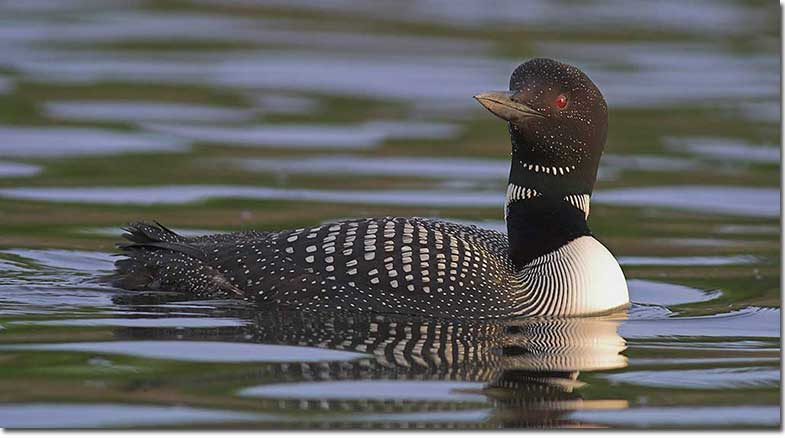
A bird song is a repeating call with a clear structure and rhythm. It is usually based on a single theme specific to that particular species but can have variations.
Another defining feature is that bird songs (in most cases) have a mating-related purpose and function. Male birds sing to:
- Attract and impress potential mates.
- Advertise their territory (to females).
- Ward off competitors and secure their breeding territory.
- Show off their strength, stamina, and overall good shape.
Not all bird songs sound like “singing” to human ears. By its purpose and other characteristics, the repetitive owl hooting is also a “song.” However, most people don’t consider it overly melodic, so it is rarely called a “song” in everyday speech.
Calls
Birds also use shorter forms of vocalization to keep contact with other birds in their habitat. This is especially true for birds living in low visibility habitats such as forests, where individuals are often scattered throughout the canopies.
There are several main types of bird calls.
- Alarm calls are short and striking, aimed at swiftly warning other birds about danger without uncovering the “whistleblower’s” own position.
- Flight calls serve to keep birds in contact while in flight. You can often hear this type of call in geese, bluebirds, and blackbirds, for example.
- Begging calls are made by nestling and fledgling chicks urging their parents to feed them. These shrieks are repetitive and pretty much constant.
Birds also make other types of vocalizations in the form of various chirps and chatters during courtship and in other situations when they want to establish, re-establish, or deepen relationships with other birds.
Other Sounds
Birds can make other types of sounds that are not created through their sound-producing organs (the syrinx, see below) but with other body parts like bills and feathers. However, they still use these “odd” sounds for a specific purpose.
Bill snaps and clatters are a good example. Storks don’t have developed muscles in their syrinx, so they can’t truly voice themselves. However, they make various noises like grunts, hisses, and their trademark bill clatters. When greeting each other or courting, the coupled storks rapidly open and close their beaks, making knocking sounds. The clatters are amplified by the bird’s throat pouch.
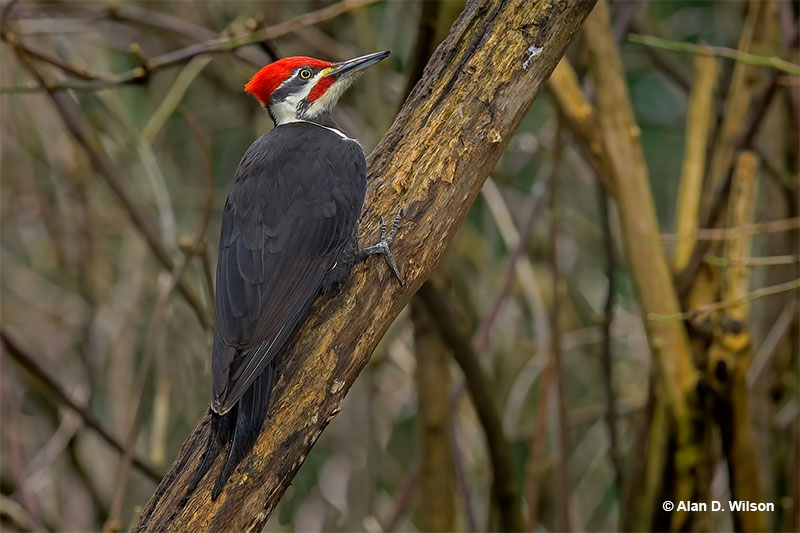
Another famous bird sound that doesn’t include a voice is the drumming of woodpeckers. During the bird mating season, woodpeckers engage in drumming to deter competition and attract a mate.
Reasons Behind Singing
Birds sing and make calls to communicate a certain message to other birds. As said before, songs usually serve reproduction purposes (courtship, nesting territory defense), and calls serve to warn other birds of danger or simply make contact.
However, not all bird species have a need to develop elaborate songs or even call. Complex or frequent sounds make sense only in certain situations. Singing birds live and breed in forests and scrublands.
In these dense, shady habitats, visibility is low, so it doesn’t make any sense for canopy-dwellers to evolve visual signals. On the other hand, calls that can be heard over a distance are ideal for communication in such circumstances.
Contrastingly, birds that live in open, high-visibility habitats like grasslands, beaches, and rocky shores have no need to make elaborate songs to communicate – they can see each other just fine. That’s why bird species that inhabit open areas rarely have “songs.”
Territory
The fact that bird songs can be heard over a significant distance makes it an effective way for a male bird to communicate the boundaries of its territory to potential rivals. The loud and long-running sound shows competitors that the singing male has the endurance and stamina to take on them if necessary.
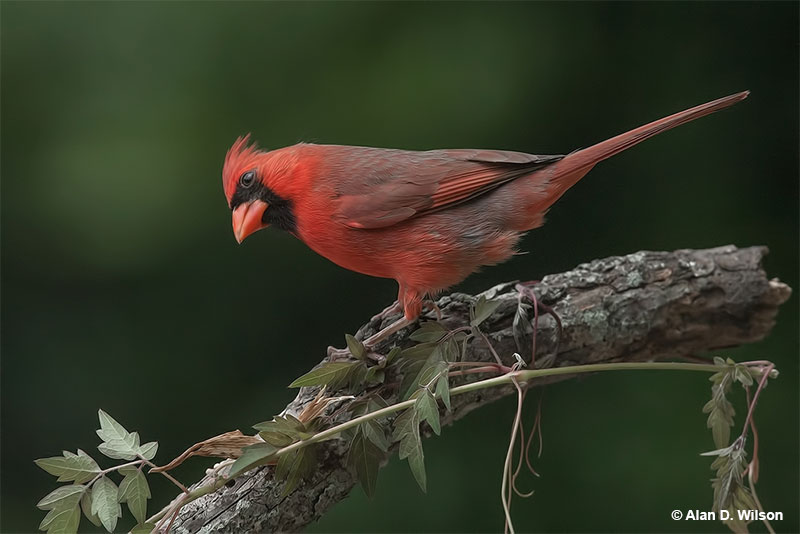
Cardinals, for example, are known for their territorial nature.
Competitors assess the fitness of the singing male to decide if they have a chance to chase the singing male away. That helps prevent wasting energy on conquering territories guarded by obviously stronger males.
Contact
Birds use calls to keep contact with members of their flock or species when they can’t keep an eye on them. For example, in songbirds like tits, parents and their chicks constantly make back-and-forth vocal contact while hopping and flying through canopies. Parents also make warning calls to their fledglings upon perceiving danger. The otherwise noisy chicks usually go quiet and take cover after the alarm.
Other birds also make contact calls, usually when foraging.
Courtship
In songbirds, the quality of the song is a prominent evolutionary factor influencing natural selection. Scientists believe that the quality of the song signals the male’s fitness, motor skills, and social status.
A study has found that the male who has a selection of slightly varying songs in his repertoire and is able to repeat them each time songs in precisely has the best chance of winning over a female. Females tended to get bored with males repeating only one song, even if his notes were on the spot.
How Do Birds Sing?
The sound-producing (vocal) organ in birds – their voice box – is called the syrinx. It is a bony structure at the bottom of the bird’s trachea, found in no other existing animal group. For comparison, mammals have an organ called the larynx at the bottom of the trachea.
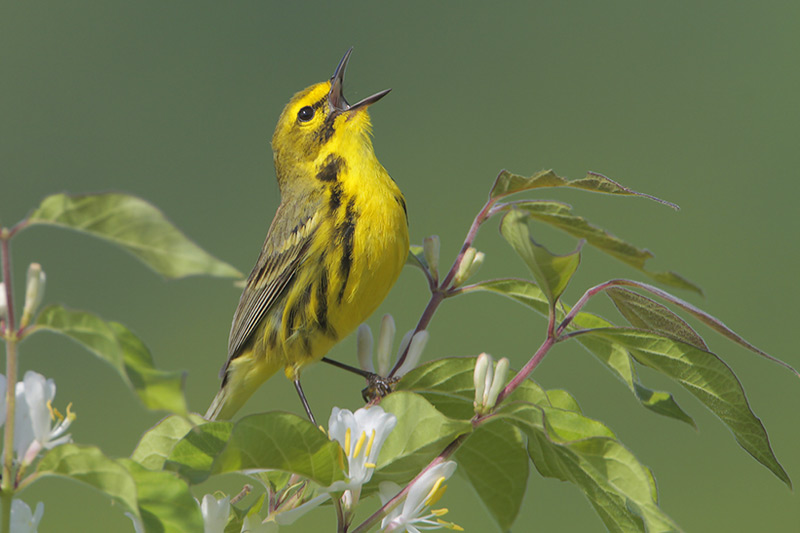
Also, the syrinx is surrounded by an air sac and connected with the trachea via fine but strong muscles. Together, the syrinx and the air sack resonate with the sound waves that the bird creates when pushing the air through membranes.
The bird controls its pitch and volume by adjusting the tension and the exhalation force. Some species can produce two notes at the same time because they can control the two sides of their trachea independently.
How do Birds Know Their Songs?
For a long time, scientists debated whether birdsong is instinctual or learned. Research has shown that simpler calls are indeed instinctive; however, young males listen and learn how to sing from older males of the same species.
To sum it up, it seems that the bird song is primarily a learned skill. That hypothesis perfectly explains the variations in bird songs of the same species.
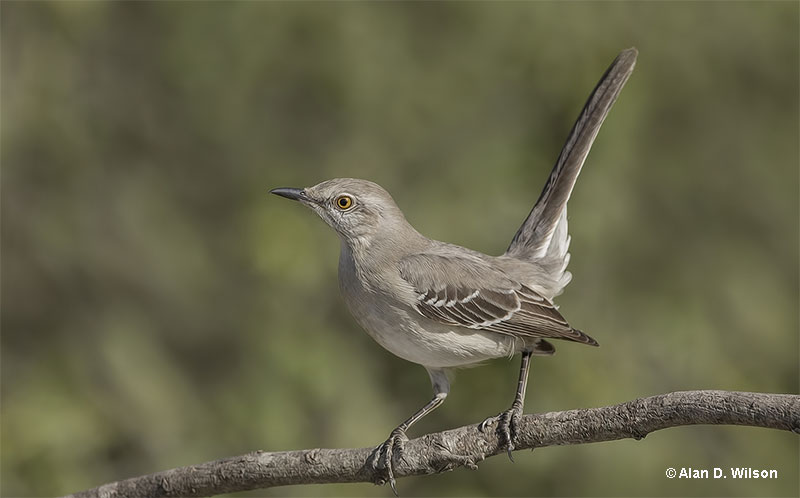
Also, some songbirds might enrich their repertoire with songs coming from other species. Starlings do this and are excellent imitators, but the brightest examples are mockingbirds, who can even imitate car alarms.
Frequently Asked Questions
What does it mean when a bird is singing?
Like us, the bird produces sounds to communicate. Various bird sounds mean different things, but in the case of bird songs, male birds sing to impress a female (as a part of the courtship ritual) and to establish and defend their territory from competitors and intruders. Birds also make simpler calls to keep in touch or alarm others about danger.
Are birds happy when they sing?
We can say that birds are in a state of excitement when singing, but it cannot be called “happiness.” Besides, excitement can be both positive and negative – a male bird singing to protect his territory from the intruder is certainly not feeling many “positive vibes,” and yet he’ll sing as loud as possible to proclaim his rights to the particular patch of habitat.
Do birds sing just for fun?
Pet parrots and other parrots in captivity in captivity seem to make sounds to entertain themselves. However, be aware that species in captivity don’t display behavior that is truly natural and that the “entertainment” might not actually feel fun for the parrot. Rather, it is the way to alleviate the boredom and loneliness these gregarious birds feel in average household conditions.
Why are birds singing during the night?
Birds usually sing during the night to announce their territory or communicate. That being said, not all birds sing in the middle of the night, just the nocturnal ones.
Which birds have the prettiest songs?
We tend to automatically favor complex and varied bird songs. Nightingales have been celebrated across the Old World for centuries because of their nighttime melodies. In North America, the Wood Thrush and a number of other thrushes (including the American Robin) are behind the most beautiful woodland melodies.
House Finch in North America and European Goldfinch in Europe are also exquisite singers of the Finch family. Common Loon and Mourning Dove have very specific-sounding songs loved by many.
Read next: Common songbirds you can meet in your garden
