
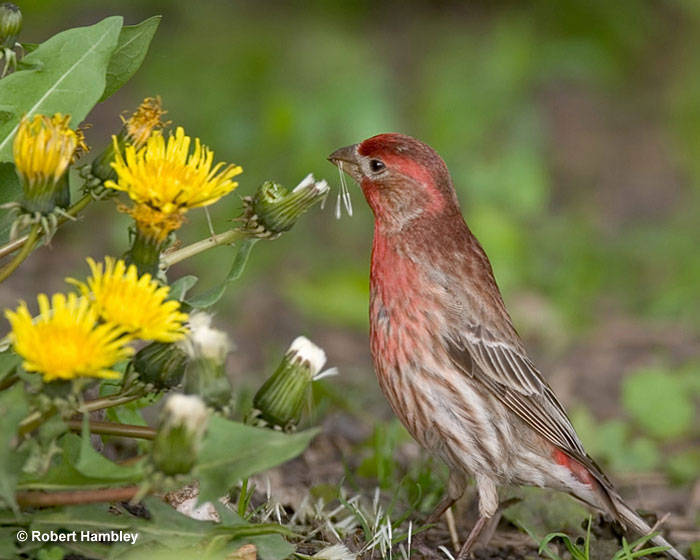
The House Finch is a small-bodied finch with long, flat heads and relatively large beaks.
Their tails seem long in comparison to their wings because their wings are on the shorter side. Finches are known for their notched tails, but the House Finch has a pretty shallow notch.
You can find House Finches in habitats like urban centers, city parks, residential backyards, forest edges, and farms. These birds are very social and are often found in loud groups. House Finches love to feed on the ground, perch in nearby trees, and visit backyards feeder.
Identification
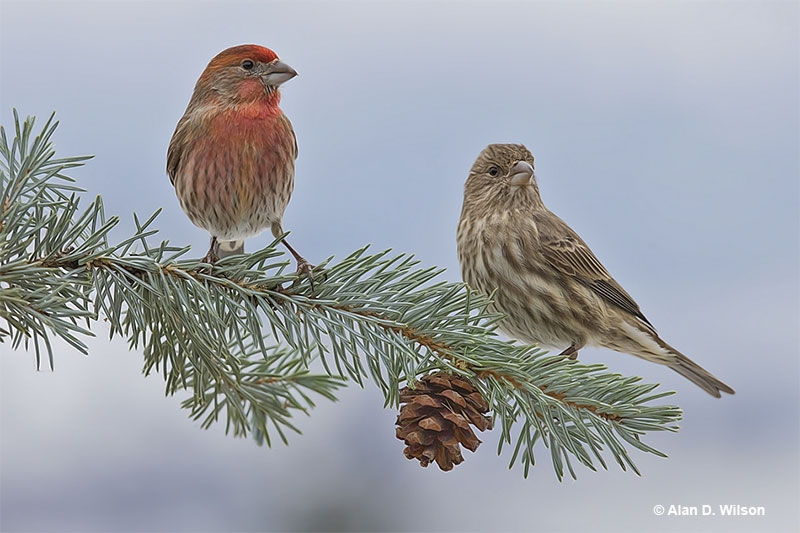
Adult male House Finches are rosy read on their upper breast and face. They have streaks of brown on their tail, belly, and back. They also have a red rump that can only be seen in flight.
House Finches are 5.1 to 5.5 inches (13 to 14 centimeters) long, weigh 0.6 to 0.9 ounces (16 to 27 grams), and have a wingspan of 7.9 to 9.8 inches (20 to 25 centimeters).
Related: 17 finch species you can see in the U.S.
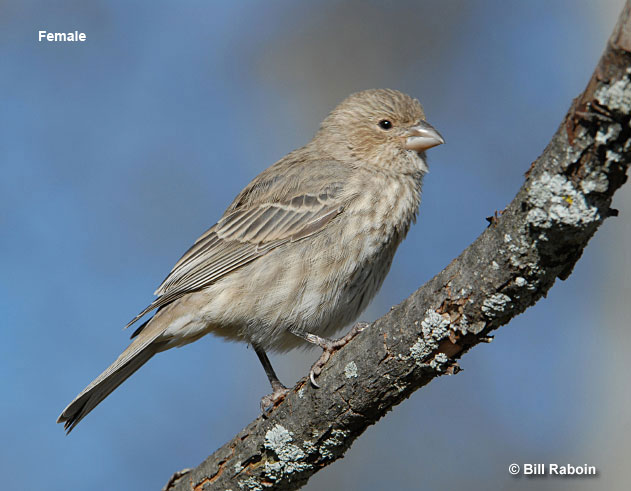
Adult female House Finches don’t have the rosy red color that males do. Instead, females are a plain brownish-gray with soft marks on their faces and blurry, thick streaks on their bodies. Female House Finches are the same size and length and have the same wingspan as breeding males. They also weigh the same amount.
Food
The House Finches diet mainly consists of plant materials like buds, fruits, and seeds. Some foods they’ll consume in the wild are knotweed, mustard seeds, thistle, poison oak, mulberry, cactus, and other plant species. House Finches will also visit orchards to consume apricots, cherries, peaches, plums, pears, strawberries, figs, and blackberries.
As stated previously, House Finches love the visit bird feeders where they’ll eat milo, black oil sunflower seeds, and millet.
Nesting and Eggs
House Finches will create nests in a variety of places. They’ll nest in cacti, coniferous and deciduous trees, and on rock ledges. It’s not uncommon to see them build nests on ledges, buildings, street lamps, hanging planters, and ivy. Occasionally House Finches will use abandoned nests that other birds created.
A House Finch will use a wide variety of materials for their nest. The nest cup is often made of leaves, feathers, fine stems, rootlets, wool, thin twigs, and string.
Similar but finer materials will be used for the lining. Once the nest is completed, it’ll have a width ranging from 3 to 7 inches and an inside cup up to 2 inches deep and 1 to 3 inches wide.
- Clutch size can be anywhere from 2 to 6 eggs.
- House Finches can have 1 to 6 broods per breeding season.
- Egg length can be anywhere from 0.6 to 0.8 inches (1.6 to 2.1 centimeters).
- Egg width can be anywhere from 0.5 to 0.6 inches (1.3 to 1.5 centimeters).
- The incubation period is around 13 to 14 days.
- The nestling period ranges from 12 to 19 days.
- Eggs are white to pale blue and can have black and pale purple fine splotches.
Current Situation
House Finches love to inhabit human-created habitats. This includes urban centers, lawns, buildings, and small conifers. In more rural areas, House Finches are commonly found around stables and barns in more rural areas. Their native range is in the West. In these areas, they’ll live in natural habitats: grassland, dry desert, chaparral, streamsides, open coniferous forests at elevations below 6,000 feet, and oak savannah.
House Finches are common birds that can be seen in parts of Canada, throughout the U.S., and Mexico. However, their populations have declined since the early 1960s. Their estimated global population is 40 million. According to the IUCN Red List, they are a species of low concern.
House Finches tend to benefit from development created by humans. Unfortunately, some House Finch populations have steeply declined due to mycoplasmal conjunctivitis.
The disease causes red, swollen eyes and respiratory problems, which makes birds susceptible to adverse weather and predators.
Facts
- The House Finch is originally from Mexico and the western portions of the United States. In the 1940s, a small amount of these birds were released on Long Island, New York. They were released because people failed to sell them as cage birds. They bred quickly, which caused them to spread across southern Canada and the eastern United States.
- House Finches are actually very aggressive birds. This is especially true at bird feeders. In fact, they’re one of the only bird species known to fight off the invasive House Sparrows.
- The rosy red color that breeding male House Finches have comes from pigments in their food. Birds aren’t able to create bright red or yellow colors on their own. So the more pigment there is in the food, the more red the male will be. This is why yellowish and orange male House Finches can be seen. Females tend to mate with a male with the reddest color because it likely raises the chances that they’re getting a capable mate who can feed the nestlings.
- With their cheery colors, finches are symbols of joy and happiness, as well as connection and vitality.
Similar Species
The House Finch has features that are similar to other bird species. Here are some similar species:
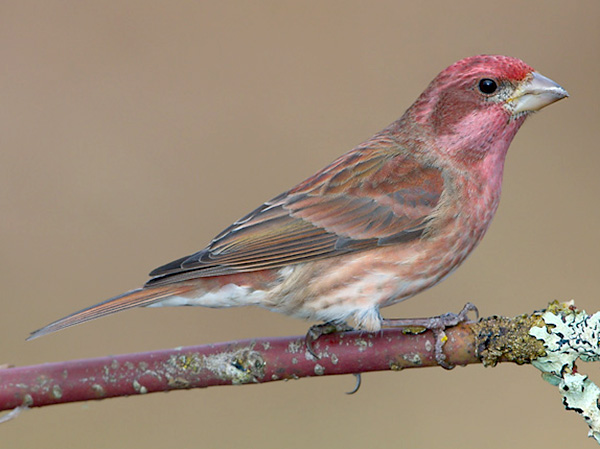
Purple Finch. Photograph © Glenn Bartley.
Adult male House Finches have some brown on their face and brown streaking on their backs.
Adult male Purple Finches have more red on their necks and faces and have reddish streaks on their backs.
Immature/Female House Finches have faint streaks on the flanks and breast, while immature/female Purple Finches have clear streaks on the flanks and breast.
House Finches also lack the mustache stripe and white eyebrow that female/immature Purple Finches have.
Learn more: House Finch vs Purple Finch
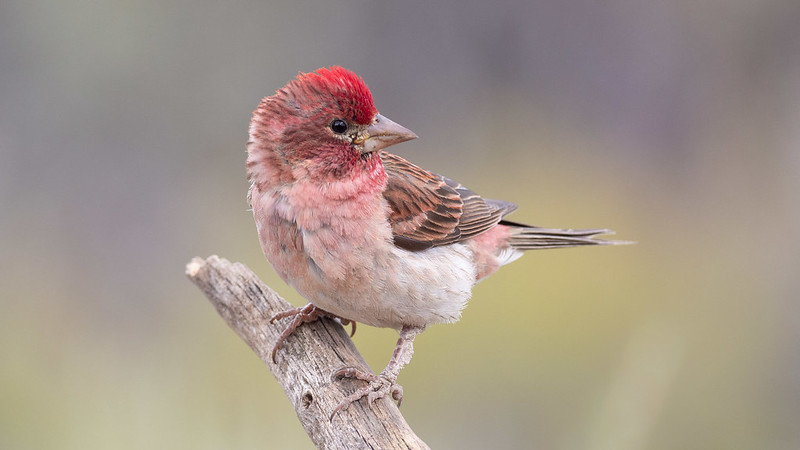
Cassin’s Finch. © David Renwald
Adult male House Finches have an all-red, evenly rounded head.
Cassin’s Finches have a peaked, bright red crown.
Immature/Female House finches have blurrier streaks on the flanks and belly than Cassin’s Finch.
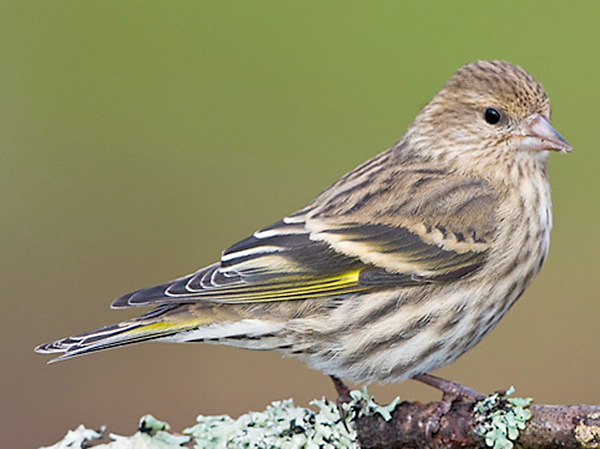
Pine Siskin. Photograph © Glenn Bartley.
House Finches have conical bills, while Pine Siskins have pointed, thin, and sharp bills.
Additionally, House Finches lack the yellow wing edging that Pine Siskins have.
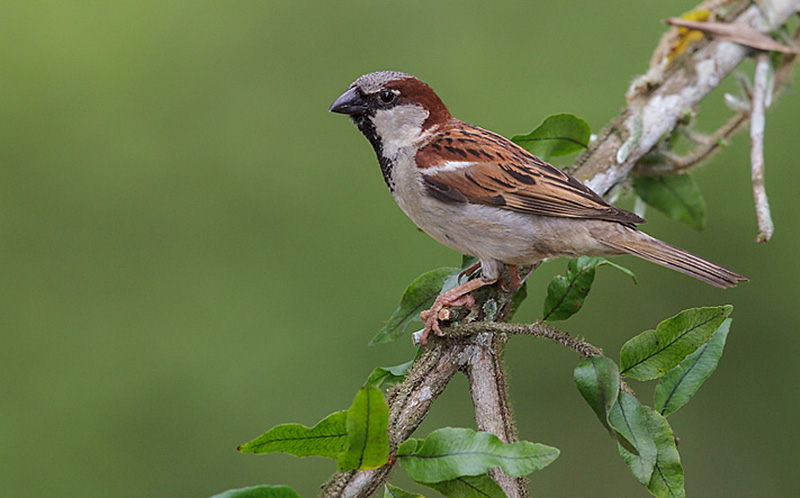
House Sparrow (Passer domesticus) perched on a branch in the Atlantic rainforest of southeast Brazil.
Immature/Female House Finches have streaks on their underparts that House Sparrows don’t.
Additionally, House Finches are not as brown.
Frequently Asked Questions
What is the difference between a Purple Finch and a House Finch?
Adult male House Finches have some brown on their face and brown streaking on their backs. Adult male Purple Finches have more red on their necks and faces and have reddish streaks on their backs.
Are House Finches good to have around?
Yes, it’s good to have House Finches around! House Finches consume large amounts of seeds that are produced by weeds. This makes them great landscapers, and they help keep unwanted plants at bay.
How smart are House Finches?
House Finches can be very intelligent. In fact, House Finches that live among people are better at solving problems than those who live in rural areas.
What does a House Finch symbolize?
House Finches symbolize joy. Their songs, behaviors, and colors are the perfect representation of cheer.