
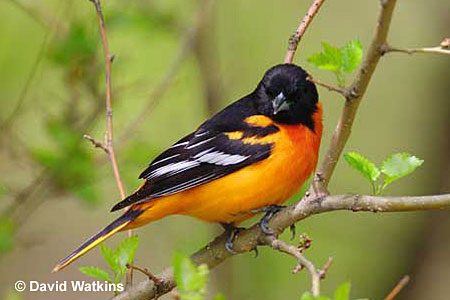

Baltimore Oriole is a well-known bird from the blackbird family – known to many for its beautiful song.
Appreciated for its brilliant color, this songbird is often seen in suburbs and parks, but is there more to their lives?
Identification
Adult male and adult female Baltimore Orioles have noticeable differences.
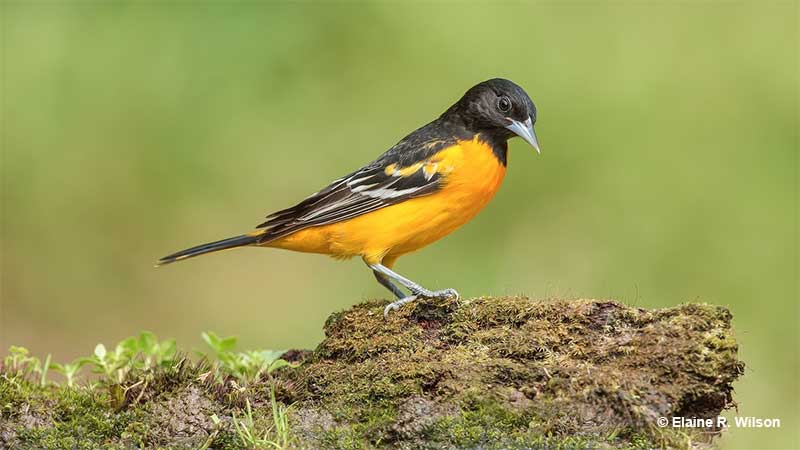
Male Baltimore Oriole
Male Baltimore Orioles have one white wing bar on their wings, solid-black heads, and are flame-orange and black overall.
Female Baltimore Orioles are grayish on the back and head, yellow-orange on the breast, and have two strong white wing bars. Juvenile birds look similar to females.
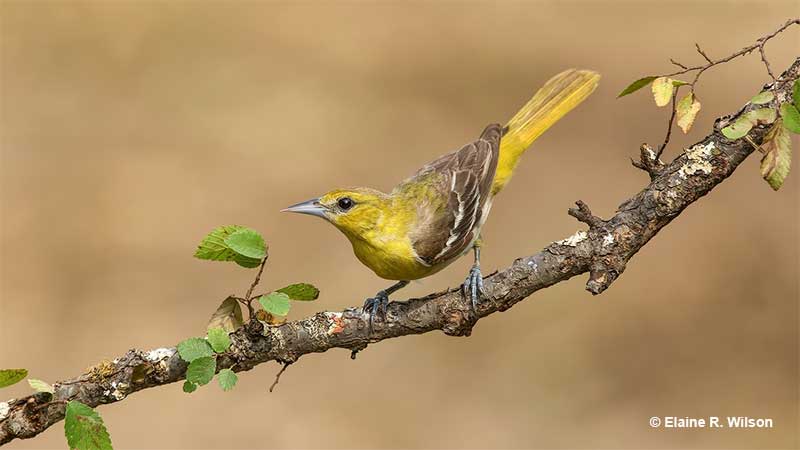
Female Baltimore Oriole
These birds are 6.7 to 7.5 inches long, weigh 1.1 to 1.4 ounces, and have a wingspan of 9.1 to 11.8 inches.
In central portions of North America, the Baltimore Oriole’s range overlaps with the Bullock’s Oriole, a close relative.
The two species are known to sometimes breed with each other. Their hybrid offspring involves a brighter orange than a typical Bullock’s Oriole but duller than a typical Baltimore Oriole. This can be confusing for some bird watchers.
Vocalizations
Baltimore Oriole’s song is often described as sweet whistles that sound like tyew, pyeer, peededoo. Their signature calls include veeer, and a low chattering call.
Food
In the wild, Baltimore Orioles consume nectar, fruit, and insects. The amount of each food they eat varies by season: in the summer months, while feeding their young and breeding, most of their diet is insects.
This is because they’re rich in proteins needed for growth. In fall and spring, ripe fruits and nectar make up most of their diet; these foods are converted into fat, which supplies them the energy they need for migration.
Baltimore Orioles consume various insects, including:
- Beetles
- Moths
- Spiders
- Crickets
- Flies
- Grasshoppers
Baltimore Orioles love ripe fruit and will actively seek it out. We recommend halving some oranges and hanging them from trees to invite these beautiful birds into your yard. Additionally, special oriole feeders can be purchased. All you do is fill them with sugar water to supplement the flower nectar that Baltimore Orioles consume naturally.
Unfortunately, these orioles are known to damage fruit crops, including bananas, oranges, and raspberries. Some fruit growers consider these birds a pest.
Nesting and Eggs
The primary nesting sites for Baltimore Orioles is trees like cottonwoods, American elms, and maples. The nest will be anchored to a fork in the slender upper branches of a tree.
The distinct nest usually hangs underneath a branch but is sometimes anchored along the tree trunk.
The chosen tree is generally within the territory defended by her mate. We want to mention that these birds are also known to make nests on the ground, in bushes, mangroves, and artificial structures like duck blinds, channel markers, and artificial nest platforms.
Female Baltimore Orioles are the ones to collect the nesting materials required for construction. The nest is created with horsehair, wool, strips of bark, and grass, as well as unnatural fibers such as fishing line, twine, or cellophane. They’ll even utilize fibers from old nests.
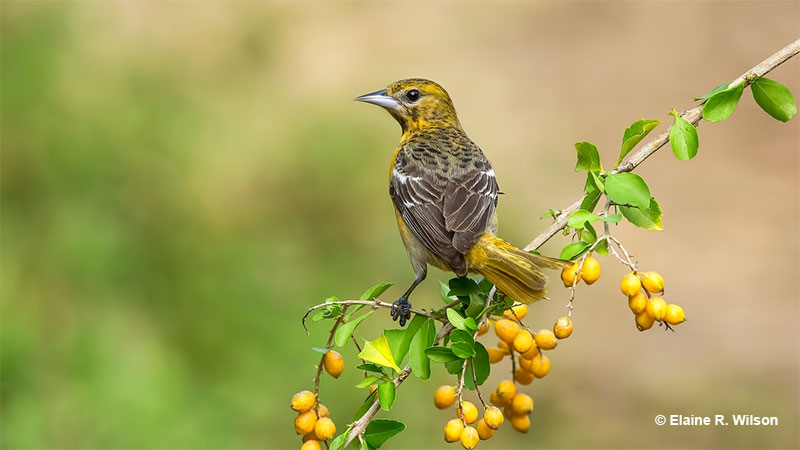
Juvenile Baltimore Oriole
The process of making these nests can span anywhere from 7 days to 2 weeks, and it’s built in 3 stages: first, the female Baltimore Oriole weaves flexible fibers to create an outer bowl and provide support. Next, she’ll incorporate springy fibers into the inner bowl, which maintains the unique shape of the nest. Finally, she’ll add a soft lining of feathers and downy fibers to create comfort for the eggs and young.
Baltimore Orioles usually have one brood per breeding season, each clutch ranging from 3 to 7 eggs. The eggs are pale gray or blue, with lavender, black, or brown blotches.
Baltimore Orioles incubate the eggs for around 11 to 14 days, after which the young orioles stay in the nest for up to 14 days.
Current Situation
According to the ICUN Red List, the Baltimore Oriole is a species of low concern. There are estimated to be up to 6 million specimens.
Baltimore Orioles maintain a presence across the eastern portions of North America during the breeding season.
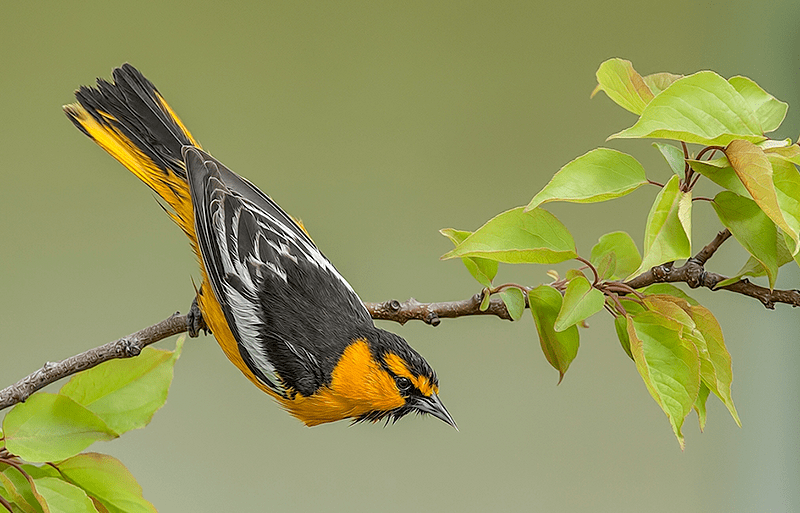
Photograph © Alan Wilson.
Because these birds winter in South and Central America and breed in North America, Baltimore Orioles are vulnerable to habitat loss due to deforestation in many different countries, and they require international cooperation in conservation efforts.
Additionally, spraying insecticides onto trees is a common practice. This not only kills off Baltimore Orioles’ prey but can even poison the birds directly. On top of that, orioles and many other songbirds migrate at night; with light pollution and rainstorms, it’s not uncommon for them to crash into tall structures like radio towers and skyscrapers.
Facts
- When eating ripe berries and fruits, Baltimore Orioles sometimes practice a unique eating method called gaping. After inserting their beak into whatever they’re eating, they spread their beak out to create a tunnel and use their tongues to lap up the juice. Additionally, it’s been found that these birds prefer the darkest color fruits.
- Many people attract Baltimore Orioles to their yards with oriole feeders. These feeders contain the same food as hummingbird feeders but are specifically designed for orioles. They’re orange instead of red and have larger perches so the birds can sit comfortably.
- The Baltimore Oriole earned its name by resembling the color scheme on the coat of arms of Lord Baltimore. He was a Baron from Ireland, after which the city of Maryland is named.
- The Baltimore Oriole’s nest is a wonder of the bird world. Over 5 to 8 days, female birds weave together whatever sturdy materials they can find until the nest is finished. The nests usually hang around 30 feet off the ground and are located on the ends of heavy branches. These nests are so strong that the birds may reuse them again months later.
- A common inhabitant of parks and suburbs, the Baltimore Oriole prefers to breed in open areas, at forest edges, and with scattered deciduous trees.
Similar Species
Baltimore Orioles have features that are similar to other bird species. Here are some similar species:
Orchard Oriole
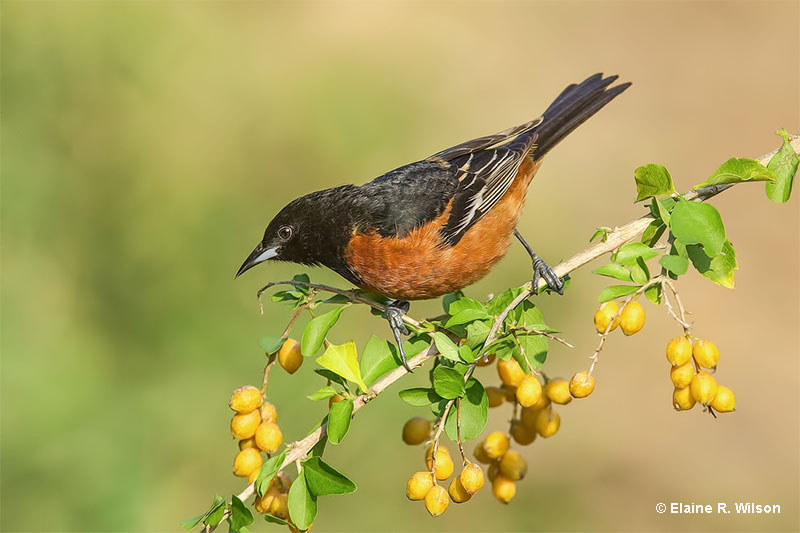
Baltimore Orioles are larger than Orchard Orioles. Additionally, they are bright orange, while Orchard Orioles are a more burnt orange. Additionally, female Baltimore Orioles show some orange coloration and streaking on the back, while female Orchard Orioles are yellow overall and have unmarked backs.
Bullock’s Oriole
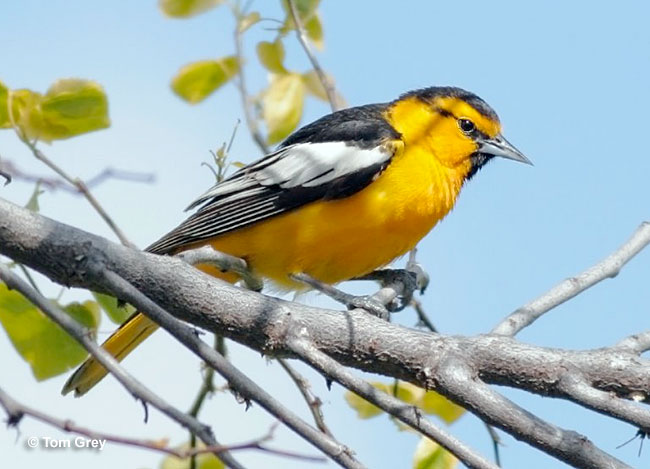
Baltimore Orioles and Bullock’s Orioles overlap in the western portions of the Baltimore Orioles range. However, there have been some recorded instances of the two species breeding. Additionally, Baltimore Orioles have black faces, while Bullock’s Orioles have orange faces. Additionally, female Baltimore Orioles have orangey bellies, while Bullock’s Orioles have whitish bellies.
American Robin
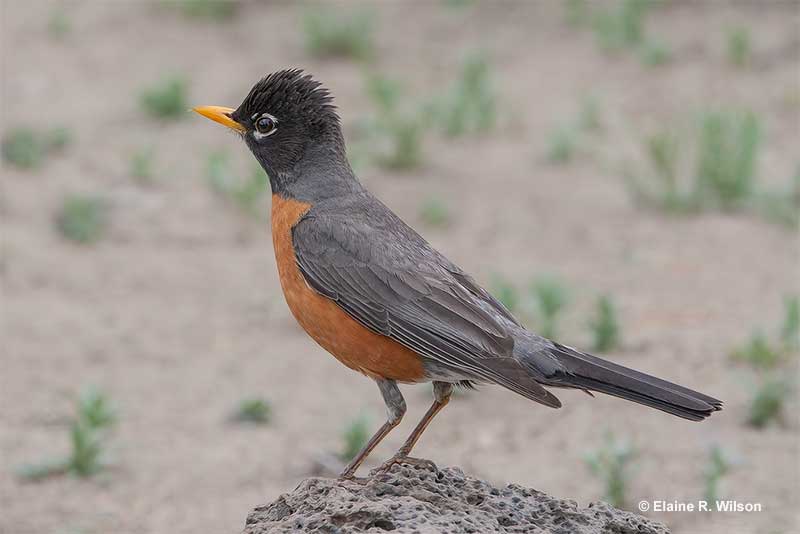
Some people mistake American Robins for Baltimore Orioles, which is understandable!
See more: Birds that look like robins
However, American Robins are a part of the thrush family and have rounder heads and shorter bills. Additionally, the orange on their breast is not as bright as the orange on a Baltimore Oriole, and they have solid brown backs.
Frequently Asked Questions
Where can you find a Baltimore Oriole?
You can find Baltimore Orioles in leafy deciduous trees in open woodland, small groves of trees, river banks, and forest edges. Baltimore Orioles have adapted well to human settlement and are often found in backyards, orchards, and parks.
What is the difference between an Orchard Oriole and a Baltimore Oriole?
Baltimore Orioles are larger than Orchard Orioles. Additionally, they are bright orange, while Orchard Orioles are a more burnt orange.
What is special about the Baltimore Oriole?
Baltimore Orioles are unique thanks to their fiery orange plumage. It makes them look like they belong in a tropical rainforest!
Do orioles stay around all summer?
Orioles stay around for the majority of the summer. Female Orioles begin to leave by the middle of August, while male Orioles will remain until the middle of September.
What is the lifespan of Baltimore Orioles?
Baltimore Orioles have a lifespan of up to 14 years in captivity and about 11.5 years in the wild.
What is Baltimore Oriole’s favorite food?
The Baltimore Orioles’ favorite food is fruit and jelly. They love eating orange halves and grape jelly; however, they’re also happy to consume nectar. It’s important to note that during their breeding season, they almost exclusively consume insects to feed their young.